Loading...
Leon Trotsky vs Qin Shi Huang
Qin Shi Huang leads by 21.9 pts · 2 figures compared
…

Leon Trotsky
Revolutionary · Modern
63.3Total
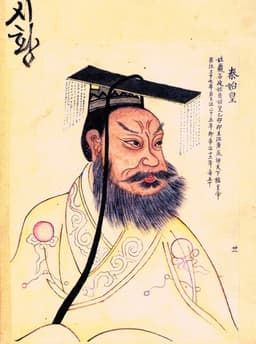
Qin Shi Huang
Emperor · Ancient
85.2Total
Basic Information
Born
1879
-259
Died
1940
-210
Era
Modern
Ancient
Nationality
Russia
China
Occupation
Revolutionary
Emperor
Civilization
Western
Eastern
Score Comparison
Military (10%)
75.0
80.0
Political (20%)
68.0
90.0
Influence (20%)
62.0
85.0
Legacy (20%)
56.0
90.0
Leadership (15%)
61.1
78.0
Strategy (15%)
69.1
82.0
TOTAL
63.3
85.2
Leon Trotsky — Complete Timeline
1917 AD
Organized the October RevolutionPolitical Action◆ Major
Trotsky, as chairman of the Petrograd Soviet's Military Revolutionary Committee, planned and executed the Bolshevik seizure of power on November 7, 1917. He coordinated the occupation of key government buildings, the Winter Palace, and the arrest of the Provisional Government, establishing Soviet rule.
Russian RevolutionBolsheviks
Impact: global
1918 AD
Created and Led the Red ArmyOther◆ Major
As People's Commissar for Military and Naval Affairs from March 1918, Trotsky built the Red Army from scratch. He recruited former Tsarist officers, instituted conscription, and imposed strict discipline, including the use of political commissars and execution of deserters, creating a force of 5 million by 1920.
Russian Civil WarMilitary Organization
Impact: national
1920 AD
Defeated the White Armies in the Russian Civil WarOther◆ Major
Trotsky personally directed Red Army campaigns against White forces across multiple fronts from 1918 to 1920. He organized the defense of Petrograd against General Yudenich, defeated Admiral Kolchak in Siberia, and crushed General Denikin's advance on Moscow, securing Bolshevik victory in the civil war.
Russian Civil WarVictory
Impact: nationalconstructive
1924 AD
Lost the Power Struggle to StalinOther◆ Major
Following Lenin's death in 1924, Trotsky lost the struggle for succession to Joseph Stalin. Stalin used his position as General Secretary to build a coalition against Trotsky, who was outmaneuvered in the Politburo, expelled from the Communist Party in 1927, and exiled to Central Asia in 1928.
Soviet PoliticsPower Struggle
Impact: nationaldestructive
1929 AD
Exiled from the Soviet UnionOther◆ Major
Trotsky was expelled from the Soviet Union in February 1929, first to Turkey, then France, Norway, and finally Mexico. From exile, he continued to write critiques of Stalin's regime, developing the theory of 'degenerated workers' state' and calling for a Fourth International to revive world revolution.
ExileOpposition
Impact: globaldestructive
1940 AD
Assassinated by Stalin's AgentPolitical Action◆ Major
Trotsky was assassinated at his home in Coyoac
AssassinationStalinism
Impact: globaldestructive
Qin Shi Huang — Complete Timeline
246 BC
Construction of the Mausoleum and Terracotta ArmyOther◆ Major
Qin Shi Huang commissioned a vast mausoleum complex near Xi'an, guarded by thousands of life-sized terracotta soldiers, horses, and chariots. The project employed hundreds of thousands of workers and reflected his obsession with immortality and imperial power.
Impact: global
230 BC
Conquest of the Six Warring StatesWar
From 230 to 221 BCE, Ying Zheng led the Qin state in a series of campaigns that conquered the Han, Zhao, Wei, Chu, Yan, and Qi states. This unified China under a single ruler for the first time, ending the Warring States period.
Impact: global
221 BC
Standardization of Writing, Currency, and MeasurementsReform◆ Major
Qin Shi Huang ordered the standardization of Chinese script, currency, and weights and measures across the unified empire. This facilitated administration, trade, and cultural integration, laying a foundation for future dynasties.
Impact: globalconstructive
Proclamation of the Qin DynastyPolitical Action
After conquering the last independent state, Ying Zheng declared himself Shi Huangdi (First Emperor), founding the Qin Dynasty. He adopted a new title to signify his supreme authority and initiated centralized imperial rule.
Impact: global
214 BC
Initiation of the Great Wall ConstructionOther◆ Major
Qin Shi Huang ordered the connection and extension of existing northern fortifications to create a unified defensive wall against nomadic Xiongnu raids. This project involved massive conscripted labor and became the precursor to the later Great Wall.
Impact: regional
213 BC
Burning of Books and Burying of ScholarsPolitical Action◆ Major
On the advice of Li Si, Qin Shi Huang ordered the burning of historical records and philosophical texts not aligned with Legalist doctrine. He also had 460 Confucian scholars buried alive to suppress dissent and consolidate ideological control.
Impact: nationaldestructive
Expert Analysis
leon-trotsky-vs-qin-shi-huang
# The Architect and the Firebrand
On a winter day in 210 BC, the First Emperor of China lay dying, surrounded by the silent ranks of his terracotta army—thousands of clay soldiers frozen for eternity, guarding a tomb that would remain undiscovered for two millennia. Two thousand years later, on an August afternoon in 1940, an ice axe shattered the skull of Leon Trotsky in a study in Mexico City, the final act of a vendetta that had pursued him across continents. Both men sought to remake the world through revolutionary violence. One succeeded so completely that his empire became the template for Chinese civilization itself. The other failed so utterly that his name became a synonym for exile and betrayal. What drove these two architects of transformation to such different fates?
Origins
Qin Shi Huang was born in 259 BC into a world of chaos—the Warring States period, when seven kingdoms bled each other dry for supremacy. His father was a king, but young Ying Zheng grew up in a court rife with intrigue, his mother's lover plotting against him, his own regent scheming for power. He learned early that trust was a luxury, and ruthlessness a necessity. The boy king ascended the throne of Qin at thirteen, a child surrounded by wolves.
Leon Trotsky was born Lev Davidovich Bronshtein in 1879, in a small Ukrainian village, the son of a prosperous Jewish farmer. Unlike the emperor, he grew up not in palaces but in the muddy fields of the Russian Empire, where the tsar's secret police watched every dissident. He was a brilliant student, drawn to literature and mathematics, but the poverty and oppression he witnessed turned him toward revolution. By his twenties, he was a fugitive, his name a pseudonym adopted from a prison guard.
The difference in their origins is not merely one of class or geography. Qin Shi Huang inherited a kingdom and a war machine; Trotsky inherited only ideas and a burning sense of injustice. One was born to rule; the other was born to rebel.
Rise to Power
From 230 to 221 BC, Ying Zheng unleashed a campaign of conquest that would define his life. Kingdom by kingdom—Han, Zhao, Wei, Chu, Yan, Qi—the armies of Qin rolled across China like a bronze tide. He was not a general who led from the front; he was a strategist who directed from behind, using spies, bribes, and terror as much as swords and crossbows. By 221 BC, at the age of thirty-eight, he stood alone. He declared himself Shi Huangdi—the First Emperor—and proclaimed a new dynasty meant to last ten thousand generations.
Trotsky's rise was different: he did not inherit power; he seized it through the force of his intellect and his oratory. In 1917, when Russia collapsed into revolution, Trotsky was the man who organized the Bolshevik seizure of power in Petrograd. He became Lenin's right hand, the architect of the Red Army, the voice that rallied the masses. While Qin Shi Huang conquered with armies, Trotsky conquered with words—his speeches electrified factory workers and soldiers alike. By 1918, he was building an army from scratch, turning a rabble of workers into a force that would defeat the White armies in a brutal civil war.
Leadership & Governance
As emperor, Qin Shi Huang was a revolutionary of a different kind. He did not merely conquer; he standardized. He ordered that all writing across China use the same script, that all carts have the same axle width, that all coins be round with a square hole. He imposed uniform weights and measures, built roads and canals, and began linking the northern walls into what would become the Great Wall. His rule was efficient, impersonal, and terrifying. Legalism, the philosophy he adopted, held that law must be harsh and punishment certain—and he enforced it with a zeal that crushed dissent.
Trotsky, by contrast, governed through constant struggle. As commissar of war, he was brilliant—he introduced political commissars to the army, used former tsarist officers under supervision, and turned defeat into victory. But in peacetime, his genius faltered. He was a revolutionary, not an administrator. He argued for permanent revolution, for spreading the fire worldwide, while Stalin consolidated power through bureaucracy and patience. Trotsky wrote manifestos; Qin Shi Huang issued decrees.
The difference is stark: the emperor built a system that lasted two thousand years; the revolutionary built an army that won a war but lost the peace.
Triumph & Tragedy
Qin Shi Huang's greatest triumph was unification itself—the creation of a single China from a patchwork of warring states. His greatest tragedy was the cost: millions died in wars, forced labor, and executions. He burned books that disagreed with him, buried scholars alive, and pursued an obsession with immortality that led him to consume mercury pills—which likely killed him at age forty-nine. His empire collapsed within three years of his death, but the structure he built survived.
Trotsky's triumph was the Red Army's victory in the Russian Civil War, a feat of organization and will that saved the Bolshevik revolution. His tragedy was his exile: expelled from the Communist Party in 1927, deported from the Soviet Union in 1929, he wandered through Turkey, France, Norway, and finally Mexico, writing history while Stalin murdered his comrades. In 1940, a Soviet agent named Ramón Mercader drove an ice axe into his skull. The revolutionary died alone, his ideas betrayed by the very system he helped create.
Character & Destiny
Qin Shi Huang was paranoid, ruthless, and grandiose. He believed himself divine, built a tomb that was a universe in miniature, and sought to control everything—even the afterlife. His personality shaped a regime of total control, where the state was everything and the individual nothing. He left no room for dissent, no space for opposition, and that is why his dynasty fell so quickly after his death.
Trotsky was brilliant, arrogant, and uncompromising. He could not build alliances, could not suffer fools, could not play the political game that Stalin mastered. His personality made him a revolutionary hero but a political failure. He was too honest for power, too principled for survival.
One man's character built an empire that collapsed; the other's character destroyed the empire he helped build.
Legacy
Qin Shi Huang's legacy is China itself. The writing system he standardized, the administrative structures he imposed, the very idea of a unified Chinese empire—all trace back to his brief reign. The terracotta army, unearthed in 1974, made him a global icon. He is remembered as a tyrant and a founder, a destroyer and a creator. His scores—Military 80, Political 88, Influence 82, Legacy 85, Leadership 88, Strategy 75—reflect a man who was more administrator than warrior, more visionary than tactician.
Trotsky's legacy is scattered. He is remembered by some as a martyr, by others as a traitor. His ideas—permanent revolution, international socialism—survive in scattered movements, but his name is more often invoked as a warning than as a model. His scores—Military 70, Political 74, Influence 76, Legacy 66, Leadership 75, Strategy 75—place him as a brilliant second, not a supreme leader.
Conclusion
What separates Qin Shi Huang from Leon Trotsky is not talent or ambition—both had those in abundance. It is the difference between building a system that can survive without you and building a movement that depends on you. The emperor created institutions—bureaucracy, standardization, infrastructure—that outlasted his tyranny. The revolutionary created an army and an idea, but no structure that could endure his absence.
One man unified China; the other divided the revolution. One died surrounded by clay soldiers; the other died alone, his blood staining the floor of a foreign study. History remembers both, but it remembers them differently: the First Emperor as the father of a civilization, Trotsky as the ghost of a revolution that never came. In the end, the difference is this: Qin Shi Huang built a house that stood for millennia, even when the builder was gone. Trotsky built a fire that burned bright—and then went out.
Rankings
🥇
Qin Shi HuangLeader
Mil: 80.0Pol: 90.0Inf: 85.0
85.2
🥈
Leon Trotsky
Mil: 75.0Pol: 68.0Inf: 62.0
63.3
+21.9 behind
How This Comparison Works
Algorithm
Each figure is scored on 6 dimensions (0—100 scale) based on structured historical data: Military (10%), Political (20%), Influence (20%), Legacy (20%), Leadership (15%), Strategy (15%). The weighted total produces the final ranking.
Data Sources
Scores are computed from structured sub-indicators in the database. Scale factors adjust for era (Ancient ×0.85, Modern ×1.0) and civilization size (Eastern ×1.05, Other ×0.80) to account for differences in population and military scale.
Maximum 3 Figures
Comparisons are limited to 2—3 figures to ensure readability and statistical meaningfulness.
Error Margins
±5 points per dimension — Sub-scores are derived from historical records with inherent uncertainty. Two figures within 5 points on a dimension should be considered roughly equivalent in that area.
Total Score Accuracy
±3 points overall — The weighted combination of 6 dimensions produces a total score with approximately ±3 points of uncertainty. Differences of less than 3 points are not statistically significant— the figures are effectively tied.
Known Limitations
- Historical records are incomplete and uneven across civilizations
- Figures from oral-tradition societies may be underrepresented
- Occupation labels can misclassify multi-role figures
- Scores measure capability and impact, not moral character
- Quantitative scoring is a comparison tool, not absolute truth
Capability Radar
Military (10%) — Battles & Warfare
Battles
75
85
Win Rate
70
90
Expansion
60
90
Political (20%) — Governance & Reform
Reform
80
95
Diplomacy
50
75
Economy
40
90
Influence (20%) — Cultural & Global Reach
Cultural
65
95
Global
75
85
Legacy (20%) — Historical Impact
Historical
80
95
Longevity
70
95
Leadership (15%) — Power & Stability
Tenure
55
70
Stability
30
65
Strategy (15%) — Tactics & Innovation
Strategy
85
85
Tactics
80
80
Reform
95
95
Similar Comparisons
Comments & Discussion
QinTheMagnificent6/17/2026
As a military historian, I call BS on the "template of Chinese civilization" hype. Qin Shi Huang didn't just unify China—he burned the books and buried scholars alive. That's not architecture, that's arson. His Great Wall was a PR stunt that killed millions, and his terra cotta army? A dictator's vanity project. Trotsky at least built the Red Army from scratch, winning a civil war, while Qin's empire imploded four years after his death. Give me the firebrand who fought for international revoluti
土刺头6/17/2026
军事迷说句实话:秦始皇搞的是暴力统一,不是文明模板。他焚书坑儒,长城是白骨堆的,兵马俑不过是独裁者的自恋。托洛茨基至少真刀真枪组建红军、打赢内战,秦朝四年就垮了,谁更失败?别拿“中华文明”糊弄人,那都是后世文人舔出来的历史滤镜。
TrotskyistNumbers6/17/2026
Data skeptic here: Let's cut the romanticism. Trotsky "failed utterly"? His ideas influenced Mao, Che, and half the 20th century's revolutions. Qin's empire lasted 15 years—that's a blip. Yes, China became a civilization, but his dynasty was a flash in the pan. Trotsky's exile produced millions of words of theory still read; Qin's legacy is a tourist trap for selfie-snappers. Lose in Mexico, win in history books. It's not even close.
量化眼镜6/17/2026
数据说话:秦朝十五年,托派影响一个世纪。秦始皇死了墓被盗,兵马俑才挖出来;托洛茨基被刺八十年后,新左派还在读他。别吹什么“帝国模板”,那是后世编的。托派理论在拉美、亚洲遍地开花,秦朝除了修长城死了几百万人,还留下啥?论持久影响力,火种比陶俑值钱。
ClassicsBrat6/17/2026
Ah, the tired "tyrant vs. martyr" binary. As a classics scholar, I'd note that Qin Shi Huang was a systematic institutionalist—weights, measures, script, roads, laws. That's the skeleton of civilization. Trotsky was a brilliant pamphleteer, yes, but his real legacy is the paranoid factionalism that poisoned Stalinist Russia. The First Emperor built a state machine that outlived his dynasty; Trotsky built a cult of personality that shattered on the first test. He lost because he couldn't build. P
墨骨先生6/17/2026
别扯什么“革命者都是理想家”。秦始皇搞的是制度——度量衡、文字、道路,那是文明的钢架。托洛茨基只会写小册子、搞派系,最后