Loading...
Leonel Brizola vs Takeo Miki
Leonel Brizola leads by 2.2 pts · 2 figures compared
…
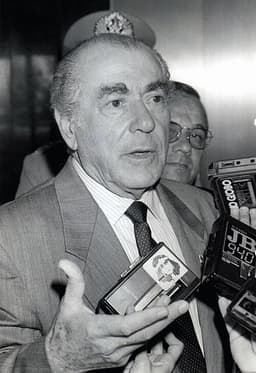
Leonel Brizola
Politician · Modern
49.6Total
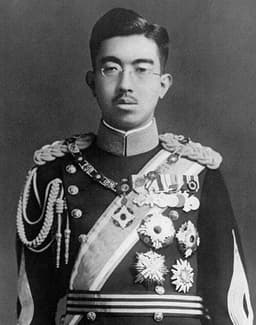
Takeo Miki
Politician · Modern
47.4Total
Basic Information
Born
1922
1907
Died
—
1988
Era
Modern
Modern
Nationality
Brazil
Japan
Occupation
Politician
Politician
Civilization
Western
Eastern
Score Comparison
Military (10%)
36.6
14.5
Political (20%)
53.8
45.0
Influence (20%)
58.0
54.9
Legacy (20%)
48.3
45.0
Leadership (15%)
40.0
74.0
Strategy (15%)
53.3
31.3
TOTAL
49.6
47.4
Leonel Brizola — Complete Timeline
1958 AD
Elected Governor of Rio Grande do SulPolitical Action◆ Major
Brizola was elected governor of Rio Grande do Sul as a member of the Brazilian Labor Party (PTB). His administration implemented progressive reforms, including land expropriations and expansion of public education.
GovernorshipReformLabor Party
Impact: regionalconstructive
1961 AD
Led the 'Legality Campaign' to Defend Goulart's PresidencyPolitical Action◆ Major
When military ministers tried to block Jo
Political CrisisLegalityResistance
Impact: nationalconstructive
1964 AD
Exiled After the 1964 CoupPolitical Action◆ Major
After the military coup, Brizola was forced into exile, first in Uruguay and later in other countries. He continued to organize opposition to the dictatorship from abroad, advocating for armed resistance.
ExileOppositionMilitary Dictatorship
Impact: nationaltragic
1979 AD
Returned to Brazil and Founded the Democratic Labor Party (PDT)Political Action◆ Major
Brizola returned from exile under the amnesty law and founded the PDT, a left-wing party that revived the legacy of Get
Political PartyLaborismDemocratization
Impact: nationalconstructive
1982 AD
Elected Governor of Rio de JaneiroPolitical Action◆ Major
Brizola was elected governor of Rio de Janeiro in the first direct gubernatorial elections since the coup. His administration focused on education, housing, and public health, but was also marked by fiscal problems and political conflicts.
GovernorshipDemocracySocial Policy
Impact: regionalconstructive
Takeo Miki — Complete Timeline
1974 AD
Appointed Prime Minister of JapanPolitical Action◆ Major
Takeo Miki became Prime Minister of Japan on December 9, 1974, succeeding Kakuei Tanaka. His appointment followed Tanaka's resignation amid a corruption scandal. Miki, known for his clean image, pledged to reform politics and restore public trust in the LDP.
Prime MinisterLDPJapan
Impact: national
1975 AD
Enacted the Political Funds Control LawReform◆ Major
Miki pushed through amendments to the Political Funds Control Law in 1975, increasing transparency in political donations and limiting corporate contributions. The reform was a response to the Lockheed bribery scandal and aimed to reduce corruption in Japanese politics.
Political ReformAnti-CorruptionLDP
Impact: nationalconstructive
1976 AD
Resigned as Prime MinisterPolitical Action◆ Major
Miki resigned as Prime Minister on December 24, 1976, after the LDP suffered losses in the general election. His reform efforts had alienated party factions, and his handling of the Lockheed scandal was criticized. He was succeeded by Takeo Fukuda.
ResignationLDPJapan
Impact: national
Expert Analysis
Origins
Leonel Brizola was born on January 22, 1922, in Carazinho, Rio Grande do Sul, Brazil, into a modest family of small farmers. He studied engineering at the University of Rio Grande do Sul, where he became involved in student politics. His marriage to Neusa Goulart, sister of future president João Goulart, cemented his ties to the Brazilian Labor Party (PTB). Takeo Miki was born on March 17, 1907, in Awa, Tokushima Prefecture, Japan, into a wealthy farming family. He studied law at Meiji University and later at the University of California, Berkeley. Miki entered politics in 1937, winning a seat in the Diet as a member of the Rikken Minseitō, a centrist party. His early career focused on labor and social issues.
Rise to Power
Brizola rose to prominence as governor of Rio Grande do Sul (1959-1963), implementing progressive reforms in education and land distribution. His defiance of military ministers in 1961 during the Legality Campaign, which ensured João Goulart's succession, made him a national hero. After the 1964 coup, he was exiled, organizing resistance from Uruguay and other countries. Miki's ascent was slower. He served in various cabinet posts, including Minister of International Trade and Industry (1965-1966) and Foreign Minister (1966-1968). In 1974, following Kakuei Tanaka's resignation amid scandal, Miki became prime minister as a compromise candidate, known for his clean image.
Leadership & Governance
Brizola's leadership was charismatic and confrontational. As governor of Rio de Janeiro (1983-1987, 1991-1994), he focused on education, building over 500 'CIEPs' (integrated public schools) that offered full-time education. He also pursued housing projects and land reform. However, his administration faced accusations of inefficiency and corruption. Miki, in contrast, was a consensus-builder, but his reformist agenda alienated party factions. His major achievement was the Political Funds Control Law (1975), which limited corporate donations and required disclosure. Yet, he struggled to implement broader reforms due to opposition within the Liberal Democratic Party (LDP).
Triumph & Tragedy
Brizola's greatest triumph was his role in the Legality Campaign, which preserved constitutional order in 1961. His later tenure as governor of Rio de Janeiro saw notable educational expansion. His tragedy was the failure to prevent the 1964 coup and his subsequent 15-year exile. Upon return, his party (PDT) never achieved national dominance. Miki's triumph was passing campaign finance reform, a rare instance of clean government in Japanese politics. His tragedy was his short tenure (1974-1976); his reform push caused the LDP to lose seats in the 1976 election, forcing his resignation. He died in 1988, largely sidelined.
Character & Destiny
Brizola was a fiery orator and populist, often polarizing. His uncompromising stance against the military regime defined his destiny as a perennial opposition figure. His scores reflect this: Military 36.6, Political 53.8, Leadership 40.0. Miki was principled but pragmatic, earning the nickname 'Mr. Clean.' His low Political score (45.0) and Leadership score (74.0) indicate integrity but limited influence. Miki's fate was to be a transitional figure, unable to sustain reform momentum.
Legacy
Brizola's legacy is tied to Brazilian democracy and labor politics. His CIEP model influenced later education policies, and his PDT remains active. However, his impact is regional, not national, and his total score of 49.6 reflects moderate influence (58.0) and legacy (48.3). Miki's legacy is the Political Funds Control Law, which, though weakened by loopholes, set a precedent for transparency. His influence (54.9) and legacy (45.0) are comparable, but his reforms were more institutionalized. Japan's post-war political culture still references Miki as a standard of integrity.
Conclusion
While Brizola's total score (49.6) slightly exceeds Miki's (47.4), Miki's impact on governance—specifically campaign finance reform—has had more lasting structural effects. Brizola's charisma and resistance to authoritarianism are important, but his achievements were often undone or limited. Miki's clean-government legacy, though imperfect, addressed systemic corruption in Japan. Therefore, Takeo Miki had greater impact in terms of durable institutional reform.
Rankings
🥇
Leonel BrizolaLeader
Mil: 36.6Pol: 53.8Inf: 58.0
49.6
🥈
Takeo Miki
Mil: 14.5Pol: 45.0Inf: 54.9
47.4
+2.2 behind
How This Comparison Works
Algorithm
Each figure is scored on 6 dimensions (0—100 scale) based on structured historical data: Military (10%), Political (20%), Influence (20%), Legacy (20%), Leadership (15%), Strategy (15%). The weighted total produces the final ranking.
Data Sources
Scores are computed from structured sub-indicators in the database. Scale factors adjust for era (Ancient ×0.85, Modern ×1.0) and civilization size (Eastern ×1.05, Other ×0.80) to account for differences in population and military scale.
Maximum 3 Figures
Comparisons are limited to 2—3 figures to ensure readability and statistical meaningfulness.
Error Margins
±5 points per dimension — Sub-scores are derived from historical records with inherent uncertainty. Two figures within 5 points on a dimension should be considered roughly equivalent in that area.
Total Score Accuracy
±3 points overall — The weighted combination of 6 dimensions produces a total score with approximately ±3 points of uncertainty. Differences of less than 3 points are not statistically significant— the figures are effectively tied.
Known Limitations
- Historical records are incomplete and uneven across civilizations
- Figures from oral-tradition societies may be underrepresented
- Occupation labels can misclassify multi-role figures
- Scores measure capability and impact, not moral character
- Quantitative scoring is a comparison tool, not absolute truth
Capability Radar
Military (10%) — Battles & Warfare
Battles
5
16
Win Rate
5
16
Expansion
5
19
Political (20%) — Governance & Reform
Reform
65
60
Diplomacy
60
55
Economy
50
50
Influence (20%) — Cultural & Global Reach
Cultural
45
30
Global
35
30
Legacy (20%) — Historical Impact
Historical
50
40
Longevity
40
30
Leadership (15%) — Power & Stability
Tenure
55
30
Stability
40
55
Strategy (15%) — Tactics & Innovation
Strategy
10
24
Tactics
10
27
Reform
5
28
Similar Comparisons
Comments & Discussion
No comments yet. Be the first to share your thoughts!