Loading...
Leopold II of Belgium vs Victor Emmanuel III
Leopold II of Belgium leads by 6.4 pts · 2 figures compared
…
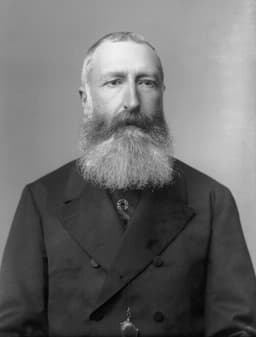
Leopold II of Belgium
Emperor · Modern
50.0Total

Victor Emmanuel III
Emperor · Modern
43.6Total
Basic Information
Born
1835
1869
Died
1909
1947
Era
Modern
Modern
Nationality
Belgium
Italy
Occupation
Emperor
Emperor
Civilization
Western
Western
Score Comparison
Military (10%)
35.0
10.2
Political (20%)
45.1
35.1
Influence (20%)
54.1
51.8
Legacy (20%)
45.8
41.7
Leadership (15%)
72.0
65.0
Strategy (15%)
39.6
42.3
TOTAL
50.0
43.6
Leopold II of Belgium — Complete Timeline
1885 AD
Creation of the Congo Free StatePolitical Action
Leopold II established the Congo Free State as his personal colony at the Berlin Conference. He gained international recognition for his claim to the Congo Basin, ruling it as private property rather than a Belgian colony.
ColonialismCongoExploitation
Impact: globaldestructive
1890 AD
Congo Free State AtrocitiesOther
Leopold II's regime in the Congo Free State enforced rubber quotas through forced labor, mutilation, and murder. Millions of Congolese died from violence, disease, and starvation between 1885 and 1908.
AtrocitiesHuman RightsColonialism
Impact: globaltragic
1897 AD
Architectural Projects in BelgiumCultural
Leopold II commissioned grand buildings in Brussels, including the Cinquantenaire Arcades, the Royal Museum for Central Africa, and the Mont des Arts. These projects aimed to glorify his reign and colonial achievements.
ArchitecturePatronageLegacy
1900 AD
International Campaign Against Congo AbusesPolitical Action◆ Major
Edmund Dene Morel and Roger Casement launched a campaign exposing Congo atrocities. The Congo Reform Association pressured governments, leading to international condemnation of Leopold II's rule.
ReformHuman RightsActivism
Impact: globalprogressive
1908 AD
Annexation of Congo by BelgiumPolitical Action◆ Major
Under international pressure, Leopold II ceded the Congo Free State to Belgium. It became the Belgian Congo, a colony governed by the Belgian state, ending Leopold's personal rule but continuing colonial exploitation.
ColonialismTransferBelgium
Impact: global
Victor Emmanuel III — Complete Timeline
1915 AD
Entry into World War IWar◆ Major
Victor Emmanuel III approved the Treaty of London, committing Italy to enter World War I on the side of the Allies. Italy declared war on Austria-Hungary, leading to years of costly fighting on the Italian front. The war resulted in over 600,000 Italian deaths.
World War IAlliesItalian Front
Impact: globaltragic
1922 AD
Appointment of Mussolini as Prime MinisterPolitical Action
After the March on Rome, Victor Emmanuel III refused to sign a decree of martial law and instead appointed Benito Mussolini as prime minister. This decision enabled the Fascist takeover of Italy, ending the liberal parliamentary system.
FascismMarch on RomeMonarchy
Impact: globaldestructive
1943 AD
Removal of MussoliniPolitical Action
Following the Allied invasion of Sicily and a vote of no confidence by the Grand Council of Fascism, Victor Emmanuel III dismissed and arrested Mussolini. The king appointed Marshal Pietro Badoglio as prime minister and began secret armistice negotiations with the Allies.
World War IIFascismArmistice
Impact: global
Armistice of CassibilePolitical Action◆ Major
Victor Emmanuel III and Badoglio signed an armistice with the Allies, announced on September 8, 1943. The German army responded by occupying northern and central Italy, disarming Italian forces, and triggering the Italian Civil War. The king fled to Brindisi.
World War IIArmisticeGerman Occupation
Impact: globaltragic
1946 AD
Abdication in Favor of Umberto IIPolitical Action◆ Major
Under pressure from the Allies and anti-fascist parties, Victor Emmanuel III formally abdicated in favor of his son Umberto II. The move was an attempt to save the monarchy before a referendum on its future. He went into exile in Egypt.
AbdicationMonarchyReferendum
Impact: national
Expert Analysis
Origins
Leopold II of Belgium was born on April 9, 1835, in Brussels, the second son of King Leopold I and Queen Louise-Marie. He was not expected to inherit the throne until the death of his older brother in 1850. His education emphasized military and diplomatic training, but he showed early interest in colonial expansion, driven by a desire to elevate Belgium's status. Victor Emmanuel III was born on November 11, 1869, in Naples, the only son of King Umberto I and Queen Margherita. He received a strict military education and ascended the throne after his father's assassination in 1900. Unlike Leopold, Victor Emmanuel was raised in a constitutional monarchy with limited personal power.
Rise to Power
Leopold II became King of the Belgians in 1865. His early reign focused on domestic infrastructure but he was obsessed with acquiring colonies. He exploited the Berlin Conference of 1884-1885 to gain international recognition for the Congo Free State as his personal property. Victor Emmanuel III became king in 1900. His rise was marked by the chaos of World War I, where he supported Italy's entry in 1915. However, his pivotal moment came in 1922 when he appointed Benito Mussolini as prime minister after the March on Rome, refusing to sign martial law. This decision handed power to the Fascists.
Leadership & Governance
Leopold II ruled the Congo Free State as a personal fiefdom, imposing a brutal extractive system for rubber and ivory. He used a private army, the Force Publique, to enforce quotas through mutilation and murder, leading to an estimated 10 million deaths. In Belgium, he was a modernizer, commissioning grand buildings. Victor Emmanuel III, by contrast, was a constitutional monarch who failed to use his powers to prevent Fascist takeover. He allowed Mussolini to dismantle democracy, only intervening in 1943 when he dismissed and arrested Mussolini after Allied invasion. His governance was passive and reactive, scoring 65.0 in leadership versus Leopold's 72.0.
Triumph & Tragedy
Leopold's triumph was the creation of the Congo Free State, which brought immense personal wealth and international prestige. His tragedy was the humanitarian catastrophe, exposed by the Congo Reform Association led by E.D. Morel and Roger Casement. The international outcry forced him to cede the colony to Belgium in 1908. Victor Emmanuel's triumph was overseeing Italy's victory in World War I and later removing Mussolini in 1943. However, his tragedy was enabling Fascism's rise; his refusal to stop Mussolini in 1922 led to 20 years of dictatorship, World War II, and the monarchy's eventual abolition.
Character & Destiny
Leopold II was driven, secretive, and ruthless. He manipulated international opinion and suppressed evidence of atrocities. His character led to his isolation and the loss of his colony. Victor Emmanuel III was indecisive, short (only 4'11"), and often overshadowed. His cautious nature prevented him from opposing Mussolini early, but his later actions to remove Mussolini came too late to save the monarchy. Both kings saw their institutions weakened: Leopold's personal colony was taken away; Victor Emmanuel's monarchy was abolished after a 1946 referendum, scoring 41.7 in legacy to Leopold's 45.8.
Legacy
Leopold II is remembered as a genocidal tyrant, with his statues being defaced and removed. His legacy is the Belgian Congo, which suffered under colonial rule for decades. Victor Emmanuel III is seen as a weak king who enabled Fascism. His son Umberto II reigned for only 34 days before the monarchy was abolished. Both left negative legacies, but Leopold's impact on the Congo is more tangible and devastating, with an estimated population decline of 50% during his rule.
Conclusion
While Victor Emmanuel III scored 43.6 total versus Leopold's 50.0, Leopold II had a greater impact—for the worse. His direct responsibility for millions of deaths in the Congo Free State outweighs Victor Emmanuel's passive role in Mussolini's rise. Leopold's scores in military (35.0) and strategy (39.6) were higher than Victor Emmanuel's (10.2 and 42.3), but more importantly, his actions fundamentally shaped the course of African history. Victor Emmanuel's legacy is one of missed opportunities and complicity, but the scale of human suffering under Leopold is unparalleled. Thus, Leopold II had a greater, albeit negative, impact on history.
Rankings
🥇
Leopold II of BelgiumLeader
Mil: 35.0Pol: 45.1Inf: 54.1
50.0
🥈
Victor Emmanuel III
Mil: 10.2Pol: 35.1Inf: 51.8
43.6
+6.4 behind
How This Comparison Works
Algorithm
Each figure is scored on 6 dimensions (0—100 scale) based on structured historical data: Military (10%), Political (20%), Influence (20%), Legacy (20%), Leadership (15%), Strategy (15%). The weighted total produces the final ranking.
Data Sources
Scores are computed from structured sub-indicators in the database. Scale factors adjust for era (Ancient ×0.85, Modern ×1.0) and civilization size (Eastern ×1.05, Other ×0.80) to account for differences in population and military scale.
Maximum 3 Figures
Comparisons are limited to 2—3 figures to ensure readability and statistical meaningfulness.
Error Margins
±5 points per dimension — Sub-scores are derived from historical records with inherent uncertainty. Two figures within 5 points on a dimension should be considered roughly equivalent in that area.
Total Score Accuracy
±3 points overall — The weighted combination of 6 dimensions produces a total score with approximately ±3 points of uncertainty. Differences of less than 3 points are not statistically significant— the figures are effectively tied.
Known Limitations
- Historical records are incomplete and uneven across civilizations
- Figures from oral-tradition societies may be underrepresented
- Occupation labels can misclassify multi-role figures
- Scores measure capability and impact, not moral character
- Quantitative scoring is a comparison tool, not absolute truth
Capability Radar
Military (10%) — Battles & Warfare
Battles
10
10
Win Rate
10
10
Expansion
60
5
Political (20%) — Governance & Reform
Reform
10
20
Diplomacy
40
20
Economy
30
20
Influence (20%) — Cultural & Global Reach
Cultural
15
20
Global
50
30
Legacy (20%) — Historical Impact
Historical
55
40
Longevity
20
20
Leadership (15%) — Power & Stability
Tenure
70
70
Stability
10
10
Strategy (15%) — Tactics & Innovation
Strategy
15
5
Tactics
5
5
Reform
5
10
Similar Comparisons
Comments & Discussion
No comments yet. Be the first to share your thoughts!