Loading...
Leopold Sedar Senghor vs Nikola Gruevski
Leopold Sedar Senghor leads by 16.3 pts · 2 figures compared
…

Leopold Sedar Senghor
Politician · Modern
58.2Total
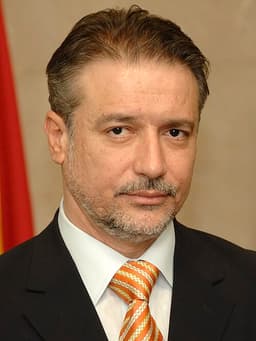
Nikola Gruevski
Politician · Modern
41.9Total
Basic Information
Born
1906
1970
Died
2001
—
Era
Modern
Modern
Nationality
Senegal
North Macedonia
Occupation
Politician
Politician
Civilization
Other
Western
Score Comparison
Military (10%)
38.4
48.7
Political (20%)
55.0
26.4
Influence (20%)
68.0
46.3
Legacy (20%)
52.0
35.8
Leadership (15%)
78.0
55.3
Strategy (15%)
43.8
42.5
TOTAL
58.2
41.9
Leopold Sedar Senghor — Complete Timeline
1945 AD
Election to French National AssemblyPolitical Action◆ Major
Senghor was elected as a deputy for Senegal to the French Constituent Assembly. He became one of the first African intellectuals to hold high political office in France, advocating for African rights.
French PoliticsColonial RepresentationIntellectual
Impact: nationalconstructive
Publication of 'Chants d'Ombre'Cultural◆ Major
Senghor published his first major poetry collection 'Chants d'Ombre' (Shadow Songs), which established him as a leading figure in the Negritude literary movement. The poems celebrated African culture and identity.
NegritudePoetryAfrican Literature
Impact: globalconstructive
1960 AD
Independence of SenegalPolitical Action
Senghor became the first President of independent Senegal after the dissolution of the Mali Federation. He led the country through a peaceful transition from French colonial rule to self-governance.
IndependenceDecolonizationPresidency
Impact: nationalconstructive
1976 AD
Introduction of Multi-Party SystemReform◆ Major
Senghor amended the constitution to allow a limited multi-party system, though with restrictions. This was a gradual move toward political liberalization in Senegal, distinguishing it from many one-party African states.
Political ReformDemocratizationMulti-Party
Impact: nationalconstructive
1980 AD
Voluntary Resignation from PresidencyPolitical Action
Senghor voluntarily resigned from the presidency, handing power to his prime minister Abdou Diouf. This was a rare peaceful transfer of power in Africa, setting a precedent for democratic succession.
ResignationPeaceful TransitionDemocracy
Impact: regionalconstructive
1983 AD
Election to Académie FrançaiseCultural◆ Major
Senghor was elected to the Acad
Académie FrançaiseLiterary RecognitionFrancophonie
Impact: globalconstructive
Nikola Gruevski — Complete Timeline
2006 AD
Elected Prime Minister of MacedoniaPolitical Action◆ Major
Gruevski became Prime Minister after his party VMRO-DPMNE won the parliamentary elections. He began a decade-long rule marked by nationalist policies and economic growth.
ElectionGovernmentMacedonia
Impact: nationalconstructive
2010 AD
Initiated the Skopje 2014 projectCultural◆ Major
Gruevski launched a large-scale urban renewal project in Skopje, building statues and buildings in a neoclassical style, including a statue of Alexander the Great. The project aimed to assert Macedonian identity but was criticized for cost and historical revisionism.
Urban DevelopmentNational IdentitySkopje
Impact: nationalconstructive
2015 AD
Wiretapping scandal revelationsPolitical Action◆ Major
Opposition leader Zoran Zaev released wiretapped conversations allegedly showing Gruevski's government involved in corruption, election rigging, and media control. This sparked massive protests and a political crisis.
ScandalCorruptionProtests
Impact: nationaldestructive
2016 AD
Resigned as Prime MinisterPolitical Action◆ Major
Under pressure from the wiretapping scandal and international mediation, Gruevski resigned, paving the way for early elections. His resignation ended his decade-long rule.
ResignationPolitical CrisisMacedonia
Impact: nationaldestructive
2018 AD
Fled to Hungary to avoid prisonPolitical Action◆ Major
After being sentenced to two years in prison for corruption related to the purchase of a luxury vehicle, Gruevski fled to Hungary, where he was granted political asylum. This caused a diplomatic rift between Macedonia and Hungary.
CorruptionAsylumEscape
Impact: nationaldestructive
Expert Analysis
Origins
Leopold Sedar Senghor was born on October 9, 1906, in Joal, French Senegal, into a Serer family of prosperous Catholic landowners. His father, Basile Diogoye Senghor, was a merchant and a respected community leader. Senghor attended Catholic missionary schools, then the Lycée Louis-le-Grand in Paris, and became the first African agrégé in grammar. He was influenced by French culture and African traditions, which shaped his concept of Négritude.
Nikola Gruevski was born on August 31, 1970, in Skopje, then part of Yugoslavia, into a middle-class family. His father was a civil servant. Gruevski studied economics at the University of Skopje and later at the University of Belgrade. He joined the nationalist VMRO-DPMNE party early, becoming its youth leader. His rise was facilitated by his mentor, Ljubčo Georgievski, who brought him into politics.
Rise to Power
Senghor's rise began in 1945 when he was elected as a deputy for Senegal to the French Constituent Assembly, one of the first African intellectuals to hold such high office. He became a leading figure in the Négritude literary movement, co-founding the journal "Présence Africaine." In 1960, after the dissolution of the Mali Federation, Senghor became the first President of independent Senegal, a position he held until 1980.
Gruevski's rise accelerated in 1998 when he became Minister of Trade under Prime Minister Georgievski. In 2006, his party VMRO-DPMNE won parliamentary elections, and he became Prime Minister. He consolidated power through nationalist rhetoric and control over media and institutions. His rule was marked by the Skopje 2014 project, a large-scale urban renewal that erected statues of Alexander the Great, aiming to assert a Macedonian national identity.
Leadership & Governance
Senghor governed Senegal with a blend of African socialism and pragmatism. He maintained close ties with France, believing in a "civilization of the universal" that merged African and European cultures. He introduced a limited multi-party system in 1976, though with restrictions, and stepped down voluntarily in 1980, handing power to his prime minister Abdou Diouf—a rare peaceful transfer in Africa. His political score of 55.0 reflects cautious liberalization.
Gruevski's governance was increasingly authoritarian. He centralized power, suppressed opposition, and used the Skopje 2014 project to promote a nationalist agenda. The project spent over €200 million on neoclassical buildings and statues, criticized as kitsch and costly. In 2015, a wiretapping scandal revealed alleged corruption, election rigging, and cover-ups. His political score of 26.4 indicates poor governance and lack of accountability.
Triumph & Tragedy
Senghor's greatest triumph was leading Senegal to independence peacefully and establishing a stable democracy. His voluntary resignation set a precedent. He is also celebrated as a poet, with works like "Chants d'Ombre" (1945) shaping Négritude. His tragedy was the gradual erosion of civil liberties; his one-party state restricted dissent, and the 1968 student protests were violently suppressed.
Gruevski's triumph was implementing the Skopje 2014 project, which boosted national pride among many Macedonians. He also secured NATO accession for Macedonia in 2020, though after his resignation. His tragedy was the wiretapping scandal that exposed state capture, leading to his resignation in 2016. In 2018, he fled to Hungary to avoid a two-year prison sentence for corruption, damaging his legacy.
Character & Destiny
Senghor was an intellectual and poet, which influenced his diplomatic and conciliatory approach. He believed in dialogue and gradualism, which helped Senegal avoid civil wars. However, his elitism and reliance on French support limited his radicalism. His character led to a peaceful legacy but also to criticism for not addressing economic inequality.
Gruevski was a nationalist populist, skilled at manipulating symbols and media. He was determined and ruthless, but his arrogance and disregard for rule of law led to his downfall. His flight to Hungary in 2018 sealed his fate as a fugitive, contrasting with Senghor's dignified exit.
Legacy
Senghor's legacy is complex. He is remembered as a founding father of Senegal and a pioneer of Négritude, influencing African literature and identity. His political system evolved into a stable democracy, though his economic policies left Senegal dependent on France. His total score of 58.2 reflects moderate impact.
Gruevski's legacy is tarnished by corruption. The Skopje 2014 project remains controversial, and his authoritarian tendencies harmed democratic institutions. His flight to Hungary made him a symbol of impunity. His total score of 41.9 indicates a net negative contribution.
Conclusion
Leopold Sedar Senghor had greater impact than Nikola Gruevski. Senghor's peaceful transition of power and intellectual contributions outweigh Gruevski's nationalist projects, which were undermined by corruption. Senghor's political score of 55.0, though modest, contrasts with Gruevski's 26.4. Senghor's legacy in literature and governance endures, while Gruevski's is a cautionary tale. The 16.3-point gap in total scores reflects this: Senghor's influence and leadership surpass Gruevski's flawed tenure.
Rankings
🥇
Leopold Sedar SenghorLeader
Mil: 38.4Pol: 55.0Inf: 68.0
58.2
🥈
Nikola Gruevski
Mil: 48.7Pol: 26.4Inf: 46.3
41.9
+16.3 behind
How This Comparison Works
Algorithm
Each figure is scored on 6 dimensions (0—100 scale) based on structured historical data: Military (10%), Political (20%), Influence (20%), Legacy (20%), Leadership (15%), Strategy (15%). The weighted total produces the final ranking.
Data Sources
Scores are computed from structured sub-indicators in the database. Scale factors adjust for era (Ancient ×0.85, Modern ×1.0) and civilization size (Eastern ×1.05, Other ×0.80) to account for differences in population and military scale.
Maximum 3 Figures
Comparisons are limited to 2—3 figures to ensure readability and statistical meaningfulness.
Error Margins
±5 points per dimension — Sub-scores are derived from historical records with inherent uncertainty. Two figures within 5 points on a dimension should be considered roughly equivalent in that area.
Total Score Accuracy
±3 points overall — The weighted combination of 6 dimensions produces a total score with approximately ±3 points of uncertainty. Differences of less than 3 points are not statistically significant— the figures are effectively tied.
Known Limitations
- Historical records are incomplete and uneven across civilizations
- Figures from oral-tradition societies may be underrepresented
- Occupation labels can misclassify multi-role figures
- Scores measure capability and impact, not moral character
- Quantitative scoring is a comparison tool, not absolute truth
Capability Radar
Military (10%) — Battles & Warfare
Battles
20
30
Win Rate
27
33
Expansion
26
35
Political (20%) — Governance & Reform
Reform
65
20
Diplomacy
75
15
Economy
60
10
Influence (20%) — Cultural & Global Reach
Cultural
75
5
Global
70
10
Legacy (20%) — Historical Impact
Historical
70
10
Longevity
65
5
Leadership (15%) — Power & Stability
Tenure
70
45
Stability
70
5
Strategy (15%) — Tactics & Innovation
Strategy
30
36
Tactics
32
40
Reform
35
46
Similar Comparisons
Comments & Discussion
No comments yet. Be the first to share your thoughts!