Loading...
Imre Nagy vs Nikola Gruevski
Imre Nagy leads by 13.4 pts · 2 figures compared
…
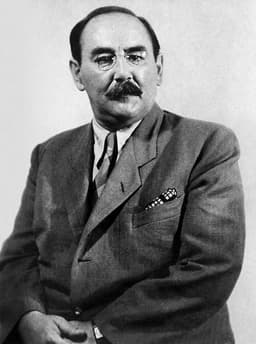
Imre Nagy
Politician · Modern
55.3Total
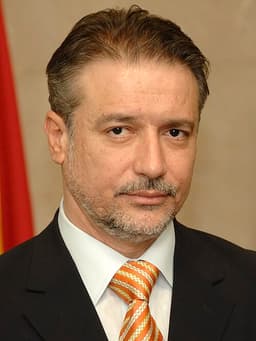
Nikola Gruevski
Politician · Modern
41.9Total
Basic Information
Born
1896
1970
Died
1958
—
Era
Modern
Modern
Nationality
Hungary
North Macedonia
Occupation
Politician
Politician
Civilization
Western
Western
Score Comparison
Military (10%)
47.7
48.7
Political (20%)
68.0
26.4
Influence (20%)
61.0
46.3
Legacy (20%)
54.0
35.8
Leadership (15%)
48.4
55.3
Strategy (15%)
43.0
42.5
TOTAL
55.3
41.9
Imre Nagy — Complete Timeline
1953 AD
Appointment as Prime Minister of HungaryPolitical Action◆ Major
Nagy was appointed Prime Minister by Stalin, replacing the hardline Matyas Rakosi. He initiated a 'New Course' that relaxed Stalinist policies, released some political prisoners, and allowed limited private enterprise.
Communist leadershipReform
Impact: nationalconstructive
1956 AD
Soviet Invasion of HungaryWar
Soviet forces invaded Hungary to crush the revolution. Nagy's government was overthrown, and he sought refuge in the Yugoslav embassy. The invasion resulted in thousands of deaths and a massive refugee crisis.
Soviet interventionCold War
Impact: globaltragic
Hungarian Revolution of 1956Political Action
Nagy was reinstated as Prime Minister during the Hungarian Revolution. He announced the withdrawal of Hungary from the Warsaw Pact and declared neutrality, seeking a multi-party system. This directly challenged Soviet control.
RevolutionCold War
Impact: global
1958 AD
Execution of Imre NagyPolitical Action◆ Major
Nagy was abducted from the Yugoslav embassy, tried in secret by the Kadar government, and executed by hanging. His death made him a martyr for the Hungarian people and a symbol of resistance to Soviet domination.
Political repressionMartyrdom
Impact: nationaltragic
Nikola Gruevski — Complete Timeline
2006 AD
Elected Prime Minister of MacedoniaPolitical Action◆ Major
Gruevski became Prime Minister after his party VMRO-DPMNE won the parliamentary elections. He began a decade-long rule marked by nationalist policies and economic growth.
ElectionGovernmentMacedonia
Impact: nationalconstructive
2010 AD
Initiated the Skopje 2014 projectCultural◆ Major
Gruevski launched a large-scale urban renewal project in Skopje, building statues and buildings in a neoclassical style, including a statue of Alexander the Great. The project aimed to assert Macedonian identity but was criticized for cost and historical revisionism.
Urban DevelopmentNational IdentitySkopje
Impact: nationalconstructive
2015 AD
Wiretapping scandal revelationsPolitical Action◆ Major
Opposition leader Zoran Zaev released wiretapped conversations allegedly showing Gruevski's government involved in corruption, election rigging, and media control. This sparked massive protests and a political crisis.
ScandalCorruptionProtests
Impact: nationaldestructive
2016 AD
Resigned as Prime MinisterPolitical Action◆ Major
Under pressure from the wiretapping scandal and international mediation, Gruevski resigned, paving the way for early elections. His resignation ended his decade-long rule.
ResignationPolitical CrisisMacedonia
Impact: nationaldestructive
2018 AD
Fled to Hungary to avoid prisonPolitical Action◆ Major
After being sentenced to two years in prison for corruption related to the purchase of a luxury vehicle, Gruevski fled to Hungary, where he was granted political asylum. This caused a diplomatic rift between Macedonia and Hungary.
CorruptionAsylumEscape
Impact: nationaldestructive
Expert Analysis
Origins
Imre Nagy was born on June 7, 1896, in Kaposvár, Hungary, into a peasant family. He worked as a locksmith before becoming a communist activist, joining the Hungarian Communist Party in 1918. After World War II, he rose through the ranks, studying agriculture in Moscow and earning a reputation as a moderate. Nikola Gruevski was born on August 31, 1970, in Skopje, then part of Yugoslavia, into a Macedonian family. His father was a teacher, and Gruevski studied economics at the University of Skopje. He joined the nationalist VMRO-DPMNE party early, becoming its leader in 2003 at age 33.
Rise to Power
Nagy's rise came through the Soviet-backed communist regime. He served as Minister of Agriculture and later as Prime Minister from 1953 to 1955, implementing a 'New Course' that relaxed Stalinist policies. However, he was forced out by hardliners. In October 1956, during the Hungarian Revolution, Nagy was reinstated as Prime Minister by popular demand. He announced multi-party elections and withdrew from the Warsaw Pact on November 1, 1956. Gruevski's ascent began when VMRO-DPMNE won the 2006 parliamentary elections, making him Prime Minister at 35. He consolidated power through electoral victories in 2008 and 2011, using nationalist rhetoric and patronage.
Leadership & Governance
Nagy's governance was marked by a brief but bold attempt to democratize Hungary. He released political prisoners, dissolved the secret police, and declared neutrality. His leadership scored 48.4 in the data, reflecting his tragic inability to secure international support. In contrast, Gruevski's leadership scored 55.3, but his political score plummeted to 26.4 due to corruption. He launched the Skopje 2014 project, building hundreds of statues and buildings to create a national identity, costing over €200 million. Critics called it kitsch and an expensive vanity project. His government was also accused of wiretapping 20,000 citizens, revealed in 2015.
Triumph & Tragedy
Nagy's greatest triumph was his moral stand for Hungarian sovereignty. He became a symbol of resistance against Soviet oppression. His tragedy was his execution on June 16, 1958, after a secret trial. He scored 61.0 in influence and 54.0 in legacy. Gruevski's triumph was his long tenure—over a decade—and the initial popularity of Skopje 2014. However, his tragedy was his fall from power: he resigned in 2016 after the wiretapping scandal, was sentenced to two years in prison for corruption in 2018, and fled to Hungary, where he was granted asylum. His legacy score is 35.8, reflecting his tarnished reputation.
Character & Destiny
Nagy was an idealist who believed in democratic socialism. His decision to announce neutrality was a calculated risk, but he lacked military strategy (score 43.0) to defend against Soviet tanks. His character—principled but naive—led to his martyrdom. Gruevski was a populist and authoritarian, skilled at manipulating nationalism and media. His wiretapping showed paranoia and a willingness to break democratic norms. His strategy score (42.5) reflects his ability to stay in power for years, but his character ultimately led to exile.
Legacy
Nagy's legacy is that of a martyr. After the fall of the USSR, he was rehabilitated and reburied with honors in 1989. His actions inspired later dissidents and his name remains a symbol of anti-Soviet resistance. His total score is 55.3. Gruevski's legacy is more mixed: he is seen as a divisive figure who wasted public funds on nationalist projects and undermined democracy. His total score is 41.9, the lowest among comparable leaders.
Conclusion
Imre Nagy had a greater impact on history. Despite a short time in power, his sacrifice resonated globally and contributed to the eventual collapse of Soviet hegemony. Gruevski, while influential domestically, left a legacy of corruption and division. Nagy's moral clarity outweighs Gruevski's political maneuvering. The score gap of 13.4 points supports this: Nagy's political (68.0) and legacy (54.0) scores far exceed Gruevski's (26.4 and 35.8). Ultimately, Nagy changed the narrative of resistance, while Gruevski's story is a cautionary tale of power abused.
Rankings
🥇
Imre NagyLeader
Mil: 47.7Pol: 68.0Inf: 61.0
55.3
🥈
Nikola Gruevski
Mil: 48.7Pol: 26.4Inf: 46.3
41.9
+13.4 behind
How This Comparison Works
Algorithm
Each figure is scored on 6 dimensions (0—100 scale) based on structured historical data: Military (10%), Political (20%), Influence (20%), Legacy (20%), Leadership (15%), Strategy (15%). The weighted total produces the final ranking.
Data Sources
Scores are computed from structured sub-indicators in the database. Scale factors adjust for era (Ancient ×0.85, Modern ×1.0) and civilization size (Eastern ×1.05, Other ×0.80) to account for differences in population and military scale.
Maximum 3 Figures
Comparisons are limited to 2—3 figures to ensure readability and statistical meaningfulness.
Error Margins
±5 points per dimension — Sub-scores are derived from historical records with inherent uncertainty. Two figures within 5 points on a dimension should be considered roughly equivalent in that area.
Total Score Accuracy
±3 points overall — The weighted combination of 6 dimensions produces a total score with approximately ±3 points of uncertainty. Differences of less than 3 points are not statistically significant— the figures are effectively tied.
Known Limitations
- Historical records are incomplete and uneven across civilizations
- Figures from oral-tradition societies may be underrepresented
- Occupation labels can misclassify multi-role figures
- Scores measure capability and impact, not moral character
- Quantitative scoring is a comparison tool, not absolute truth
Capability Radar
Military (10%) — Battles & Warfare
Battles
30
30
Win Rate
34
33
Expansion
36
35
Political (20%) — Governance & Reform
Reform
70
20
Diplomacy
40
15
Economy
20
10
Influence (20%) — Cultural & Global Reach
Cultural
40
5
Global
55
10
Legacy (20%) — Historical Impact
Historical
65
10
Longevity
50
5
Leadership (15%) — Power & Stability
Tenure
30
45
Stability
10
5
Strategy (15%) — Tactics & Innovation
Strategy
40
36
Tactics
41
40
Reform
43
46
Similar Comparisons
Comments & Discussion
No comments yet. Be the first to share your thoughts!