Loading...
Levy Mwanawasa vs Sri Mulyani Indrawati
Sri Mulyani Indrawati leads by 2.3 pts · 2 figures compared
…
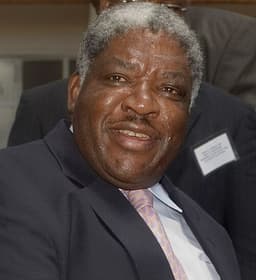
Levy Mwanawasa
Politician · Modern
53.2Total

Sri Mulyani Indrawati
Politician · Modern
55.5Total
Basic Information
Born
1948
1962
Died
—
—
Era
Modern
Modern
Nationality
Zambia
Indonesia
Occupation
Politician
Politician
Civilization
Other
Eastern
Score Comparison
Military (10%)
28.8
13.7
Political (20%)
72.0
78.0
Influence (20%)
55.7
59.0
Legacy (20%)
45.0
48.3
Leadership (15%)
66.0
80.0
Strategy (15%)
44.7
36.2
TOTAL
53.2
55.5
Levy Mwanawasa — Complete Timeline
2002 AD
Elected President of ZambiaPolitical Action◆ Major
Mwanawasa won the presidential election as the candidate of the Movement for Multiparty Democracy, succeeding Frederick Chiluba. His victory was initially disputed but later confirmed by the Supreme Court.
ElectionZambiaMMD
Impact: national
Launched Anti-Corruption CampaignPolitical Action◆ Major
Mwanawasa initiated a high-profile anti-corruption drive, including the prosecution of former president Frederick Chiluba for corruption. This marked a significant break from his predecessor and earned him international praise.
Anti-CorruptionChilubaZambia
Impact: nationalconstructive
2006 AD
Re-elected President of ZambiaPolitical Action◆ Major
Mwanawasa won a second term with 43% of the vote in a multi-candidate election. The election was deemed largely free and fair by observers, though opposition parties alleged irregularities.
ElectionZambiaRe-election
Impact: national
2008 AD
Suffered Stroke and Died in OfficeOther◆ Major
Mwanawasa suffered a stroke at the African Union summit in Egypt. He was flown to France for treatment but died in Paris on August 19, 2008. His death triggered a presidential by-election.
DeathStrokeZambia
Impact: nationaltragic
Sri Mulyani Indrawati — Complete Timeline
2010 AD
Appointed as World Bank Managing DirectorPolitical Action◆ Major
Sri Mulyani Indrawati was appointed as one of three Managing Directors of the World Bank Group. She oversaw operations in 78 countries, managing a portfolio of over $40 billion, marking a significant international role for an Indonesian economist.
World BankInternational CareerEconomic Governance
Impact: globalconstructive
Resigned as Finance Minister amid Bank Century ScandalPolitical Action◆ Major
Sri Mulyani resigned as Finance Minister following political pressure related to the Bank Century bailout scandal. Her resignation was widely seen as a concession to political opponents, though she maintained her integrity and later joined the World Bank.
ResignationBank CenturyPolitical Scandal
Impact: nationaltragic
2016 AD
Implemented Tax Amnesty ProgramReform◆ Major
Sri Mulyani oversaw Indonesia's tax amnesty program, which allowed taxpayers to declare unreported assets with reduced penalties. The program generated over $11 billion in additional tax revenue and expanded the tax base, though it faced criticism for leniency.
Tax ReformFiscal PolicyEconomic Reform
Impact: nationalconstructive
Returned as Indonesian Finance MinisterPolitical Action◆ Major
Sri Mulyani returned to Indonesia to serve as Finance Minister under President Joko Widodo. Her reappointment was seen as a move to restore investor confidence and strengthen fiscal discipline after a period of economic uncertainty.
Indonesian PoliticsFiscal PolicyJoko Widodo
Impact: nationalconstructive
2019 AD
Awarded the Bintang Mahaputera AdipradanaCultural
Sri Mulyani received Indonesia's highest civilian honor, the Bintang Mahaputera Adipradana, from President Joko Widodo. The award recognized her contributions to the nation's economic development and public service.
AwardRecognitionPublic Service
Impact: nationalconstructive
Expert Analysis
Origins
Levy Mwanawasa was born on September 3, 1948, in Mufulira, Northern Rhodesia (now Zambia), into a modest family. He studied law at the University of Zambia and later practiced as a lawyer, specializing in commercial law. His early career included serving as Solicitor General and later as Vice President under Frederick Chiluba from 1991 to 1994, before resigning due to policy differences.
Sri Mulyani Indrawati was born on August 26, 1962, in Bandar Lampung, Indonesia. She earned a PhD in economics from the University of Illinois at Urbana-Champaign. Before entering politics, she taught at the University of Indonesia and served as a consultant for the World Bank. Her academic background in economics shaped her technocratic approach to governance.
Rise to Power
Mwanawasa rose to prominence as a lawyer and anti-corruption advocate. In 2001, he won the presidency as the candidate of the Movement for Multiparty Democracy, succeeding Chiluba. His initial victory was narrow and contested, but he secured a second term in 2006 with 43% of the vote, which was deemed largely free and fair.
Sri Mulyani's rise began as a technocrat. She served as Minister of National Development Planning from 2004 to 2005 under President Susilo Bambang Yudhoyono. In 2005, she was appointed Finance Minister, where she implemented fiscal reforms. She gained international recognition, leading to her appointment as Managing Director of the World Bank in 2010, overseeing operations in 78 countries.
Leadership & Governance
Mwanawasa's leadership style was confrontational and reformist. He launched a high-profile anti-corruption campaign, prosecuting former president Chiluba and other officials. He also focused on economic reforms, including privatizing state-owned enterprises and attracting foreign investment. However, his governance was marked by political polarization and limited progress on poverty reduction.
Sri Mulyani's leadership was technocratic and market-oriented. As Finance Minister, she reduced fuel subsidies, reformed the tax system, and implemented a tax amnesty program that generated $8.9 billion in additional revenues. She also strengthened fiscal discipline and improved Indonesia's credit rating. At the World Bank, she managed a portfolio of $45 billion. Her approach prioritized macroeconomic stability and investor confidence.
Triumph & Tragedy
Mwanawasa's greatest triumph was his anti-corruption drive, which led to the conviction of Chiluba for corruption in 2007. He also oversaw economic growth averaging 5% annually. His tragedy was his sudden death from a stroke in 2008, leaving his reforms incomplete. Critics note that corruption persisted, and his authoritarian tendencies undermined democratic institutions.
Sri Mulyani's triumphs include Indonesia's tax amnesty program, which brought in $8.9 billion, and her role in stabilizing the economy during the 2008 global financial crisis. Her tragedy was her resignation in 2010 amid the Bank Century scandal, where political pressure forced her out despite no evidence of wrongdoing. This event highlighted the challenges of reform in a corrupt political system.
Character & Destiny
Mwanawasa was known for his tenacity and moral conviction. His determination to fight corruption earned him respect but also made enemies. His health deteriorated due to stress, and his death at 60 cut short his legacy. Historians note that his anti-corruption efforts were genuine but limited by political constraints.
Sri Mulyani is characterized by her integrity and competence. She is widely respected for her technocratic expertise and willingness to take on vested interests. Her return as Finance Minister in 2016 under President Joko Widodo demonstrated her resilience. Her scores reflect a political score of 78.0 and leadership of 80.0, compared to Mwanawasa's 72.0 and 66.0, respectively.
Legacy
Mwanawasa is remembered as Zambia's anti-corruption president, but his impact was mixed. His prosecution of Chiluba set a precedent, but corruption remained endemic. His economic reforms laid groundwork for growth, but poverty persisted. His legacy score of 45.0 reflects limited long-term transformation.
Sri Mulyani's legacy is more substantial. Her reforms strengthened Indonesia's fiscal position and attracted investment. She is hailed as a symbol of good governance in a country often plagued by corruption. Her influence extends globally through her World Bank role. Her legacy score of 48.3 is higher, reflecting broader impact.
Conclusion
While both figures fought corruption and pursued reforms, Sri Mulyani Indrawati had greater impact. Her total score of 55.5 exceeds Mwanawasa's 53.2, and her leadership score of 80.0 dwarfs his 66.0. Mwanawasa's anti-corruption efforts were significant but localized and short-lived. Sri Mulyani's reforms had lasting effects on Indonesia's economy and global standing. She also influenced policy at the World Bank, affecting dozens of countries. Therefore, Sri Mulyani Indrawati is the more impactful figure.
Rankings
🥇
Sri Mulyani IndrawatiLeader
Mil: 13.7Pol: 78.0Inf: 59.0
55.5
🥈
Levy Mwanawasa
Mil: 28.8Pol: 72.0Inf: 55.7
53.2
+2.3 behind
How This Comparison Works
Algorithm
Each figure is scored on 6 dimensions (0—100 scale) based on structured historical data: Military (10%), Political (20%), Influence (20%), Legacy (20%), Leadership (15%), Strategy (15%). The weighted total produces the final ranking.
Data Sources
Scores are computed from structured sub-indicators in the database. Scale factors adjust for era (Ancient ×0.85, Modern ×1.0) and civilization size (Eastern ×1.05, Other ×0.80) to account for differences in population and military scale.
Maximum 3 Figures
Comparisons are limited to 2—3 figures to ensure readability and statistical meaningfulness.
Error Margins
±5 points per dimension — Sub-scores are derived from historical records with inherent uncertainty. Two figures within 5 points on a dimension should be considered roughly equivalent in that area.
Total Score Accuracy
±3 points overall — The weighted combination of 6 dimensions produces a total score with approximately ±3 points of uncertainty. Differences of less than 3 points are not statistically significant— the figures are effectively tied.
Known Limitations
- Historical records are incomplete and uneven across civilizations
- Figures from oral-tradition societies may be underrepresented
- Occupation labels can misclassify multi-role figures
- Scores measure capability and impact, not moral character
- Quantitative scoring is a comparison tool, not absolute truth
Capability Radar
Military (10%) — Battles & Warfare
Battles
19
14
Win Rate
25
16
Expansion
26
22
Political (20%) — Governance & Reform
Reform
70
75
Diplomacy
60
70
Economy
55
85
Influence (20%) — Cultural & Global Reach
Cultural
30
30
Global
35
65
Legacy (20%) — Historical Impact
Historical
40
50
Longevity
30
40
Leadership (15%) — Power & Stability
Tenure
65
65
Stability
50
70
Strategy (15%) — Tactics & Innovation
Strategy
30
24
Tactics
35
24
Reform
35
28
Similar Comparisons
Comments & Discussion
No comments yet. Be the first to share your thoughts!