Loading...
This comparison has not been analyzed yet.
One-time AI generation (~1 minute). Scores and timeline are already available below.
Li Jifu vs Yu Qian
Yu Qian leads by 8.6 pts · 2 figures compared
…

Li Jifu
Politician · Medieval
53.4Total
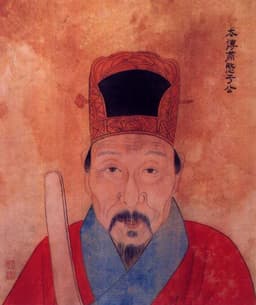
Yu Qian
Politician · Medieval
62.0Total
Basic Information
Born
758
1398
Died
814
1457
Era
Medieval
Medieval
Nationality
China
China
Occupation
Politician
Politician
Civilization
Eastern
Eastern
Score Comparison
Military (10%)
25.4
50.0
Political (20%)
72.0
70.0
Influence (20%)
55.7
61.0
Legacy (20%)
46.7
54.0
Leadership (15%)
72.0
78.0
Strategy (15%)
36.9
60.0
TOTAL
53.4
62.0
Li Jifu — Complete Timeline
808 AD
Appointed ChancellorPolitical Action◆ Major
Li Jifu was appointed as chancellor (zaixiang) under Emperor Xianzong. As chancellor, he played a key role in centralizing Tang authority and implementing policies to reduce the power of provincial military governors.
Tang DynastyChancellorshipCentralization
Impact: nationalconstructive
810 AD
Implemented Fiscal ReformsReform◆ Major
Li Jifu implemented fiscal reforms aimed at strengthening the central treasury. These reforms included measures to improve tax collection and reduce the financial power of regional governors, supporting Emperor Xianzong's centralization efforts.
Fiscal ReformTang DynastyCentralization
Impact: nationalconstructive
813 AD
Compiled Yuanhe Maps and RecordsCultural◆ Major
Li Jifu compiled the 'Yuanhe Maps and Records of Prefectures and Counties', a comprehensive geographical and administrative survey of the Tang Empire. This work documented the empire's administrative divisions, population, and resources during the Yuanhe era.
GeographyAdministrationTang DynastyYuanhe Era
Impact: nationalconstructive
Yu Qian — Complete Timeline
1449 AD
Defense of Beijing against the Oirat MongolsWar
After the Ming emperor was captured at the Battle of Tumu Fortress, Yu Qian organized the defense of Beijing against the Oirat Mongol army. He rallied the troops, stockpiled supplies, and successfully repelled the Mongol siege.
SiegeMongol InvasionMilitary Defense
Impact: nationalconstructive
Installation of the Jingtai EmperorPolitical Action◆ Major
Yu Qian supported the installation of Zhu Qiyu as the Jingtai Emperor after the capture of the Zhengtong Emperor. This move prevented a power vacuum and allowed for a unified command during the Mongol crisis.
Imperial SuccessionPolitical DecisionCrisis Management
Impact: nationalconstructive
1457 AD
Execution of Yu QianPolitical Action◆ Major
After the Tianshun Emperor (formerly the Zhengtong Emperor) regained the throne in a coup, Yu Qian was arrested and executed on charges of treason. His death was widely seen as a political purge by the restored emperor.
ExecutionPolitical PurgeInjustice
Impact: nationaltragic
This comparison has not been analyzed yet.
One-time AI generation (~1 minute). Scores and timeline are already available below.
Rankings
🥇
Yu QianLeader
Mil: 50.0Pol: 70.0Inf: 61.0
62.0
🥈
Li Jifu
Mil: 25.4Pol: 72.0Inf: 55.7
53.4
+8.6 behind
How This Comparison Works
Algorithm
Each figure is scored on 6 dimensions (0—100 scale) based on structured historical data: Military (10%), Political (20%), Influence (20%), Legacy (20%), Leadership (15%), Strategy (15%). The weighted total produces the final ranking.
Data Sources
Scores are computed from structured sub-indicators in the database. Scale factors adjust for era (Ancient ×0.85, Modern ×1.0) and civilization size (Eastern ×1.05, Other ×0.80) to account for differences in population and military scale.
Maximum 3 Figures
Comparisons are limited to 2—3 figures to ensure readability and statistical meaningfulness.
Error Margins
±5 points per dimension — Sub-scores are derived from historical records with inherent uncertainty. Two figures within 5 points on a dimension should be considered roughly equivalent in that area.
Total Score Accuracy
±3 points overall — The weighted combination of 6 dimensions produces a total score with approximately ±3 points of uncertainty. Differences of less than 3 points are not statistically significant— the figures are effectively tied.
Known Limitations
- Historical records are incomplete and uneven across civilizations
- Figures from oral-tradition societies may be underrepresented
- Occupation labels can misclassify multi-role figures
- Scores measure capability and impact, not moral character
- Quantitative scoring is a comparison tool, not absolute truth
Capability Radar
Military (10%) — Battles & Warfare
Battles
36
65
Win Rate
40
70
Expansion
44
10
Political (20%) — Governance & Reform
Reform
60
65
Diplomacy
55
75
Economy
60
60
Influence (20%) — Cultural & Global Reach
Cultural
45
55
Global
30
50
Legacy (20%) — Historical Impact
Historical
50
65
Longevity
40
60
Leadership (15%) — Power & Stability
Tenure
65
70
Stability
55
70
Strategy (15%) — Tactics & Innovation
Strategy
46
80
Tactics
51
75
Reform
55
60
Similar Comparisons
Comments & Discussion
No comments yet. Be the first to share your thoughts!