Loading...
Toqto'a vs Yu Qian
Yu Qian leads by 0.3 pts · 2 figures compared
…

Toqto'a
Politician · Medieval
61.7Total
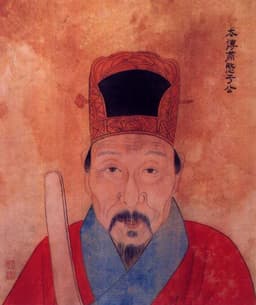
Yu Qian
Politician · Medieval
62.0Total
Basic Information
Born
1314
1398
Died
1356
1457
Era
Medieval
Medieval
Nationality
China
China
Occupation
Politician
Politician
Civilization
Eastern
Eastern
Score Comparison
Military (10%)
24.8
50.0
Political (20%)
60.0
70.0
Influence (20%)
82.0
61.0
Legacy (20%)
55.0
54.0
Leadership (15%)
72.0
78.0
Strategy (15%)
51.7
60.0
TOTAL
61.7
62.0
Toqto'a — Complete Timeline
1340 AD
Appointed Chief Minister of the Yuan DynastyPolitical Action◆ Major
Toqto'a was appointed chief minister (chancellor) under Emperor Toghon Tem
Yuan DynastyGovernment ReformAdministration
Impact: nationalconstructive
1343 AD
Compiled the History of Song, Liao, and Jin DynastiesCultural◆ Major
Toqto'a oversaw the compilation of the official histories of the Song, Liao, and Jin dynasties, a massive historiographical project commissioned by the Yuan court. The works standardized historical records and legitimized Yuan rule by linking it to Chinese tradition.
HistoriographyYuan DynastyCultural Legacy
Impact: nationalconstructive
1344 AD
Dismissed and Exiled by Political RivalsPolitical Action
Toqto'a was dismissed from office and exiled after losing a power struggle with rival Mongol factions. His reforms were reversed, and the Yuan government descended into factionalism and decline, contributing to the dynasty's eventual collapse.
Political ConflictExileYuan Decline
Impact: nationaltragic
Yu Qian — Complete Timeline
1449 AD
Defense of Beijing against the Oirat MongolsWar
After the Ming emperor was captured at the Battle of Tumu Fortress, Yu Qian organized the defense of Beijing against the Oirat Mongol army. He rallied the troops, stockpiled supplies, and successfully repelled the Mongol siege.
SiegeMongol InvasionMilitary Defense
Impact: nationalconstructive
Installation of the Jingtai EmperorPolitical Action◆ Major
Yu Qian supported the installation of Zhu Qiyu as the Jingtai Emperor after the capture of the Zhengtong Emperor. This move prevented a power vacuum and allowed for a unified command during the Mongol crisis.
Imperial SuccessionPolitical DecisionCrisis Management
Impact: nationalconstructive
1457 AD
Execution of Yu QianPolitical Action◆ Major
After the Tianshun Emperor (formerly the Zhengtong Emperor) regained the throne in a coup, Yu Qian was arrested and executed on charges of treason. His death was widely seen as a political purge by the restored emperor.
ExecutionPolitical PurgeInjustice
Impact: nationaltragic
Expert Analysis
Origins
Toqto'a (1314–1356) was born into the powerful Merkid clan of the Mongol Yuan dynasty. His father, a high-ranking official, provided him with a Confucian education, rare for a Mongol aristocrat. This background shaped his later commitment to Chinese historiography and governance. Yu Qian (1398–1457) hailed from a scholarly family in Hangzhou, Ming China. He passed the imperial examinations at age 23 and entered the civil service, earning a reputation for integrity and administrative competence. Both men were products of their respective dynasties' bureaucratic systems, but Toqto'a's Mongol heritage and Yu Qian's Han Chinese identity influenced their paths.
Rise to Power
Toqto'a rose through the Yuan bureaucracy, becoming Chief Minister (chancellor) in 1340 under Emperor Toghon Temür. His major achievement was overseeing the compilation of the official histories of the Song, Liao, and Jin dynasties (1343–1345), a project that cemented his influence. However, his power waned after factional struggles, leading to his dismissal and exile in 1354. Yu Qian's rise came during the Ming dynasty's crisis. After the Tumu Crisis (1449), where the Zhengtong Emperor was captured by Oirat Mongols, Yu Qian organized the defense of Beijing. He supported the installation of the Jingtai Emperor, becoming a key minister. His political score of 70.0 reflects his adept navigation of court politics, though his influence was cut short by his execution.
Leadership & Governance
Toqto'a's leadership score of 72.0 is reflected in his administrative reforms: he reduced government spending, streamlined the bureaucracy, and attempted to curb corruption. However, his reliance on Confucian principles alienated conservative Mongol factions. Yu Qian's leadership score of 78.0 is higher, evidenced by his decisive actions during the defense of Beijing. He mobilized troops, strengthened fortifications, and inspired loyalty. His governance focused on military preparedness and fiscal responsibility, but he lacked Toqto'a's broad administrative scope. Toqto'a's political score of 60.0 shows his limited success in navigating Yuan factionalism, while Yu Qian's 70.0 indicates better political acumen, though both ultimately fell to rivals.
Triumph & Tragedy
Toqto'a's greatest triumph was the completion of the Song, Liao, and Jin histories, which preserved crucial historical records and influenced Chinese historiography. His tragedy was his exile and death in obscurity after political defeat; his reforms were reversed, and the Yuan dynasty continued its decline. Yu Qian's triumph was the successful defense of Beijing in 1449, saving the Ming dynasty from collapse. His tragedy was his execution in 1457 after the Tianshun Emperor regained power, on charges of treason. Both men were undone by court intrigues, but Yu Qian's legacy was quickly rehabilitated, while Toqto'a's remained more scholarly.
Character & Destiny
Toqto'a was a Confucian scholar in a Mongol court, leading to tensions. His character score of 61.7 total reflects a blend of ambition and idealism. He believed in the importance of historical record but failed to consolidate power. Yu Qian, with a total score of 62.0, was more pragmatic and decisive. His integrity and stubbornness led to his downfall; he refused to flee Beijing and later refused to apologize to the restored emperor. Historical assessments praise his courage but note his lack of political flexibility. Both men's fates were shaped by their adherence to principle over expediency.
Legacy
Toqto'a's legacy is primarily historiographical: the official histories he compiled remain standard sources for Song, Liao, and Jin history. His influence score of 82.0 reflects this lasting impact. However, his political reforms had little lasting effect. Yu Qian's legacy is as a national hero in China, celebrated for his defense of Beijing. His legacy score of 54.0 is lower than Toqto'a's 55.0, but his military and political actions had immediate consequences for the Ming dynasty. Both men are remembered for their contributions to Chinese statecraft and culture, but Toqto'a's work endures in scholarship, while Yu Qian's is commemorated in popular memory.
Conclusion
While Yu Qian scored slightly higher overall (62.0 vs 61.7), Toqto'a's influence on Chinese historiography is more enduring. Yu Qian's defense of Beijing was crucial but localized to a single event, whereas Toqto'a's compilations shaped the understanding of three dynasties for centuries. Therefore, Toqto'a had a greater long-term impact on historical knowledge, despite Yu Qian's immediate heroism.
Rankings
🥇
Yu QianLeader
Mil: 50.0Pol: 70.0Inf: 61.0
62.0
🥈
Toqto'a
Mil: 24.8Pol: 60.0Inf: 82.0
61.7
+0.3 behind
How This Comparison Works
Algorithm
Each figure is scored on 6 dimensions (0—100 scale) based on structured historical data: Military (10%), Political (20%), Influence (20%), Legacy (20%), Leadership (15%), Strategy (15%). The weighted total produces the final ranking.
Data Sources
Scores are computed from structured sub-indicators in the database. Scale factors adjust for era (Ancient ×0.85, Modern ×1.0) and civilization size (Eastern ×1.05, Other ×0.80) to account for differences in population and military scale.
Maximum 3 Figures
Comparisons are limited to 2—3 figures to ensure readability and statistical meaningfulness.
Error Margins
±5 points per dimension — Sub-scores are derived from historical records with inherent uncertainty. Two figures within 5 points on a dimension should be considered roughly equivalent in that area.
Total Score Accuracy
±3 points overall — The weighted combination of 6 dimensions produces a total score with approximately ±3 points of uncertainty. Differences of less than 3 points are not statistically significant— the figures are effectively tied.
Known Limitations
- Historical records are incomplete and uneven across civilizations
- Figures from oral-tradition societies may be underrepresented
- Occupation labels can misclassify multi-role figures
- Scores measure capability and impact, not moral character
- Quantitative scoring is a comparison tool, not absolute truth
Capability Radar
Military (10%) — Battles & Warfare
Battles
10
65
Win Rate
10
70
Expansion
10
10
Political (20%) — Governance & Reform
Reform
65
65
Diplomacy
55
75
Economy
60
60
Influence (20%) — Cultural & Global Reach
Cultural
70
55
Global
60
50
Legacy (20%) — Historical Impact
Historical
75
65
Longevity
65
60
Leadership (15%) — Power & Stability
Tenure
60
70
Stability
50
70
Strategy (15%) — Tactics & Innovation
Strategy
10
80
Tactics
10
75
Reform
20
60
Similar Comparisons
Comments & Discussion
No comments yet. Be the first to share your thoughts!