Loading...
Li Shi vs Wenceslaus I of Bohemia
Wenceslaus I of Bohemia leads by 5.2 pts · 2 figures compared
…
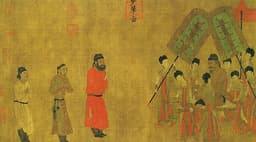
Li Shi
Emperor · Medieval
51.5Total
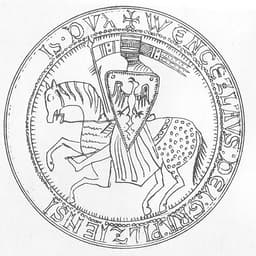
Wenceslaus I of Bohemia
Emperor · Medieval
56.7Total
Basic Information
Born
742
907
Died
805
935
Era
Medieval
Medieval
Nationality
China
Bohemia
Occupation
Emperor
Emperor
Civilization
Eastern
Western
Score Comparison
Military (10%)
25.9
50.0
Political (20%)
68.0
40.8
Influence (20%)
51.8
68.0
Legacy (20%)
45.0
65.0
Leadership (15%)
72.0
62.2
Strategy (15%)
36.8
30.3
TOTAL
51.5
56.7
Li Shi — Complete Timeline
780 AD
Implementation of the Two-Tax SystemReform◆ Major
Li Shi adopted the Two-Tax System proposed by Chancellor Yang Yan. This reform replaced the equal-field system with a simplified tax based on land and property, collected twice a year. It increased revenue but also increased the burden on peasants.
Tax ReformTwo-Tax SystemFiscal Policy
Impact: nationalconstructive
783 AD
Suppression of the Jingyuan MutinyWar◆ Major
Troops from Jingyuan mutinied in Chang'an, forcing Li Shi to flee. The mutineers supported Zhu Ci as emperor. Li Shi's forces, with help from loyalist jiedushi, eventually suppressed the rebellion and recaptured the capital in 784.
MutinyRebellionCapital Recapture
Impact: nationaldestructive
785 AD
Reassertion of Central Authority over FanzhenPolitical Action
After the Jingyuan Mutiny, Li Shi attempted to reduce the power of military governors by appointing civil officials and rotating commanders. These efforts had limited success, as the fanzhen remained largely autonomous.
FanzhenCentralization AttemptMilitary Governors
Impact: national
805 AD
Death of Li ShiOther
Li Shi died in 805 after a reign marked by attempts at fiscal and administrative reform. His death led to a succession crisis and the brief reign of his son, who was soon deposed by eunuchs.
DeathSuccession Crisis
Impact: national
Wenceslaus I of Bohemia — Complete Timeline
921 AD
Conversion to ChristianityCultural◆ Major
Wenceslaus I was raised and educated as a Christian by his grandmother, Saint Ludmila. He promoted Christianity in Bohemia, building churches and supporting missionaries, which strengthened the Christian identity of the Czech state.
ChristianizationReligious ReformCultural Change
Impact: nationalconstructive
929 AD
Submission to Henry the FowlerPolitical Action◆ Major
Wenceslaus I accepted the overlordship of King Henry I of East Francia to avoid invasion. This act secured peace for Bohemia but made it a tributary state of the Holy Roman Empire, a status that lasted for centuries.
TributeHoly Roman EmpireDiplomacy
Impact: regional
935 AD
Assassination of Wenceslaus IPolitical Action
Wenceslaus I was murdered by his brother Boleslaus I and other conspirators at the gates of a church in Star
AssassinationMartyrdomDynastic Conflict
Impact: nationaltragic
Expert Analysis
Origins
Li Shi, born in 742 as the eldest son of Emperor Daizong, was raised in the Tang imperial court. His early education emphasized Confucian classics and governance, preparing him for rule. He became emperor in 779 after his father's death. Wenceslaus I, born around 907 in Bohemia, was the son of Duke Vratislaus I. His grandmother, Saint Ludmila, educated him as a Christian, fostering his piety. After his father's death in 921, his mother Drahomíra acted as regent, but Wenceslaus assumed control in 925.
Rise to Power
Li Shi ascended the throne in 779, inheriting a Tang empire weakened by the An Lushan Rebellion and powerful military governors (fanzhen). His early reign focused on fiscal reform to stabilize state finances. Wenceslaus I became duke of Bohemia in 921, but faced challenges from his pagan mother and pro-German factions. He consolidated power by submitting to King Henry I of East Francia in 929, securing peace but accepting tributary status.
Leadership & Governance
Li Shi's leadership centered on fiscal and administrative reform. In 780, he adopted the Two-Tax System, proposed by Chancellor Yang Yan, which simplified taxes into summer and autumn payments based on land and property, replacing the equal-field system. This reform increased state revenue but faced resistance from landowners. He also attempted to reduce the power of military governors by appointing civil officials and rotating commanders, but these efforts were largely ineffective. Wenceslaus I governed as a Christian ruler, promoting the faith by building churches and supporting clergy. He submitted to Henry the Fowler to avoid invasion, a pragmatic decision that preserved Bohemian autonomy but made it a tributary. His leadership style was pious and diplomatic, contrasting Li Shi's bureaucratic approach.
Triumph & Tragedy
Li Shi's greatest triumph was the Two-Tax System, which influenced Chinese taxation for centuries. His political score of 68.0 reflects his administrative impact. However, his greatest failure was the Jingyuan Mutiny in 783, when mutinous troops forced him to flee Chang'an. The revolt undermined his authority and exposed the weakness of central control. Wenceslaus I's triumph was his successful Christianization of Bohemia, earning him sainthood and a legacy as the 'Good King.' His influence score of 68.0 and legacy of 65.0 reflect this. His tragedy was his assassination in 935 by his brother Boleslaus I, which cut short his rule but elevated his martyrdom.
Character & Destiny
Li Shi was a cautious, bureaucratic ruler who prioritized fiscal stability. His military score of 25.9 indicates his lack of martial prowess, which left him vulnerable to rebellions. His character shaped his destiny as a reformer overshadowed by his era's turmoil. Wenceslaus I was devout and diplomatic, with a leadership score of 62.2. His assassination, while tragic, cemented his legacy as a Christian martyr. His brother Boleslaus's act of fratricide paradoxically ensured Wenceslaus's sainthood.
Legacy
Li Shi's Two-Tax System remained in use until the Ming dynasty, a lasting fiscal innovation. However, his political score of 68.0 and legacy of 45.0 show limited long-term impact compared to his reforms. Wenceslaus I became the patron saint of the Czech Republic, commemorated in the Christmas carol 'Good King Wenceslaus.' His legacy score of 65.0 reflects his enduring religious and cultural significance. Despite his total score of 56.7 (higher than Li Shi's 51.5), his impact was more symbolic than systemic.
Conclusion
Wenceslaus I scored higher overall (56.7 vs 51.5), but Li Shi's fiscal reforms had a more concrete impact on governance. However, Wenceslaus's cultural and religious legacy transcends his era, making him more influential in the long term. Therefore, Wenceslaus I had greater impact, as his sainthood and symbolism continue to shape Czech identity, while Li Shi's reforms, though important, were eventually superseded.
Rankings
🥇
Wenceslaus I of BohemiaLeader
Mil: 50.0Pol: 40.8Inf: 68.0
56.7
🥈
Li Shi
Mil: 25.9Pol: 68.0Inf: 51.8
51.5
+5.2 behind
How This Comparison Works
Algorithm
Each figure is scored on 6 dimensions (0—100 scale) based on structured historical data: Military (10%), Political (20%), Influence (20%), Legacy (20%), Leadership (15%), Strategy (15%). The weighted total produces the final ranking.
Data Sources
Scores are computed from structured sub-indicators in the database. Scale factors adjust for era (Ancient ×0.85, Modern ×1.0) and civilization size (Eastern ×1.05, Other ×0.80) to account for differences in population and military scale.
Maximum 3 Figures
Comparisons are limited to 2—3 figures to ensure readability and statistical meaningfulness.
Error Margins
±5 points per dimension — Sub-scores are derived from historical records with inherent uncertainty. Two figures within 5 points on a dimension should be considered roughly equivalent in that area.
Total Score Accuracy
±3 points overall — The weighted combination of 6 dimensions produces a total score with approximately ±3 points of uncertainty. Differences of less than 3 points are not statistically significant— the figures are effectively tied.
Known Limitations
- Historical records are incomplete and uneven across civilizations
- Figures from oral-tradition societies may be underrepresented
- Occupation labels can misclassify multi-role figures
- Scores measure capability and impact, not moral character
- Quantitative scoring is a comparison tool, not absolute truth
Capability Radar
Military (10%) — Battles & Warfare
Battles
20
15
Win Rate
15
20
Expansion
5
10
Political (20%) — Governance & Reform
Reform
65
35
Diplomacy
40
40
Economy
60
35
Influence (20%) — Cultural & Global Reach
Cultural
30
75
Global
20
70
Legacy (20%) — Historical Impact
Historical
40
80
Longevity
30
85
Leadership (15%) — Power & Stability
Tenure
70
40
Stability
30
40
Strategy (15%) — Tactics & Innovation
Strategy
15
15
Tactics
10
15
Reform
5
10
Similar Comparisons
Comments & Discussion
No comments yet. Be the first to share your thoughts!