Loading...
Li Siyuan vs Tiberius II Constantine
Li Siyuan leads by 1.1 pts · 2 figures compared
…
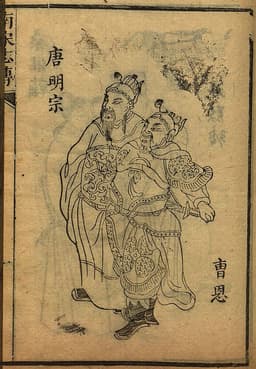
Li Siyuan
Emperor · Medieval
54.9Total
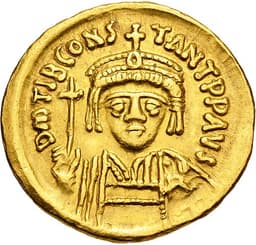
Tiberius II Constantine
Emperor · Medieval
53.8Total
Basic Information
Born
867
520
Died
933
582
Era
Medieval
Medieval
Nationality
China
Byzantine Empire
Occupation
Emperor
Emperor
Civilization
Eastern
Western
Score Comparison
Military (10%)
70.0
55.0
Political (20%)
68.0
68.0
Influence (20%)
51.8
52.5
Legacy (20%)
45.0
40.8
Leadership (15%)
53.2
64.0
Strategy (15%)
55.0
51.7
TOTAL
54.9
53.8
Li Siyuan — Complete Timeline
926 AD
Seized Power in a CoupPolitical Action
Li Siyuan, a general of Shatuo origin, led a mutiny against Emperor Li Cunxu (Zhuangzong) after the emperor's excessive cruelty and mismanagement. The mutiny succeeded, and Li Siyuan was proclaimed emperor of the Later Tang dynasty, restoring order.
CoupLater TangShatuo
Impact: national
927 AD
Implemented Frugal and Benevolent ReformsReform◆ Major
Despite being illiterate, Li Siyuan reduced taxes, curbed corruption, and promoted capable officials. He cut court expenses and distributed grain during famines, earning a reputation as a wise and just ruler who stabilized the Later Tang state.
ReformsGood GovernanceFrugality
Impact: nationalconstructive
Tiberius II Constantine — Complete Timeline
578 AD
Generous Fiscal PoliciesReform
Tiberius II was known for his generosity, reducing taxes, distributing money to the poor, and remitting debts. He spent lavishly on public works and charity, earning him the epithet 'friend of the poor.' However, his spending depleted the treasury that Anastasius I had accumulated.
Fiscal PolicyGenerositySocial Welfare
Impact: nationalconstructive
Accession as EmperorPolitical Action◆ Major
Tiberius II Constantine was proclaimed emperor by the Byzantine Senate and people after the death of Justin II. He was chosen for his popularity and reputation for generosity. His accession was marked by a distribution of gold to the people and a remission of taxes.
AccessionEmperorPopular Rule
Impact: nationalconstructive
579 AD
Military Campaigns against the Avars and SlavsWar◆ Major
Tiberius II led campaigns against the Avars and Slavs who were raiding the Balkans. He achieved some successes, including the recapture of Sirmium in 582, but the Avars continued to pose a threat. His military efforts were hampered by limited resources and the ongoing war with Persia.
Balkan CampaignsAvarsSlavs
Impact: regional
582 AD
Death and Succession of MauricePolitical Action◆ Major
Tiberius II died after a short illness, having named the general Maurice as his successor. He married Maurice to his daughter Constantina and elevated him to co-emperor before his death. This ensured a smooth transition of power and continued the dynasty.
SuccessionDeathMaurice
Impact: national
Expert Analysis
Origins
Li Siyuan (born 867) was a general of Shatuo Turkic origin who rose through the ranks of the Later Tang dynasty. His early life was marked by military service under the dynasty's founder, Li Cunxu. Illiterate, he relied on oral reports and trusted advisors. In contrast, Tiberius II Constantine (born c. 520) was a Thracian by birth, serving as a comes excubitorum (commander of the imperial guard) under Emperor Justin II. His early career was administrative and military, gaining popularity for his fairness.
Rise to Power
Li Siyuan seized power in a coup in 926 after Emperor Li Cunxu's brutal rule sparked a mutiny. He marched on the capital, Luoyang, and was proclaimed emperor. His rise was a direct result of military rebellion. Tiberius II was proclaimed emperor by the Senate and people after Justin II's death in 578. He was chosen for his reputation as a just and generous administrator. His accession was peaceful and constitutional.
Leadership & Governance
Li Siyuan ruled from 926 to 933. Despite illiteracy, he implemented frugal and benevolent reforms: reduced taxes, curbed corruption, promoted capable officials, cut court expenses, and distributed grain during famines. His military score is 70.0, reflecting campaigns against the Khitans and internal rebels. Tiberius II (r. 578-582) focused on fiscal generosity: reduced taxes, remitted debts, spent on public works, and gave to the poor. He was popular but his military score is 55.0, with limited success against Avars and Slavs. Politically, both score 68.0, but Li Siyuan's reforms were more structural.
Triumph & Tragedy
Li Siyuan's greatest success was stabilizing the Later Tang after a coup, providing competent governance. His failure: he could not control his son Li Conghou, leading to a succession crisis after his death. Tiberius II's triumph was his popularity and generous policies, but his tragedy was his short reign (4 years) and failure to secure the Danube frontier. He died of illness, having named Maurice as successor.
Character & Destiny
Li Siyuan was pragmatic, relying on advisors due to illiteracy. His character—disciplined and frugal—shaped his reforms. His destiny: a capable emperor who died naturally, but his dynasty fell soon after. Tiberius II was kind and generous, but his spending strained the treasury. His early death cut short his potential. Historians note Li Siyuan's leadership score of 53.2 reflects his competent but not transformative rule; Tiberius II's 64.0 reflects his popularity.
Legacy
Li Siyuan is remembered as a wise ruler who overcame illiteracy. His reforms influenced Later Tang governance but the dynasty collapsed in 936. His total score is 54.9. Tiberius II's legacy is as a benevolent emperor, but his policies were reversed by successors. His total score is 53.8. Neither left a lasting institutional change.
Conclusion
Li Siyuan had a slightly greater impact due to his political reforms and military stability, reflected in his higher total score (54.9 vs 53.8). While Tiberius II was more popular, Li Siyuan's governance was more substantive. Li Siyuan edges ahead.
Rankings
🥇
Li SiyuanLeader
Mil: 70.0Pol: 68.0Inf: 51.8
54.9
🥈
Tiberius II Constantine
Mil: 55.0Pol: 68.0Inf: 52.5
53.8
+1.1 behind
How This Comparison Works
Algorithm
Each figure is scored on 6 dimensions (0—100 scale) based on structured historical data: Military (10%), Political (20%), Influence (20%), Legacy (20%), Leadership (15%), Strategy (15%). The weighted total produces the final ranking.
Data Sources
Scores are computed from structured sub-indicators in the database. Scale factors adjust for era (Ancient ×0.85, Modern ×1.0) and civilization size (Eastern ×1.05, Other ×0.80) to account for differences in population and military scale.
Maximum 3 Figures
Comparisons are limited to 2—3 figures to ensure readability and statistical meaningfulness.
Error Margins
±5 points per dimension — Sub-scores are derived from historical records with inherent uncertainty. Two figures within 5 points on a dimension should be considered roughly equivalent in that area.
Total Score Accuracy
±3 points overall — The weighted combination of 6 dimensions produces a total score with approximately ±3 points of uncertainty. Differences of less than 3 points are not statistically significant— the figures are effectively tied.
Known Limitations
- Historical records are incomplete and uneven across civilizations
- Figures from oral-tradition societies may be underrepresented
- Occupation labels can misclassify multi-role figures
- Scores measure capability and impact, not moral character
- Quantitative scoring is a comparison tool, not absolute truth
Capability Radar
Military (10%) — Battles & Warfare
Battles
65
35
Win Rate
70
40
Expansion
50
30
Political (20%) — Governance & Reform
Reform
65
55
Diplomacy
60
50
Economy
55
50
Influence (20%) — Cultural & Global Reach
Cultural
30
30
Global
20
15
Legacy (20%) — Historical Impact
Historical
40
25
Longevity
30
20
Leadership (15%) — Power & Stability
Tenure
70
40
Stability
50
55
Strategy (15%) — Tactics & Innovation
Strategy
75
35
Tactics
60
30
Reform
55
45
Similar Comparisons
Comments & Discussion
No comments yet. Be the first to share your thoughts!