Loading...
Li Siyuan vs Li Yuan
Li Yuan leads by 18.8 pts · 2 figures compared
…
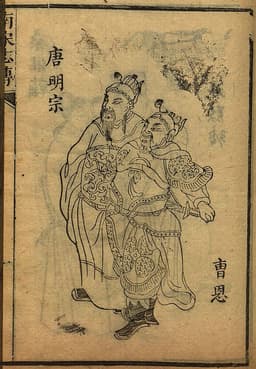
Li Siyuan
Emperor · Medieval
54.9Total
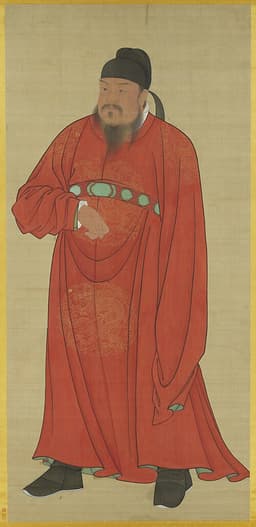
Li Yuan
Emperor · Medieval
73.7Total
Basic Information
Born
867
566
Died
933
635
Era
Medieval
Medieval
Nationality
China
China
Occupation
Emperor
Emperor
Civilization
Eastern
Eastern
Score Comparison
Military (10%)
70.0
78.0
Political (20%)
68.0
70.0
Influence (20%)
51.8
80.0
Legacy (20%)
45.0
71.4
Leadership (15%)
53.2
72.0
Strategy (15%)
55.0
67.2
TOTAL
54.9
73.7
Li Siyuan — Complete Timeline
926 AD
Seized Power in a CoupPolitical Action
Li Siyuan, a general of Shatuo origin, led a mutiny against Emperor Li Cunxu (Zhuangzong) after the emperor's excessive cruelty and mismanagement. The mutiny succeeded, and Li Siyuan was proclaimed emperor of the Later Tang dynasty, restoring order.
CoupLater TangShatuo
Impact: national
927 AD
Implemented Frugal and Benevolent ReformsReform◆ Major
Despite being illiterate, Li Siyuan reduced taxes, curbed corruption, and promoted capable officials. He cut court expenses and distributed grain during famines, earning a reputation as a wise and just ruler who stabilized the Later Tang state.
ReformsGood GovernanceFrugality
Impact: nationalconstructive
Li Yuan — Complete Timeline
618 AD
Founded the Tang dynastyPolitical Action
Li Yuan, Duke of Tang, rebelled against the Sui dynasty and captured Chang'an. He declared himself Emperor Gaozu, founding the Tang dynasty that would rule China for nearly 300 years.
Tang dynastyFoundingSui-Tang transition
Impact: globalconstructive
621 AD
Battle of Hulao PassWar◆ Major
Li Yuan's son Li Shimin defeated the rival warlord Dou Jiande at Hulao Pass. This victory eliminated a major competitor and secured Tang control over the central plains.
Tang unificationBattleLi Shimin
Impact: national
626 AD
Abdicated in favor of Li ShiminPolitical Action◆ Major
After the Xuanwu Gate Incident where Li Shimin killed his brothers, Li Yuan abdicated the throne to his son. He became Taishang Huang (retired emperor) and lived in retirement.
Tang dynastySuccessionXuanwu Gate
Impact: national
Expert Analysis
Origins
Li Siyuan (867–933) was born into a Shatuo Turkic family, a minority group serving the Tang dynasty. His early life was obscure; he was illiterate and rose through military ranks. He became a trusted general under Li Cunxu, the founder of the Later Tang. In contrast, Li Yuan (566–635) was born into a noble Chinese family, the Li clan of Longxi, with a strong military tradition. His father was a general, and Li Yuan himself served as a regional governor under the Sui dynasty. Li Yuan was well-educated and experienced in administration, unlike Li Siyuan's humble, unlettered background.
Rise to Power
Li Siyuan's rise came through a coup. In 926, after Emperor Li Cunxu's tyranny and misrule, Li Siyuan led a mutiny. He marched on the capital, Luoyang, and seized power, proclaiming himself emperor of Later Tang. His coup was swift, relying on his military reputation. Li Yuan's path was more calculated. In 617, he rebelled against the declining Sui dynasty, capturing Chang'an. He declared himself Emperor Gaozu in 618, founding the Tang dynasty. His success was aided by his son Li Shimin, who won key battles like the Battle of Hulao Pass (621) against Dou Jiande, securing Tang control. Li Yuan's rise was a planned rebellion with strategic alliances, while Li Siyuan's was a reactive mutiny.
Leadership & Governance
Li Siyuan governed with frugality and benevolence. He reduced taxes, cut court expenses, and distributed grain during famines. He promoted capable officials regardless of their background, even though he was illiterate. His leadership score is 53.2, reflecting his modest but effective style. However, his inability to read limited his direct oversight. Li Yuan, with a leadership score of 72.0, established the Tang dynasty's administrative framework. He adopted Sui institutions, like the equal-field system and three-department government. He also appointed his sons to key posts, which led to succession conflicts. Li Yuan's governance was more systematic, but his favoritism caused instability.
Triumph & Tragedy
Li Siyuan's triumph was stabilizing the Later Tang after a period of chaos. He implemented reforms that improved the lives of commoners. His tragedy was his inability to control his own family; his son Li Conghou was weak, and the dynasty fell soon after his death. His military score of 70.0 shows his competence, but his political score of 68.0 indicates limited lasting influence. Li Yuan's triumph was founding the Tang dynasty, which lasted nearly 300 years. His tragedy was the Xuanwu Gate Incident (626), where his son Li Shimin killed his brothers and forced Li Yuan to abdicate. Li Yuan's legacy score of 71.4 is much higher than Li Siyuan's 45.0, reflecting the Tang's enduring impact.
Character & Destiny
Li Siyuan was pragmatic and humble, aware of his illiteracy. He relied on advisors and sought to rule justly. His character shaped a reign of relative peace but limited ambition. His destiny was to be a transitional figure. Li Yuan was more ambitious and politically astute, but he was also cautious. His decision to rebel was calculated. His character led to the founding of a great dynasty, but his inability to manage his sons caused personal tragedy. Historical assessments praise Li Yuan as a founder, while Li Siyuan is seen as a capable but minor emperor.
Legacy
Li Siyuan's legacy is modest. His reforms were short-lived, and the Later Tang collapsed in 937. He is remembered as the 'illiterate emperor' who ruled wisely. His influence score of 51.8 is moderate. Li Yuan's legacy is immense. The Tang dynasty became a golden age of Chinese civilization, influencing politics, culture, and trade across East Asia. His legacy score of 71.4 and influence of 80.0 reflect this. Li Yuan's system of government and legal codes persisted for centuries.
Conclusion
Li Yuan had greater impact. His total score of 73.7 dwarfs Li Siyuan's 54.9. Li Yuan founded a dynasty that shaped world history, while Li Siyuan only briefly stabilized a minor state. Despite Li Siyuan's admirable reforms, his influence was limited by the Later Tang's short duration and his own illiteracy. Li Yuan's strategic vision and legacy are far superior. The data supports this: Li Yuan scores higher in every category except strategy (67.2 vs 55.0), but even there, his strategy secured a dynasty. Li Siyuan's story is a footnote; Li Yuan's is foundational.
Rankings
🥇
Li YuanLeader
Mil: 78.0Pol: 70.0Inf: 80.0
73.7
🥈
Li Siyuan
Mil: 70.0Pol: 68.0Inf: 51.8
54.9
+18.8 behind
How This Comparison Works
Algorithm
Each figure is scored on 6 dimensions (0—100 scale) based on structured historical data: Military (10%), Political (20%), Influence (20%), Legacy (20%), Leadership (15%), Strategy (15%). The weighted total produces the final ranking.
Data Sources
Scores are computed from structured sub-indicators in the database. Scale factors adjust for era (Ancient ×0.85, Modern ×1.0) and civilization size (Eastern ×1.05, Other ×0.80) to account for differences in population and military scale.
Maximum 3 Figures
Comparisons are limited to 2—3 figures to ensure readability and statistical meaningfulness.
Error Margins
±5 points per dimension — Sub-scores are derived from historical records with inherent uncertainty. Two figures within 5 points on a dimension should be considered roughly equivalent in that area.
Total Score Accuracy
±3 points overall — The weighted combination of 6 dimensions produces a total score with approximately ±3 points of uncertainty. Differences of less than 3 points are not statistically significant— the figures are effectively tied.
Known Limitations
- Historical records are incomplete and uneven across civilizations
- Figures from oral-tradition societies may be underrepresented
- Occupation labels can misclassify multi-role figures
- Scores measure capability and impact, not moral character
- Quantitative scoring is a comparison tool, not absolute truth
Capability Radar
Military (10%) — Battles & Warfare
Battles
65
75
Win Rate
70
80
Expansion
50
80
Political (20%) — Governance & Reform
Reform
65
75
Diplomacy
60
80
Economy
55
75
Influence (20%) — Cultural & Global Reach
Cultural
30
85
Global
20
85
Legacy (20%) — Historical Impact
Historical
40
90
Longevity
30
90
Leadership (15%) — Power & Stability
Tenure
70
70
Stability
50
70
Strategy (15%) — Tactics & Innovation
Strategy
75
85
Tactics
60
70
Reform
55
65
Similar Comparisons
Comments & Discussion
No comments yet. Be the first to share your thoughts!