Loading...
This comparison has not been analyzed yet.
One-time AI generation (~1 minute). Scores and timeline are already available below.
Li Tingzhi vs Yamana Sozen
Yamana Sozen leads by 12.8 pts · 2 figures compared
…

Li Tingzhi
General · Medieval
39.8Total
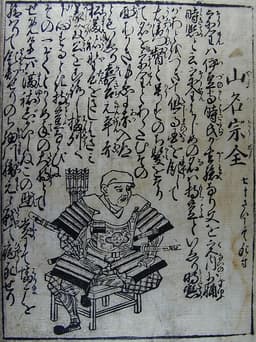
Yamana Sozen
General · Medieval
52.6Total
Basic Information
Born
1219
1404
Died
1276
1473
Era
Medieval
Medieval
Nationality
China
Japan
Occupation
General
General
Civilization
Eastern
Eastern
Score Comparison
Military (10%)
38.3
72.5
Political (20%)
33.6
37.9
Influence (20%)
44.0
51.0
Legacy (20%)
35.8
46.7
Leadership (15%)
33.5
57.6
Strategy (15%)
60.0
66.3
TOTAL
39.8
52.6
Li Tingzhi — Complete Timeline
1275 AD
Defended Yangzhou against Mongol forcesWar◆ Major
Li Tingzhi commanded the defense of Yangzhou, a key city in the Southern Song, against the invading Mongol army under Kublai Khan. Despite being outnumbered and lacking reinforcements, he held the city for over a year. His stubborn resistance delayed the Mongol advance and became a symbol of Song loyalty.
Mongol ConquestSiege of YangzhouResistance
Impact: regionaltragic
1276 AD
Executed by the Mongols after Yangzhou fellPolitical Action◆ Major
After Yangzhou was betrayed and fell to the Mongols, Li Tingzhi was captured. He refused to surrender and was executed by the Mongol forces. His death, along with his steadfast defense, made him a martyr for the Song cause and a figure of loyalty in Chinese history.
ExecutionMartyrdomSong Loyalty
Impact: nationaltragic
Yamana Sozen — Complete Timeline
1440 AD
Became a Buddhist MonkCultural
Yamana Sozen became a Buddhist monk and took the name Sozen, though he remained politically and militarily active. His nickname 'Red Monk' (Aka Nyudo) came from his red monk's robes and his warlike nature.
BuddhismMonkNickname
1450 AD
Expanded Yamana Clan TerritoryWar◆ Major
Sozen led military campaigns that expanded Yamana control to 11 provinces, making him one of the most powerful daimyo in Japan. His aggressive expansion alarmed other clans, particularly the Hosokawa.
Territorial ExpansionDaimyoYamana Clan
Impact: regionaldestructive
1464 AD
Feud with Hosokawa KatsumotoPolitical Action◆ Major
Sozen's rivalry with Hosokawa Katsumoto intensified over control of the shogunate. The two kanrei clashed over succession and policy, with Sozen supporting Shogun Yoshimasa's son while Katsumoto backed his brother.
RivalryHosokawa KatsumotoPower Struggle
Impact: nationaldestructive
1467 AD
Led the Western Army in the Onin WarWar
Sozen commanded the Western Army (Seigun) in the Onin War, opposing Katsumoto's Eastern Army. His forces fought fierce battles in Kyoto, burning temples and palaces, and the war spread chaos across Japan.
Onin WarWestern ArmyKyoto
Impact: nationaldestructive
1473 AD
Death During the Onin WarOther◆ Major
Sozen died of illness in 1473, the same year as his rival Katsumoto. His death did not end the Onin War, which continued until 1477, but it removed one of the key instigators of the conflict.
DeathOnin WarYamana Clan
Impact: nationaltragic
This comparison has not been analyzed yet.
One-time AI generation (~1 minute). Scores and timeline are already available below.
Rankings
🥇
Yamana SozenLeader
Mil: 72.5Pol: 37.9Inf: 51.0
52.6
🥈
Li Tingzhi
Mil: 38.3Pol: 33.6Inf: 44.0
39.8
+12.8 behind
How This Comparison Works
Algorithm
Each figure is scored on 6 dimensions (0—100 scale) based on structured historical data: Military (10%), Political (20%), Influence (20%), Legacy (20%), Leadership (15%), Strategy (15%). The weighted total produces the final ranking.
Data Sources
Scores are computed from structured sub-indicators in the database. Scale factors adjust for era (Ancient ×0.85, Modern ×1.0) and civilization size (Eastern ×1.05, Other ×0.80) to account for differences in population and military scale.
Maximum 3 Figures
Comparisons are limited to 2—3 figures to ensure readability and statistical meaningfulness.
Error Margins
±5 points per dimension — Sub-scores are derived from historical records with inherent uncertainty. Two figures within 5 points on a dimension should be considered roughly equivalent in that area.
Total Score Accuracy
±3 points overall — The weighted combination of 6 dimensions produces a total score with approximately ±3 points of uncertainty. Differences of less than 3 points are not statistically significant— the figures are effectively tied.
Known Limitations
- Historical records are incomplete and uneven across civilizations
- Figures from oral-tradition societies may be underrepresented
- Occupation labels can misclassify multi-role figures
- Scores measure capability and impact, not moral character
- Quantitative scoring is a comparison tool, not absolute truth
Capability Radar
Military (10%) — Battles & Warfare
Battles
35
55
Win Rate
30
50
Expansion
5
45
Political (20%) — Governance & Reform
Reform
10
35
Diplomacy
20
50
Economy
10
30
Influence (20%) — Cultural & Global Reach
Cultural
20
40
Global
10
35
Legacy (20%) — Historical Impact
Historical
25
60
Longevity
20
50
Leadership (15%) — Power & Stability
Tenure
30
60
Stability
15
20
Strategy (15%) — Tactics & Innovation
Strategy
35
55
Tactics
40
60
Reform
10
30
Similar Comparisons
Comments & Discussion
No comments yet. Be the first to share your thoughts!