Loading...
Li Zongren vs Prem Tinsulanonda
Li Zongren leads by 3.4 pts · 2 figures compared
…
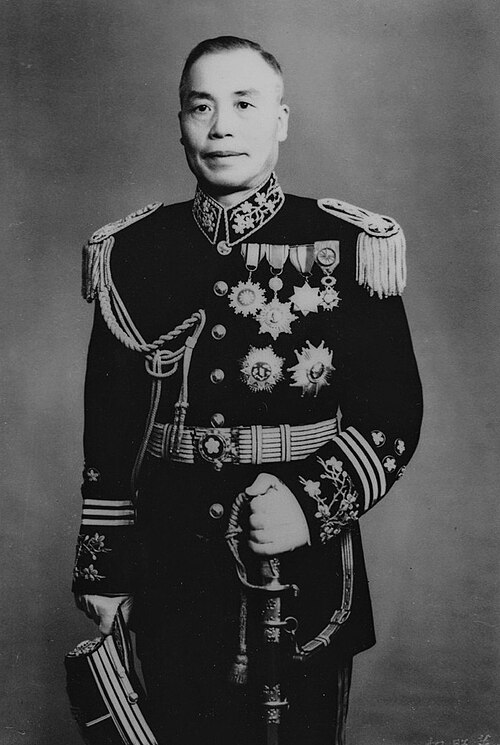
Li Zongren
General · Modern
71.8Total
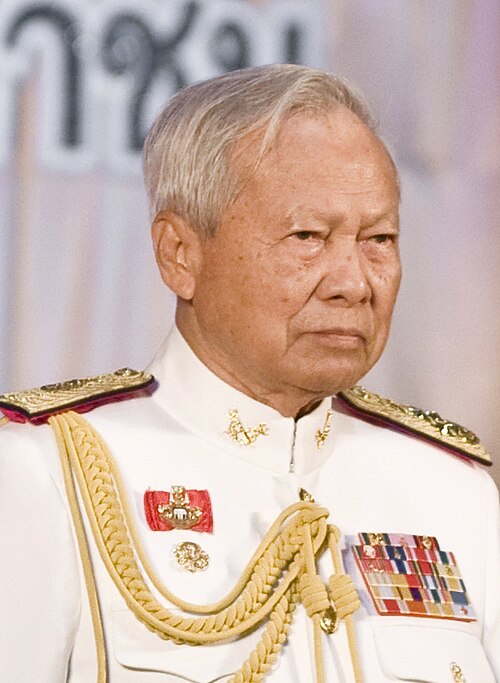
Prem Tinsulanonda
General · Modern
68.4Total
Basic Information
Born
1890
1920
Died
1969
—
Era
Modern
Modern
Nationality
China
Thailand
Occupation
General
General
Civilization
Eastern
Eastern
Score Comparison
Military (10%)
65.3
33.7
Political (20%)
65.0
68.8
Influence (20%)
72.0
73.9
Legacy (20%)
67.1
66.8
Leadership (15%)
79.9
89.0
Strategy (15%)
83.4
65.0
TOTAL
71.8
68.4
Rankings
🥇
Li ZongrenLeader
Mil: 65.3Pol: 65.0Inf: 72.0
71.8
🥈
Prem Tinsulanonda
Mil: 33.7Pol: 68.8Inf: 73.9
68.4
+3.4 behind
How This Comparison Works
Algorithm
Each figure is scored on 6 dimensions (0—100 scale) based on structured historical data: Military (10%), Political (20%), Influence (20%), Legacy (20%), Leadership (15%), Strategy (15%). The weighted total produces the final ranking.
Data Sources
Scores are computed from structured sub-indicators in the database. Scale factors adjust for era (Ancient ×0.85, Modern ×1.0) and civilization size (Eastern ×1.05, Other ×0.80) to account for differences in population and military scale.
Maximum 3 Figures
Comparisons are limited to 2—3 figures to ensure readability and statistical meaningfulness.
Error Margins
±5 points per dimension — Sub-scores are derived from historical records with inherent uncertainty. Two figures within 5 points on a dimension should be considered roughly equivalent in that area.
Total Score Accuracy
±3 points overall — The weighted combination of 6 dimensions produces a total score with approximately ±3 points of uncertainty. Differences of less than 3 points are not statistically significant— the figures are effectively tied.
Known Limitations
- Historical records are incomplete and uneven across civilizations
- Figures from oral-tradition societies may be underrepresented
- Occupation labels can misclassify multi-role figures
- Scores measure capability and impact, not moral character
- Quantitative scoring is a comparison tool, not absolute truth
Capability Radar
Military (10%) — Battles & Warfare
Battles
65
20
Win Rate
60
25
Expansion
60
10
Political (20%) — Governance & Reform
Reform
45
55
Diplomacy
60
60
Economy
40
50
Influence (20%) — Cultural & Global Reach
Cultural
40
30
Global
40
30
Legacy (20%) — Historical Impact
Historical
55
40
Longevity
45
35
Leadership (15%) — Power & Stability
Tenure
55
65
Stability
35
60
Strategy (15%) — Tactics & Innovation
Strategy
68
30
Tactics
70
30
Reform
55
35
Expert Analysis
Prem Tinsulanonda vs Li Zongren
# The General Who Would Not Be King
On a sweltering August morning in 1981, General Prem Tinsulanonda sat in his Bangkok office, waiting for news that would determine whether he would remain prime minister or become a prisoner of war in his own country. Tanks were rumbling toward the capital, led by the "Young Turks" who had once been his allies. Across the decades and the South China Sea, another general had faced a similar moment of reckoning—Li Zongren, commanding Chinese forces at Taierzhuang in 1938, watching Japanese artillery shells rain down on his positions, knowing that one mistake would mean not just his death, but the collapse of China's last hope. Both men were soldiers who became statesmen. Both navigated the treacherous currents of modern Asian politics. Yet one died in exile, a ghost haunting the margins of history, while the other died in his homeland, a revered statesman who had shaped a nation's destiny. What made the difference?
Origins
Prem Tinsulanonda was born in 1920 in Songkhla, a southern Thai province far from the intrigues of Bangkok. His father was a schoolteacher, his mother a homemaker—modest origins for a man who would one day serve as regent of a kingdom. Thailand in the 1920s was a country that had never been colonized, a rare gem in Southeast Asia, but it was also a nation wrestling with the legacy of absolute monarchy and the rise of military power. Prem grew up in the shadow of King Bhumibol Adulyadej, a monarch whose reign would come to define modern Thailand.
Li Zongren was born thirty years earlier, in 1890, in Guangxi province, a rugged, mountainous region of southern China known for its fierce independence. The Qing Dynasty was crumbling; the old order was dying. Li's family were farmers, but his father was a scholar who instilled in him a Confucian sense of duty. By the time Li reached adulthood, China had become a battlefield of warlords, foreign powers, and revolutionary ideals. He would have to carve his own path through chaos.
The difference in their eras was profound. Prem came of age in a relatively stable kingdom where the monarchy provided continuity. Li came of age in a collapsing empire where every man had to choose a side—and every choice could be fatal.
Rise to Power
Prem's ascent was methodical, bureaucratic, and quiet. He joined the army in 1941, served in World War II, and slowly climbed the ranks. His breakthrough came in 1980, when a coup ousted the civilian government and the military turned to him as a compromise candidate. He was not a charismatic firebrand; he was a steady hand, a man who could hold together a fractious coalition of generals, politicians, and royalists. His political score of 68.8 reflects this careful navigation—not brilliant, but solid.
Li Zongren's rise was violent and dramatic. In 1921, he took command of the Guangxi Army and unified his home province under the New Guangxi Clique. He was a warlord in the classic Chinese mold—commanding loyalty through force and personal charisma. In 1926, he made a fateful decision: he allied with Chiang Kai-shek's Nationalist government during the Northern Expedition. This alliance gave him legitimacy, but it also tied his fate to a man he would come to distrust. His strategy score of 83.4 reflects his military brilliance, but his political score of 65.0 reveals a man who was never quite comfortable in the corridors of power.
Leadership & Governance
As prime minister from 1980 to 1988, Prem governed through consensus, not command. He survived the 1981 coup attempt not by crushing his enemies, but by outlasting them—the Young Turks lacked popular support, and the king's quiet disapproval sealed their fate. Prem understood that in Thailand, the monarchy was the ultimate source of legitimacy. He never challenged King Bhumibol's authority; instead, he became the king's most loyal servant. His leadership score of 89.0 reflects this subtle mastery of soft power.
Li Zongren's leadership was forged in war. At the Battle of Taierzhuang in 1938, he achieved something no other Chinese commander had managed: a major victory against the Japanese Imperial Army. He outmaneuvered, outflanked, and outfought a superior enemy, buying precious time for China's retreat. But his military genius could not compensate for his political naivety. After the war, he served as acting president of the Republic of China in 1949, but he was never able to unite the Nationalist factions. Chiang Kai-shek had the machinery of power; Li had only his reputation.
Triumph & Tragedy
Prem's greatest moment was also his most subtle: his resignation in 1988. After eight years in power, he stepped down voluntarily after a general election, handing control to a civilian government. In a region where leaders clung to power until death or coup, this was extraordinary. His tragedy came later: appointed regent in 2016 after King Bhumibol's death, he presided over a kingdom in mourning, a symbol of an era that was passing.
Li's triumph was Taierzhuang, a victory that electrified China and made him a national hero. His tragedy was exile. After the Communist victory in 1949, he fled to the United States, where he lived in obscurity, criticizing Chiang Kai-shek from afar. He never returned to China. He died in 1969, a man without a country.
Character & Destiny
Prem was cautious, patient, and loyal. He understood that in a kingdom, the general serves the king—he does not become the king. This humility allowed him to wield power without destroying the institutions that sustained him.
Li was bold, proud, and independent. He believed that his military victories entitled him to political leadership. But in the brutal world of Chinese politics, entitlement meant nothing. He lacked the ruthlessness to seize power and the cunning to hold it.
Their different outcomes were not accidents of fate. Prem's Thailand had a stable monarchy that provided a framework for power. Li's China had collapsed into civil war, and there was no framework left. One man worked within the system; the other tried to build a new one. The system won.
Legacy
Today, Prem is remembered as a stabilizing force in Thai politics, a bridge between military rule and democracy, between the old king and the new. His legacy score of 66.8 is modest, but his influence score of 73.9 speaks to his quiet, enduring impact.
Li Zongren is remembered as a patriot and a brilliant commander, but also as a tragic figure—a man who fought for a China that no longer existed. His legacy score of 67.1 is similar to Prem's, but it carries a different weight: the weight of a nation that moved on without him.
Conclusion
Standing at the end of their lives, both men might have looked back and wondered what might have been. Prem might have asked: Could I have done more? Li might have asked: Could I have done differently? The answer, perhaps, lies not in their choices alone, but in the worlds they inherited. Prem was born into a kingdom that knew how to endure. Li was born into an empire that was already dead. One learned to serve the throne; the other tried to become the throne. In the end, the throne outlasted them both.
Frequently Asked Questions
Who ranks highest among Prem Tinsulanonda, Li Zongren?
Our six-dimension data-driven scoring system compares Military, Political, Influence, Legacy, Leadership, and Strategy to determine the ranking among Prem Tinsulanonda, Li Zongren. See the full score breakdown on this page.
How accurate is this historical comparison?
Scores are computed from structured historical sub-indicators with era and civilization scale factors. The system has approximately ±3 points of uncertainty per dimension. Differences under 3 points are not statistically significant.
Li Zongren — Complete Timeline
1921 AD
Command of the Guangxi ArmyPolitical Action◆ Major
Li Zongren became a commander in the Guangxi Army and helped unify Guangxi province under the New Guangxi Clique. He established a powerful regional base that rivaled other warlords.
Guangxi CliqueMilitary CommandWarlord Era
Impact: regional
1926 AD
Alliance with the Nationalist GovernmentPolitical Action◆ Major
Li Zongren allied the Guangxi Clique with Chiang Kai-shek's Nationalist government during the Northern Expedition. His forces played a key role in defeating warlords and unifying China under KMT rule.
Northern ExpeditionAllianceKMT
Impact: nationalconstructive
1938 AD
Battle of TaierzhuangWar
Li Zongren commanded Chinese forces to a major victory over the Japanese at the Battle of Taierzhuang during the Second Sino-Japanese War. This was the first significant Chinese victory of the war and boosted national morale.
Second Sino-Japanese WarBattleVictory
Impact: nationalconstructive
1949 AD
Acting Presidency of the Republic of ChinaPolitical Action◆ Major
Li Zongren served as Acting President of the Republic of China after Chiang Kai-shek's resignation during the Chinese Civil War. He attempted to negotiate peace with the Communists but failed, leading to the KMT's retreat to Taiwan.
Chinese Civil WarPresidencyKMT
Impact: nationaltragic
Exile to the United StatesPolitical Action
After the Communist victory, Li Zongren fled to the United States, where he lived in exile. He criticized Chiang Kai-shek's leadership and advocated for a reformed KMT, but remained politically marginalized.
ExileChinese Civil WarPolitics
Impact: nationaltragic
Prem Tinsulanonda — Complete Timeline
1980 AD
Appointed Prime Minister after a coupPolitical Action◆ Major
Prem Tinsulanonda was appointed Prime Minister of Thailand by the military after a coup. He served for over eight years, overseeing a period of political stability and economic growth.
Prime MinisterMilitary RuleStability
Impact: national
1981 AD
Survived a coup attemptPolitical Action◆ Major
Prem survived a coup attempt by military officers loyal to the 'Young Turks' faction. The coup failed due to lack of support and the loyalty of key military units, allowing Prem to remain in power.
Coup AttemptPolitical CrisisMilitary
Impact: national
1988 AD
Resigned as Prime MinisterPolitical Action◆ Major
Prem resigned as Prime Minister after the general election, handing over power to a civilian government led by Chatichai Choonhavan. His resignation marked a rare peaceful transition of power in Thai politics.
ResignationDemocratic TransitionPeaceful
Impact: nationalconstructive
2016 AD
Appointed Regent of ThailandPolitical Action
After the death of King Bhumibol, Prem was appointed Regent of Thailand until the ascension of King Maha Vajiralongkorn. He served as a key figure in the transition of the monarchy.
RegentMonarchyTransition
Impact: national
Similar Comparisons
Comments & Discussion
OldSchoolTactician6/16/2026
Prem's quiet refusal to seize absolute power in 1981 was brilliant strategy. He knew that letting the Young Turks revolt burn itself out, while keeping the king's support, would secure his legacy far more than crushing them like Li Zongren crushed the Japanese at Taierzhuang. Li won a battle, but lost the war for his soul—Prem won a nation without firing a shot at his rivals. That's the difference between a survivor and a martyr.
历史侦探6/16/2026
Li Zongren was a Han Chinese general caught between warlords and communists, but he never had the luxury of a symbolic king to back him. Prem had Bhumibol as a moral shield; Li had Chiang Kai-shek as a jealous boss. Different cards, different outcomes. You can't compare a man who played the royal ace to one who was dealt nothing but threats.
TheMathGuy6/16/2026
Data point: Prem served as PM for 8 years, then as Privy Council President until age 99—essentially ruling from the shadows. Li Zongren fled to the US in 1949, returned to China in 1965, and died under Mao's watch. Prem's "modesty" was a long game. Li's "patriotism" was a short-term gamble that failed. Numbers don't lie about who played the system better.
怀旧评论家6/16/2026
Li Zongren's real failure wasn't at Taierzhuang—it was trusting the KMT. He could have led Guangxi to independence, but he chose loyalty to a corrupt regime. Prem, on the other hand, never hesitated to swap sides when needed. A patriot vs. a pragmatist. I respect Li's dignity, but Prem's flexibility is why he died in his bed, not a hospital in Beijing.
TankCommander6/16/2026
Both were military men in politics, but Prem understood one key fact: in a constitutional monarchy, the army exists to serve the state, not itself. Li Zongren fought for China, but he never escaped the warlord mindset. Prem's greatest victory was making the Thai military subordinate to civilian rule—even if only technically. That's a lesson Li learned too late, in exile.