Loading...
Otanes vs Qu Yuan
Qu Yuan leads by 18.2 pts · 2 figures compared
…

Otanes
Politician · Ancient
43.4Total
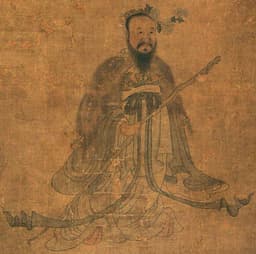
Qu Yuan
Politician · Ancient
61.6Total
Basic Information
Born
-550
-340
Died
-490
-278
Era
Ancient
Ancient
Nationality
Achaemenid Empire
China
Occupation
Politician
Politician
Civilization
Middle Eastern
Eastern
Score Comparison
Military (10%)
50.0
42.1
Political (20%)
29.3
26.4
Influence (20%)
48.6
75.0
Legacy (20%)
39.2
90.0
Leadership (15%)
51.9
41.5
Strategy (15%)
43.0
60.0
TOTAL
43.4
61.6
Otanes — Complete Timeline
522 BC
Led the conspiracy against the MagiPolitical Action
Otanes was a leading figure in the conspiracy of the Seven Persian nobles who overthrew the Magian usurper Gaumata. He advocated for the assassination of the false king and helped secure the throne for Darius I.
ConspiracyDarius IPersian Empire
Impact: globalconstructive
Proposed a debate on the best form of governmentPolitical Action◆ Major
After the overthrow of the Magi, Otanes proposed a debate among the conspirators on the best form of government for Persia. He argued for democracy, but the group ultimately chose monarchy, with Darius I as king.
DebateGovernmentPersian Empire
Impact: national
521 BC
Retired from politicsPolitical Action
After the debate, Otanes chose to retire from political life rather than serve under a monarch. He was granted special privileges by Darius I, including exemption from certain taxes, as a reward for his role in the conspiracy.
RetirementPrivileges
Impact: national
490 BC
Death and legacyOther
Otanes died around 490 BC. He is remembered for his role in the founding of the Achaemenid dynasty under Darius I and for his advocacy of democratic principles, which was unusual for the time.
DeathLegacy
Qu Yuan — Complete Timeline
299 BC
Exiled from Chu courtPolitical Action◆ Major
Qu Yuan was banished from the Chu court by King Huai of Chu due to slander from rival officials. This exile removed him from political influence and led to his wandering in the southern regions of Chu.
ExileChuPolitical Fall
Impact: nationaltragic
295 BC
Composed the Li SaoCultural◆ Major
During his exile, Qu Yuan wrote the Li Sao, a long autobiographical poem expressing his sorrow and loyalty to Chu. This work became a foundational text of Chinese literature and the Chu Ci anthology.
PoetryChinese LiteratureChu Ci
Impact: globalconstructive
278 BC
Drowned himself in the Miluo RiverOther◆ Major
Upon hearing that the Qin army had captured the Chu capital Ying, Qu Yuan drowned himself in the Miluo River. This act of protest against political corruption is commemorated annually by the Dragon Boat Festival.
SuicideDragon Boat FestivalProtest
Impact: nationaltragic
Expert Analysis
Origins
Otanes was a Persian noble, born around 520 BC into the influential Achaemenid aristocracy. Little is known of his early life, but he was among the seven leading families of Persia. He was likely educated in courtly and military arts, preparing for a life of politics and warfare.
Qu Yuan was born around 340 BC in the state of Chu during the Warring States period of China. He came from a noble family and received a classical education in literature, history, and statecraft. His early talent for poetry and administration earned him a position at the court of King Huai of Chu.
Rise to Power
Otanes rose to prominence as a central figure in the conspiracy against the Magian usurper Gaumata in 522 BC. Along with Darius and five other nobles, he helped overthrow the false king, an event recorded in Herodotus's Histories. After the coup, he participated in a famous debate on the best form of government, advocating for democracy—a radical idea for the time. However, when the group chose monarchy, Otanes voluntarily stepped back, securing special privileges from Darius I.
Qu Yuan rose through merit, becoming a trusted minister and advisor to King Huai of Chu. He advocated for an alliance with the other states against the rising power of Qin. His political influence peaked in the early 4th century BC, but he faced opposition from corrupt officials who slandered him to the king. Due to their machinations, he was exiled from court around 313 BC.
Leadership & Governance
Otanes demonstrated leadership through decisive action in the conspiracy, but his governance style was marked by a principled stance on democracy. He argued for a government accountable to the people, but his ideas were not implemented. After retiring, he had no direct role in ruling Persia, scoring only 51.9 in leadership. His political score of 29.3 reflects his limited impact on governance.
Qu Yuan, as a minister, focused on strengthening Chu through reforms and alliances. He advocated for a united front against Qin, but his political acumen was undermined by court intrigue. His leadership score of 41.5 reflects his inability to overcome slander and maintain influence. His political score of 26.4 is even lower than Otanes', indicating his failure to effect lasting political change.
Triumph & Tragedy
Otanes' greatest triumph was his role in ending the Magian usurpation and establishing Darius I as king, which led to the expansion of the Achaemenid Empire. He also earned the respect of his peers for his principled advocacy of democracy. His tragedy was that his political ideal was rejected, and he chose retirement over service under a monarch, thus limiting his direct impact.
Qu Yuan's triumph is his literary legacy: the Li Sao and other poems, which became foundational to Chinese literature and culture. His influence score of 75.0 reflects this. His tragedy was his exile and eventual suicide in 278 BC after the fall of Chu's capital, an act of despair that immortalized him as a symbol of loyalty and patriotism. His legacy score of 90.0 is among the highest.
Character & Destiny
Otanes was pragmatic and principled, willing to act decisively but also to step aside when his views did not prevail. His character led him to a quiet retirement, with his influence fading after his death around 490 BC. He scored 43.4 overall, reflecting a modest but notable role in Persian history.
Qu Yuan was idealistic and passionate, unable to compromise in a corrupt court. His character drove him to write his emotions, creating timeless poetry, but also to self-destruction. His destiny was to become a cultural icon, with his death commemorated annually in the Dragon Boat Festival. His total score of 61.6 is significantly higher than Otanes'.
Legacy
Otanes is remembered primarily through Herodotus's account of the conspiracy and the debate on government. His advocacy for democracy is a historical curiosity but had no lasting impact on Persian governance. His legacy score of 39.2 reflects his minor role in the grand narrative of the Achaemenid Empire.
Qu Yuan's legacy is immense. His poetry is a cornerstone of Chinese literature, influencing countless writers. The Dragon Boat Festival, held in his honor, is a major cultural event. His suicide is seen as a powerful protest against corruption and tyranny. His legacy score of 90.0 is nearly double Otanes'.
Conclusion
While Otanes played a crucial role in the founding of the Achaemenid dynasty, his impact is limited to a moment in history. Qu Yuan, with a total score of 61.6 compared to Otanes' 43.4, had a far greater and more enduring impact. His cultural and literary legacy continues to shape Chinese identity, making him the more significant figure in terms of influence and legacy. Otanes' political contributions, though notable, cannot match the depth and breadth of Qu Yuan's cultural resonance.
Rankings
🥇
Qu YuanLeader
Mil: 42.1Pol: 26.4Inf: 75.0
61.6
🥈
Otanes
Mil: 50.0Pol: 29.3Inf: 48.6
43.4
+18.2 behind
How This Comparison Works
Algorithm
Each figure is scored on 6 dimensions (0—100 scale) based on structured historical data: Military (10%), Political (20%), Influence (20%), Legacy (20%), Leadership (15%), Strategy (15%). The weighted total produces the final ranking.
Data Sources
Scores are computed from structured sub-indicators in the database. Scale factors adjust for era (Ancient ×0.85, Modern ×1.0) and civilization size (Eastern ×1.05, Other ×0.80) to account for differences in population and military scale.
Maximum 3 Figures
Comparisons are limited to 2—3 figures to ensure readability and statistical meaningfulness.
Error Margins
±5 points per dimension — Sub-scores are derived from historical records with inherent uncertainty. Two figures within 5 points on a dimension should be considered roughly equivalent in that area.
Total Score Accuracy
±3 points overall — The weighted combination of 6 dimensions produces a total score with approximately ±3 points of uncertainty. Differences of less than 3 points are not statistically significant— the figures are effectively tied.
Known Limitations
- Historical records are incomplete and uneven across civilizations
- Figures from oral-tradition societies may be underrepresented
- Occupation labels can misclassify multi-role figures
- Scores measure capability and impact, not moral character
- Quantitative scoring is a comparison tool, not absolute truth
Capability Radar
Military (10%) — Battles & Warfare
Battles
28
40
Win Rate
30
45
Expansion
33
44
Political (20%) — Governance & Reform
Reform
15
15
Diplomacy
30
10
Economy
10
10
Influence (20%) — Cultural & Global Reach
Cultural
10
85
Global
10
75
Legacy (20%) — Historical Impact
Historical
20
80
Longevity
15
90
Leadership (15%) — Power & Stability
Tenure
20
20
Stability
25
10
Strategy (15%) — Tactics & Innovation
Strategy
34
48
Tactics
35
55
Reform
40
57
Similar Comparisons
Comments & Discussion
No comments yet. Be the first to share your thoughts!