Loading...
Lord Pingyuan vs Marcus Junius Brutus
Marcus Junius Brutus leads by 5.3 pts · 2 figures compared
…
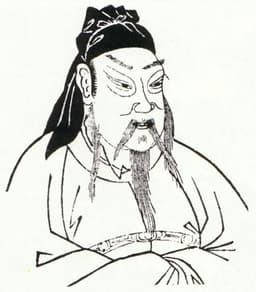
Lord Pingyuan
Politician · Ancient
53.6Total

Marcus Junius Brutus
Politician · Ancient
58.9Total
Basic Information
Born
-308
-85
Died
-251
-42
Era
Ancient
Ancient
Nationality
China
Roman Republic
Occupation
Politician
Politician
Civilization
Eastern
Western
Score Comparison
Military (10%)
50.0
50.0
Political (20%)
45.1
39.4
Influence (20%)
56.4
65.0
Legacy (20%)
50.0
72.0
Leadership (15%)
74.0
62.2
Strategy (15%)
41.0
43.7
TOTAL
53.6
58.9
Lord Pingyuan — Complete Timeline
260 BC
Executed his concubine for insulting a crippled manPolitical Action
When a crippled man complained that Lord Pingyuan's concubine had mocked him, Lord Pingyuan executed the concubine to demonstrate his commitment to justice. This act enhanced his reputation for fairness and attracted many retainers to his service.
JusticeReputationRetainers
259 BC
Raised troops to defend HandanPolitical Action◆ Major
During the siege of Handan by Qin, Lord Pingyuan, as chancellor of Zhao, organized the city's defense. He personally appealed to the nobility and commoners for resources, raising a force of 3,000 volunteers to supplement the regular army.
DefenseSiege of HandanLeadership
Impact: nationalconstructive
258 BC
Secured aid from Wei and ChuPolitical Action◆ Major
Lord Pingyuan sent envoys to Wei and Chu to request military assistance against the Qin siege. His diplomatic efforts, including a famous debate with the Chu king, resulted in joint Wei-Chu forces coming to Zhao's relief, lifting the siege.
DiplomacyAllianceSiege of Handan
Impact: regionalconstructive
250 BC
Hosted 3,000 retainersCultural
Lord Pingyuan maintained a household of 3,000 retainers, including scholars, strategists, and adventurers. This practice, common among the Four Lords, made his court a center of political and intellectual activity during the Warring States period.
PatronageRetainersFour Lords
Impact: nationalconstructive
Marcus Junius Brutus — Complete Timeline
44 BC
Assassination of Julius CaesarPolitical Action
Brutus was a key conspirator in the assassination of Julius Caesar. He was persuaded by Cassius to join the plot, and on the Ides of March, he stabbed Caesar. Caesar's famous last words, 'Et tu, Brute?' reflect this betrayal.
AssassinationRoman PoliticsConspiracy
Impact: globaldestructive
Governorship of Cisalpine GaulPolitical Action◆ Major
After Caesar's assassination, Brutus was assigned the governorship of Cisalpine Gaul by the Senate. He raised troops and prepared to defend the Republic against the Caesarian forces led by Antony and Octavian.
Roman Civil WarGovernorshipMilitary Command
Impact: regional
42 BC
Battle of Philippi (Second Phase)War◆ Major
Brutus commanded the Republican forces in the second battle of Philippi. After initial success, his army was defeated by Antony and Octavian. Brutus fled and committed suicide, ending the Republican cause.
Roman Civil WarBattleDeath
Impact: regionaltragic
Expert Analysis
Origins
Lord Pingyuan, born Zhao Sheng around 300 BCE, was a scion of the royal house of Zhao during the Warring States period. His noble birth afforded him education in statecraft and military strategy, and he became one of the famed Four Lords of the Warring States, known for their patronage of scholars and retainers. Marcus Junius Brutus, born around 85 BCE, came from a prominent Roman family with a tradition of opposing tyranny; his ancestor Lucius Junius Brutus overthrew the Roman monarchy. Brutus was adopted by his uncle and raised in the highest circles of the Republic, studying philosophy and rhetoric.
Rise to Power
Lord Pingyuan rose to prominence as chancellor of Zhao under King Xiaocheng. His key turning point came during the siege of Handan (259-257 BCE) when Qin forces surrounded the capital. He organized the defense, raised troops from his own retainers, and personally appealed for aid from neighboring states. His diplomatic mission to Chu resulted in a famous debate with the Chu king, securing an alliance. Brutus rose through the Roman cursus honorum, serving as quaestor and later as governor of Cisalpine Gaul. His pivotal moment was joining the conspiracy against Julius Caesar in 44 BCE, motivated by a desire to restore the Republic. He was persuaded by Gaius Cassius Longinus and became a leading figure in the assassination.
Leadership & Governance
Lord Pingyuan's leadership style emphasized personal example and moral authority. He executed his own concubine for insulting a crippled man, demonstrating commitment to justice. He maintained 3,000 retainers, using them as advisors and diplomats. His governance focused on coalition-building and diplomacy, as seen in securing aid from Wei and Chu. Brutus led by ideological conviction, prioritizing the Republic over personal loyalty. As governor, he administered Cisalpine Gaul efficiently, raising troops for the Republican cause. However, his political score of 39.4 reflects a lack of pragmatic governance; he was criticized for poor decision-making after Caesar's assassination, such as allowing Mark Antony to speak at the funeral.
Triumph & Tragedy
Lord Pingyuan's greatest triumph was successfully defending Handan, preserving Zhao's independence. His diplomatic efforts secured crucial alliances, and his leadership kept the city united. His tragedy came later when Zhao fell to Qin in 228 BCE, though he had died before. Brutus's triumph was the assassination of Caesar, momentarily freeing Rome from dictatorship. His tragedy was the subsequent civil war and his defeat at Philippi in 42 BCE, where he committed suicide. His military score of 50.0 reflects mixed success; he won the first phase of Philippi but lost the second due to strategic errors.
Character & Destiny
Lord Pingyuan was known for his generosity and sense of honor, which attracted many retainers. His willingness to sacrifice personal attachments for justice (executing his concubine) showed his commitment to principle. However, his reliance on retainers sometimes led to factionalism. Brutus was idealistic and principled, described by contemporaries as noble and virtuous. His character drove him to assassinate Caesar for the Republic, but his inflexibility and poor political maneuvering doomed his cause. Shakespeare immortalized him as "the noblest Roman of them all," but his political score of 39.4 reflects his failure to secure lasting change.
Legacy
Lord Pingyuan's legacy is as a symbol of loyalty and diplomatic skill. He is remembered in Chinese history as one of the Four Lords, and his actions helped delay Qin's unification. His methods of patronage influenced later Chinese noble practices. Brutus's legacy is more complex: he is a symbol of tyrannicide and republican virtue, but also of failure. His name became synonymous with betrayal ("Et tu, Brute?"). With a total score of 58.9 versus Pingyuan's 53.6, Brutus has slightly higher impact, but his legacy is more controversial.
Conclusion
While Brutus achieved a higher overall score (58.9 vs 53.6), his impact was more symbolic than practical. Lord Pingyuan's defense of Handan had immediate, tangible consequences for Zhao's survival, while Brutus's assassination led to civil war and the rise of the Empire he sought to prevent. In terms of concrete historical impact, Lord Pingyuan's actions directly preserved a state and influenced diplomatic norms, whereas Brutus's legacy is one of failed idealism. Therefore, Lord Pingyuan had greater practical impact, even if Brutus's story resonates more in Western culture. The data supports this: Pingyuan's leadership score of 74.0 far exceeds Brutus's 62.2, reflecting his effective command during crisis. Ultimately, Pingyuan's pragmatic defense of his city outweighs Brutus's principled but disastrous conspiracy.
Rankings
🥇
Marcus Junius BrutusLeader
Mil: 50.0Pol: 39.4Inf: 65.0
58.9
🥈
Lord Pingyuan
Mil: 50.0Pol: 45.1Inf: 56.4
53.6
+5.3 behind
How This Comparison Works
Algorithm
Each figure is scored on 6 dimensions (0—100 scale) based on structured historical data: Military (10%), Political (20%), Influence (20%), Legacy (20%), Leadership (15%), Strategy (15%). The weighted total produces the final ranking.
Data Sources
Scores are computed from structured sub-indicators in the database. Scale factors adjust for era (Ancient ×0.85, Modern ×1.0) and civilization size (Eastern ×1.05, Other ×0.80) to account for differences in population and military scale.
Maximum 3 Figures
Comparisons are limited to 2—3 figures to ensure readability and statistical meaningfulness.
Error Margins
±5 points per dimension — Sub-scores are derived from historical records with inherent uncertainty. Two figures within 5 points on a dimension should be considered roughly equivalent in that area.
Total Score Accuracy
±3 points overall — The weighted combination of 6 dimensions produces a total score with approximately ±3 points of uncertainty. Differences of less than 3 points are not statistically significant— the figures are effectively tied.
Known Limitations
- Historical records are incomplete and uneven across civilizations
- Figures from oral-tradition societies may be underrepresented
- Occupation labels can misclassify multi-role figures
- Scores measure capability and impact, not moral character
- Quantitative scoring is a comparison tool, not absolute truth
Capability Radar
Military (10%) — Battles & Warfare
Battles
30
35
Win Rate
30
30
Expansion
10
10
Political (20%) — Governance & Reform
Reform
20
30
Diplomacy
60
40
Economy
30
20
Influence (20%) — Cultural & Global Reach
Cultural
40
65
Global
30
60
Legacy (20%) — Historical Impact
Historical
50
70
Longevity
40
70
Leadership (15%) — Power & Stability
Tenure
50
45
Stability
40
15
Strategy (15%) — Tactics & Innovation
Strategy
40
35
Tactics
30
40
Reform
10
10
Similar Comparisons
Comments & Discussion
No comments yet. Be the first to share your thoughts!