Loading...
Lord Pingyuan vs Otanes
Lord Pingyuan leads by 10.2 pts · 2 figures compared
…
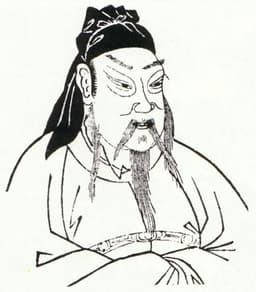
Lord Pingyuan
Politician · Ancient
53.6Total

Otanes
Politician · Ancient
43.4Total
Basic Information
Born
-308
-550
Died
-251
-490
Era
Ancient
Ancient
Nationality
China
Achaemenid Empire
Occupation
Politician
Politician
Civilization
Eastern
Middle Eastern
Score Comparison
Military (10%)
50.0
50.0
Political (20%)
45.1
29.3
Influence (20%)
56.4
48.6
Legacy (20%)
50.0
39.2
Leadership (15%)
74.0
51.9
Strategy (15%)
41.0
43.0
TOTAL
53.6
43.4
Lord Pingyuan — Complete Timeline
260 BC
Executed his concubine for insulting a crippled manPolitical Action
When a crippled man complained that Lord Pingyuan's concubine had mocked him, Lord Pingyuan executed the concubine to demonstrate his commitment to justice. This act enhanced his reputation for fairness and attracted many retainers to his service.
JusticeReputationRetainers
259 BC
Raised troops to defend HandanPolitical Action◆ Major
During the siege of Handan by Qin, Lord Pingyuan, as chancellor of Zhao, organized the city's defense. He personally appealed to the nobility and commoners for resources, raising a force of 3,000 volunteers to supplement the regular army.
DefenseSiege of HandanLeadership
Impact: nationalconstructive
258 BC
Secured aid from Wei and ChuPolitical Action◆ Major
Lord Pingyuan sent envoys to Wei and Chu to request military assistance against the Qin siege. His diplomatic efforts, including a famous debate with the Chu king, resulted in joint Wei-Chu forces coming to Zhao's relief, lifting the siege.
DiplomacyAllianceSiege of Handan
Impact: regionalconstructive
250 BC
Hosted 3,000 retainersCultural
Lord Pingyuan maintained a household of 3,000 retainers, including scholars, strategists, and adventurers. This practice, common among the Four Lords, made his court a center of political and intellectual activity during the Warring States period.
PatronageRetainersFour Lords
Impact: nationalconstructive
Otanes — Complete Timeline
522 BC
Led the conspiracy against the MagiPolitical Action
Otanes was a leading figure in the conspiracy of the Seven Persian nobles who overthrew the Magian usurper Gaumata. He advocated for the assassination of the false king and helped secure the throne for Darius I.
ConspiracyDarius IPersian Empire
Impact: globalconstructive
Proposed a debate on the best form of governmentPolitical Action◆ Major
After the overthrow of the Magi, Otanes proposed a debate among the conspirators on the best form of government for Persia. He argued for democracy, but the group ultimately chose monarchy, with Darius I as king.
DebateGovernmentPersian Empire
Impact: national
521 BC
Retired from politicsPolitical Action
After the debate, Otanes chose to retire from political life rather than serve under a monarch. He was granted special privileges by Darius I, including exemption from certain taxes, as a reward for his role in the conspiracy.
RetirementPrivileges
Impact: national
490 BC
Death and legacyOther
Otanes died around 490 BC. He is remembered for his role in the founding of the Achaemenid dynasty under Darius I and for his advocacy of democratic principles, which was unusual for the time.
DeathLegacy
Expert Analysis
Origins
Lord Pingyuan (Zhao Sheng) was born around 308 BC into the royal family of Zhao, one of the seven major states of the Warring States period in China. As a younger son of King Wuling of Zhao, he was enfeoffed as the Lord of Pingyuan (Plain Mound) and became a prominent nobleman. His early life was marked by the chaotic politics of the late Warring States, where military prowess and diplomatic skill were essential for survival. He was known for his lavish hospitality, maintaining a household of 3,000 retainers, including scholars, strategists, and adventurers, which was a common practice among the Four Lords of the Warring States.
Otanes was a Persian nobleman of the Achaemenid Empire, active in the late 6th century BC. His exact birth date is unknown, but he was part of the elite class under Cambyses II. His background is less documented than Pingyuan's, but he is known as one of the seven conspirators who overthrew the Magian usurper Gaumata. His early life likely involved military service and court intrigue, typical for Persian aristocrats.
Rise to Power
Lord Pingyuan rose to prominence as a leading minister in Zhao. His key turning point came during the siege of Handan (259-257 BC), when Qin forces besieged the Zhao capital. As chancellor, he organized the city's defense, rallying the nobility and commoners. He sent envoys to Wei and Chu to request military aid. His most famous diplomatic achievement was securing help from Wei through the persuasion of his retainer Mao Sui, who famously argued that a wise man must be given a chance to show his talent (the origin of the idiom "Mao Sui recommending himself"). Pingyuan's ability to mobilize resources and negotiate alliances during the crisis solidified his power.
Otanes rose to power as a leading conspirator against the Magi. In 522 BC, after the death of Cambyses, the Magian Gaumata usurped the throne, pretending to be Smerdis, Cambyses' brother. Otanes, suspecting the deception, gathered six other nobles, including Darius, to overthrow the usurper. He led the conspiracy, and they successfully assassinated Gaumata. Otanes then proposed a debate on the best form of government, advocating for democracy, but the majority chose monarchy. His role in this pivotal event made him a key figure in the founding of Darius I's reign.
Leadership & Governance
Lord Pingyuan's leadership style was characterized by personal charisma and a sense of justice. He executed his own concubine for insulting a crippled man, demonstrating his commitment to fairness and gaining loyalty. He relied heavily on his network of retainers, who provided advice and carried out missions. His governance focused on maintaining noble support and military preparedness. However, his political score of 45.1 reflects that his influence was largely tied to his noble status and the crisis of the siege, rather than long-term administrative reforms.
Otanes, with a political score of 29.3, showed less aptitude for sustained governance. After the conspiracy, he proposed a democratic system, but when the majority chose monarchy, he opted to retire rather than serve under Darius. This suggests a principled but impractical stance. He was granted special privileges, such as exemption from certain royal obligations, but his influence waned after his retirement. His leadership was more about a single act of rebellion than ongoing rule.
Triumph & Tragedy
Lord Pingyuan's greatest triumph was successfully defending Handan. By securing aid from Wei and Chu, he broke the Qin siege, saving Zhao from destruction. This victory preserved Zhao's independence for another 30 years. His greatest failure was perhaps his inability to reform Zhao's internal politics, as the state continued to weaken after his death. His reliance on retainers also led to some inefficiencies, but overall, his military score of 50.0 reflects a competent but not exceptional commander.
Otanes' triumph was his role in the conspiracy that ended Gaumata's usurpation, which paved the way for Darius I's reforms and the expansion of the Achaemenid Empire. However, his advocacy for democracy failed, and he chose to retire, leaving him with limited direct impact on governance. His legacy score of 39.2 indicates that he is remembered more as a supporting figure than a primary leader. His failure to persuade the other nobles of democratic ideals can be seen as a personal tragedy.
Character & Destiny
Lord Pingyuan was pragmatic and generous, using his wealth to attract talent. His decision to execute his concubine shows a willingness to sacrifice personal interests for reputation. His character, while noble, was also cautious; he initially doubted Mao Sui's abilities but later embraced him. This flexibility allowed him to succeed in diplomacy. His destiny was tied to the fate of Zhao; he died around 251 BC, before the eventual fall of Zhao to Qin.
Otanes was principled and independent. He risked his life in the conspiracy and then refused to compromise his beliefs by serving a monarch. His character led him to retire, which limited his long-term influence. His destiny was to be a catalyst for change rather than a long-term ruler. He died around 490 BC, leaving a legacy as a defender of liberty.
Legacy
Lord Pingyuan's legacy is as one of the Four Lords of the Warring States, symbolizing the patronage of scholars and the defense of feudal states. His actions during the siege of Handan are celebrated in Chinese history. The idiom "Mao Sui recommending himself" remains in use. His leadership score of 74.0 reflects his ability to inspire loyalty, but his overall influence score of 56.4 is moderate because his impact was limited to Zhao.
Otanes is remembered for his role in the succession of Darius I and his early advocacy for democracy. He is a minor figure in Persian history, but his proposal for democratic governance is noted as one of the earliest recorded discussions of political systems. His influence score of 48.6 is lower than Pingyuan's, as his retirement curtailed his impact. His legacy is more philosophical than practical.
Conclusion
Lord Pingyuan had a greater impact than Otanes, as reflected in his total score of 53.6 compared to Otanes' 43.4. Pingyuan's successful defense of Handan directly preserved a major state during a critical period, while Otanes' conspiracy, though significant, was a precursor to Darius's reign. Pingyuan's political and leadership scores (45.1 and 74.0) far exceed Otanes' (29.3 and 51.9), demonstrating his superior ability to govern and inspire. Otanes' democratic proposal was ahead of its time but failed to materialize, whereas Pingyuan's actions had concrete, lasting effects. Thus, Lord Pingyuan stands as the more consequential figure.
Rankings
🥇
Lord PingyuanLeader
Mil: 50.0Pol: 45.1Inf: 56.4
53.6
🥈
Otanes
Mil: 50.0Pol: 29.3Inf: 48.6
43.4
+10.2 behind
How This Comparison Works
Algorithm
Each figure is scored on 6 dimensions (0—100 scale) based on structured historical data: Military (10%), Political (20%), Influence (20%), Legacy (20%), Leadership (15%), Strategy (15%). The weighted total produces the final ranking.
Data Sources
Scores are computed from structured sub-indicators in the database. Scale factors adjust for era (Ancient ×0.85, Modern ×1.0) and civilization size (Eastern ×1.05, Other ×0.80) to account for differences in population and military scale.
Maximum 3 Figures
Comparisons are limited to 2—3 figures to ensure readability and statistical meaningfulness.
Error Margins
±5 points per dimension — Sub-scores are derived from historical records with inherent uncertainty. Two figures within 5 points on a dimension should be considered roughly equivalent in that area.
Total Score Accuracy
±3 points overall — The weighted combination of 6 dimensions produces a total score with approximately ±3 points of uncertainty. Differences of less than 3 points are not statistically significant— the figures are effectively tied.
Known Limitations
- Historical records are incomplete and uneven across civilizations
- Figures from oral-tradition societies may be underrepresented
- Occupation labels can misclassify multi-role figures
- Scores measure capability and impact, not moral character
- Quantitative scoring is a comparison tool, not absolute truth
Capability Radar
Military (10%) — Battles & Warfare
Battles
30
28
Win Rate
30
30
Expansion
10
33
Political (20%) — Governance & Reform
Reform
20
15
Diplomacy
60
30
Economy
30
10
Influence (20%) — Cultural & Global Reach
Cultural
40
10
Global
30
10
Legacy (20%) — Historical Impact
Historical
50
20
Longevity
40
15
Leadership (15%) — Power & Stability
Tenure
50
20
Stability
40
25
Strategy (15%) — Tactics & Innovation
Strategy
40
34
Tactics
30
35
Reform
10
40
Similar Comparisons
Comments & Discussion
No comments yet. Be the first to share your thoughts!