Loading...
Louis-Alexandre Berthier vs Thomas Fairfax
Thomas Fairfax leads by 2.4 pts · 2 figures compared
…

Louis-Alexandre Berthier
General · Modern
60.6Total
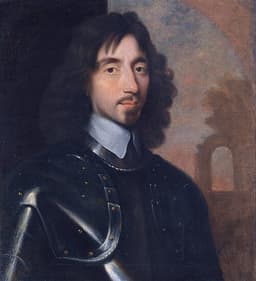
Thomas Fairfax
General · Modern
63.0Total
Basic Information
Born
1753
1612
Died
1815
1671
Era
Modern
Modern
Nationality
France
England
Occupation
General
General
Civilization
Western
Western
Score Comparison
Military (10%)
76.0
61.7
Political (20%)
68.0
68.0
Influence (20%)
55.0
58.3
Legacy (20%)
52.0
55.0
Leadership (15%)
62.0
72.0
Strategy (15%)
68.0
75.0
TOTAL
60.6
63.0
Louis-Alexandre Berthier — Complete Timeline
1796 AD
Appointed Chief of Staff of the Army of ItalyPolitical Action◆ Major
Berthier was appointed chief of staff to General Bonaparte during the Italian campaign. He organized logistics and communications, enabling rapid French advances and victories against Austrian forces.
Italian CampaignStaff WorkNapoleonic Wars
Impact: regional
1799 AD
Minister of WarPolitical Action◆ Major
Berthier served as Minister of War under the Consulate. He reorganized the French army, improved supply systems, and prepared for future campaigns, laying the groundwork for Napoleon's military successes.
MinistryReorganizationNapoleonic Era
Impact: nationalconstructive
1800 AD
Battle of MarengoWar◆ Major
Berthier served as chief of staff at Marengo. He coordinated troop movements that allowed Napoleon to reinforce the battlefield and turn a near-defeat into a decisive victory over Austria.
Napoleonic WarsBattleStaff Work
Impact: regional
1805 AD
Battle of AusterlitzWar◆ Major
Berthier served as chief of staff at Austerlitz. He managed the complex deployment of French corps, enabling Napoleon to execute the decisive flank attack that destroyed the Allied army.
Napoleonic WarsBattleStaff Work
Impact: global
1807 AD
Battle of EylauWar◆ Major
Berthier coordinated French logistics and reinforcements during the brutal winter battle at Eylau. His staff work kept the army operational despite heavy casualties and extreme conditions.
Napoleonic WarsBattleLogistics
Impact: regional
1808 AD
Marriage to Princess Maria Elisabeth of BavariaPolitical Action
Berthier married Princess Maria Elisabeth of Bavaria, a niece of King Maximilian I Joseph. This marriage allied him with the Bavarian royal family and enhanced his social standing.
MarriageAllianceBavaria
1815 AD
Death by DefenestrationOther◆ Major
Berthier died after falling from a window in Bamberg, Bavaria. The circumstances were unclear, possibly suicide or accident, occurring during the Bourbon Restoration as he avoided joining Napoleon's Hundred Days.
DeathBourbon RestorationMystery
Impact: nationaltragic
Thomas Fairfax — Complete Timeline
1645 AD
Battle of NasebyWar
Fairfax led the New Model Army to a decisive victory over King Charles I's forces at Naseby. The battle destroyed the main Royalist army and effectively decided the First English Civil War in favor of Parliament.
English Civil WarBattleDecisive Victory
Impact: national
Appointed Commander-in-Chief of the New Model ArmyPolitical Action◆ Major
Fairfax was appointed commander-in-chief of the New Model Army, a professional army created by Parliament to fight the Royalists. This appointment placed him at the head of the most effective military force in England during the First English Civil War.
English Civil WarMilitary CommandParliament
Impact: national
1646 AD
Siege of OxfordWar◆ Major
Fairfax commanded the siege of Oxford, the Royalist capital. The city surrendered, and King Charles I fled, effectively ending the First English Civil War. Fairfax treated the defeated Royalists with moderation.
English Civil WarSiegeRoyalist Defeat
Impact: national
1647 AD
Refused to Arrest the Five MembersPolitical Action
Fairfax refused orders from the Army Council to arrest five Presbyterian members of Parliament who were critical of the army. This action demonstrated his independence from radical army factions and his commitment to parliamentary authority.
English Civil WarPolitical CrisisArmy-Parliament Relations
Impact: national
1650 AD
Resigned as Commander-in-ChiefPolitical Action◆ Major
Fairfax resigned his commission as commander-in-chief of the New Model Army rather than lead an invasion of Scotland to suppress the Scottish Covenanters who had proclaimed Charles II as king. He cited his conscience and opposition to preemptive war.
English Civil WarResignationConscience
Impact: national
1660 AD
Led the Restoration Delegation to Charles IIPolitical Action◆ Major
Fairfax led a parliamentary delegation to The Hague to invite Charles II to return as king, restoring the monarchy. He played a key role in the peaceful Restoration, helping to avoid further civil war.
RestorationMonarchyPolitical Transition
Impact: nationalconstructive
Expert Analysis
Origins
Louis-Alexandre Berthier was born on November 20, 1753, in Versailles, France, into a military family. His father, Jean-Baptiste Berthier, was a senior officer in the Corps of Topographical Engineers. Berthier received a thorough education in military engineering and cartography, joining the French army as a teenager in 1770. He served in the American Revolutionary War under General Rochambeau, gaining experience in staff work and logistics. By the outbreak of the French Revolution, Berthier had risen to the rank of colonel, but his noble background made him vulnerable; he nonetheless survived the purges by demonstrating technical competence.
Thomas Fairfax was born on January 17, 1612, at Denton Hall in Yorkshire, England, into a wealthy landed family. His father, Ferdinando Fairfax, was a prominent Parliamentarian commander. Fairfax studied at St John's College, Cambridge, and later served as a volunteer in the Dutch army fighting the Spanish, gaining military experience. He returned to England and was knighted by King Charles I in 1640. When the English Civil War began in 1642, Fairfax joined the Parliamentary cause, initially serving as a cavalry officer under his father.
Rise to Power
Berthier's rise accelerated during the French Revolutionary Wars. He served as chief of staff to several generals, including Rochambeau and Kellermann. In 1796, he was appointed chief of staff to Napoleon Bonaparte for the Italian campaign. Berthier's ability to translate Napoleon's strategic concepts into precise orders became crucial. He organized logistics, communications, and troop movements that enabled rapid French advances. During the Egyptian campaign, Berthier served as chief of staff again, though he disliked the assignment. After Napoleon's coup of 18 Brumaire (November 1799), Berthier became Minister of War, a role he held until 1807. He reorganized the French army, improved supply systems, and prepared for future campaigns.
Fairfax rose to prominence during the First English Civil War. In 1644, he was appointed commander of the Parliamentary forces in Yorkshire, achieving victories at Selby and Marston Moor. However, Parliament was dissatisfied with the indecisive war effort and created the New Model Army in 1645, a professional army with centralized command. Fairfax was appointed its commander-in-chief, largely due to his reputation for integrity and military skill. His second-in-command was Oliver Cromwell. At the Battle of Naseby (June 14, 1645), Fairfax led the New Model Army to a decisive victory, personally leading a cavalry charge that broke the Royalist lines. This battle effectively ended the First Civil War.
Leadership & Governance
Berthier's leadership style was that of a meticulous administrator. He excelled at staff work: mapping, logistics, intelligence, and communication. He was known for his tireless work ethic and ability to manage vast amounts of information. As chief of staff, he organized the Grande Armée into corps, each with its own staff, and developed a system of standardized orders and reports. However, Berthier was not a field commander; he lacked the strategic vision of Napoleon and was often criticized for being overly cautious. In governance, Berthier served as Minister of War, where he implemented reforms to recruitment, supply, and training. He also created the depots and training camps that prepared soldiers for campaigns.
Fairfax was a charismatic and principled leader. He led from the front, often fighting in the thick of battle, which earned him the loyalty of his troops. His leadership style was consultative, and he worked closely with his council of officers. However, Fairfax was less skilled in politics. After the Civil War, he opposed the trial and execution of King Charles I, withdrawing from active politics. He resigned as commander-in-chief in 1650 rather than lead an invasion of Scotland to suppress the Covenanters, a decision that reflected his reluctance to engage in wars of conquest. During the Protectorate, Fairfax lived in retirement, though he was briefly involved in the Restoration.
Triumph & Tragedy
Berthier's greatest triumph was his role in the victory at Austerlitz on December 2, 1805. As chief of staff, he managed the complex deployment of French corps, enabling Napoleon to execute the decisive flanking maneuver that crushed the Russian and Austrian armies. He also served as chief of staff at Marengo, where his coordination of troop movements allowed Napoleon to reinforce the battlefield and turn a near-defeat into victory. Berthier's tragedy came in 1814-1815. He abandoned Napoleon after the first abdication and served Louis XVIII, but when Napoleon returned from Elba, Berthier fled to Bamberg, Bavaria. On June 1, 1815, he died after falling from a window, possibly suicide or murder. His death left Napoleon without his chief of staff for Waterloo.
Fairfax's greatest triumph was the Battle of Naseby, where he led the New Model Army to destroy the main Royalist army, capturing Charles I's baggage and papers. This victory led to the rapid collapse of Royalist resistance. He also commanded the Siege of Oxford, forcing the surrender of the Royalist capital. However, Fairfax's tragedy was his loss of political influence. He opposed the execution of Charles I and the subsequent Cromwellian regime, leading to his marginalization. His resignation in 1650 ended his military career, and he spent the rest of the Protectorate in obscurity. When the monarchy was restored in 1660, Fairfax played a role but never regained his former prominence.
Character & Destiny
Berthier was a consummate professional, known for his diligence, precision, and loyalty to Napoleon. He was not a charismatic leader but a reliable executor of orders. His character was that of a brilliant staff officer rather than a commander. This destiny was tied to Napoleon: without Napoleon, Berthier lacked direction. His death in 1815 was a reflection of his inability to navigate the post-Napoleonic world. Historians have assessed Berthier as the model chief of staff, but his limited independent command ability kept his overall score at 60.6.
Fairfax was a man of principle, but his integrity sometimes hindered his ambition. He was brave in battle but hesitant in politics. His destiny was shaped by the English Civil War: he rose to command the army that defeated the king, but he could not accept the radical steps needed to consolidate that victory. His resignation allowed Cromwell to seize power, which Fairfax later regretted. His score of 63.0 reflects his military competence (72.0 leadership) but also his political naivety.
Legacy
Berthier's legacy is as the father of modern staff systems. His organizational methods influenced military staffs across Europe, including the Prussian General Staff. He is remembered as the man who made Napoleon's campaigns possible through his logistical and administrative genius. However, his personal reputation is overshadowed by Napoleon. Berthier's score of 52.0 in legacy reflects his limited independent fame.
Fairfax's legacy is as the commander of the New Model Army, which became the model for professional armies in England and later the British Empire. He is remembered as a skilled general who won the key battle of the Civil War. However, his political legacy is ambiguous; he is often overshadowed by Cromwell. Fairfax's score of 55.0 in legacy is slightly higher than Berthier's, reflecting his role in a transformative historical event.
Conclusion
While both Berthier and Fairfax were highly competent military leaders, Fairfax had a greater overall impact. His score of 63.0 compared to Berthier's 60.6 reflects his higher leadership (72.0 vs 62.0) and strategy (75.0 vs 68.0). Fairfax's victory at Naseby was a turning point in English history, leading to the temporary overthrow of the monarchy. Berthier, though indispensable, was a supporting actor in Napoleon's drama. His death before Waterloo meant his absence was felt, but Napoleon's defeat was due to many factors. Fairfax, by contrast, was the lead commander in a war that changed England's political structure. Therefore, Thomas Fairfax had a greater impact on history than Louis-Alexandre Berthier.
Rankings
🥇
Thomas FairfaxLeader
Mil: 61.7Pol: 68.0Inf: 58.3
63.0
🥈
Louis-Alexandre Berthier
Mil: 76.0Pol: 68.0Inf: 55.0
60.6
+2.4 behind
How This Comparison Works
Algorithm
Each figure is scored on 6 dimensions (0—100 scale) based on structured historical data: Military (10%), Political (20%), Influence (20%), Legacy (20%), Leadership (15%), Strategy (15%). The weighted total produces the final ranking.
Data Sources
Scores are computed from structured sub-indicators in the database. Scale factors adjust for era (Ancient ×0.85, Modern ×1.0) and civilization size (Eastern ×1.05, Other ×0.80) to account for differences in population and military scale.
Maximum 3 Figures
Comparisons are limited to 2—3 figures to ensure readability and statistical meaningfulness.
Error Margins
±5 points per dimension — Sub-scores are derived from historical records with inherent uncertainty. Two figures within 5 points on a dimension should be considered roughly equivalent in that area.
Total Score Accuracy
±3 points overall — The weighted combination of 6 dimensions produces a total score with approximately ±3 points of uncertainty. Differences of less than 3 points are not statistically significant— the figures are effectively tied.
Known Limitations
- Historical records are incomplete and uneven across civilizations
- Figures from oral-tradition societies may be underrepresented
- Occupation labels can misclassify multi-role figures
- Scores measure capability and impact, not moral character
- Quantitative scoring is a comparison tool, not absolute truth
Capability Radar
Military (10%) — Battles & Warfare
Battles
75
75
Win Rate
70
80
Expansion
85
40
Political (20%) — Governance & Reform
Reform
40
60
Diplomacy
55
50
Economy
30
30
Influence (20%) — Cultural & Global Reach
Cultural
55
55
Global
65
55
Legacy (20%) — Historical Impact
Historical
70
70
Longevity
60
60
Leadership (15%) — Power & Stability
Tenure
60
55
Stability
50
45
Strategy (15%) — Tactics & Innovation
Strategy
80
82
Tactics
65
78
Reform
95
85
Similar Comparisons
Comments & Discussion
No comments yet. Be the first to share your thoughts!