Loading...
Agustin Pedro Justo vs Thomas Fairfax
Thomas Fairfax leads by 15.5 pts · 2 figures compared
…

Agustin Pedro Justo
General · Modern
47.5Total
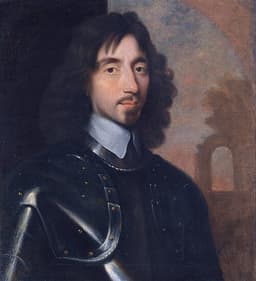
Thomas Fairfax
General · Modern
63.0Total
Basic Information
Born
1876
1612
Died
1943
1671
Era
Modern
Modern
Nationality
Argentina
England
Occupation
General
General
Civilization
Western
Western
Score Comparison
Military (10%)
50.0
61.7
Political (20%)
45.0
68.0
Influence (20%)
51.0
58.3
Legacy (20%)
43.3
55.0
Leadership (15%)
53.2
72.0
Strategy (15%)
41.7
75.0
TOTAL
47.5
63.0
Agustin Pedro Justo — Complete Timeline
1932 AD
Elected President of ArgentinaOther◆ Major
Justo was elected President of Argentina on November 8, 1931, as candidate of the Concordancia coalition, which included conservative and anti-personalist Radicals. The election was marred by fraud and the proscription of the Radical Civic Union (UCR) under Hip
Argentine PresidencyConcordanciaInfamous Decade
Impact: national
Initiated National Road Construction ProgramOther◆ Major
Justo launched a major national road construction program, building over 10,000 kilometers of paved roads during his presidency. The program aimed to integrate Argentina's interior regions, facilitate agricultural exports, and reduce dependence on railways. It was funded by a gasoline tax and foreign loans.
InfrastructureRoad ConstructionEconomic Development
Impact: nationalconstructive
1933 AD
Signed Roca-Runciman Treaty with BritainOther◆ Major
Justo signed the Roca-Runciman Treaty with the United Kingdom on May 1, 1933, to protect Argentine beef exports to Britain. The treaty guaranteed Argentina a quota of chilled beef but required preferential treatment for British goods and investments. Critics argued it compromised Argentine economic sovereignty.
Roca-Runciman TreatyTradeAnglo-Argentine Relations
Impact: nationaldestructive
Suppressed Radical Civic Union UprisingOther◆ Major
Justo's government violently suppressed an armed uprising by the Radical Civic Union (UCR) in December 1933, led by Colonel Roberto Bosch. The revolt was crushed, and many Radical leaders, including future president Arturo Frondizi, were arrested and imprisoned. The repression solidified the Concordancia's hold on power.
Political RepressionRadical Civic UnionUprising
Impact: nationaldestructive
1935 AD
Established Central Bank of ArgentinaOther◆ Major
Justo oversaw the creation of the Central Bank of Argentina (Banco Central de la Rep
Central BankMonetary PolicyEconomic Institution
Impact: nationalconstructive
Thomas Fairfax — Complete Timeline
1645 AD
Battle of NasebyWar
Fairfax led the New Model Army to a decisive victory over King Charles I's forces at Naseby. The battle destroyed the main Royalist army and effectively decided the First English Civil War in favor of Parliament.
English Civil WarBattleDecisive Victory
Impact: national
Appointed Commander-in-Chief of the New Model ArmyPolitical Action◆ Major
Fairfax was appointed commander-in-chief of the New Model Army, a professional army created by Parliament to fight the Royalists. This appointment placed him at the head of the most effective military force in England during the First English Civil War.
English Civil WarMilitary CommandParliament
Impact: national
1646 AD
Siege of OxfordWar◆ Major
Fairfax commanded the siege of Oxford, the Royalist capital. The city surrendered, and King Charles I fled, effectively ending the First English Civil War. Fairfax treated the defeated Royalists with moderation.
English Civil WarSiegeRoyalist Defeat
Impact: national
1647 AD
Refused to Arrest the Five MembersPolitical Action
Fairfax refused orders from the Army Council to arrest five Presbyterian members of Parliament who were critical of the army. This action demonstrated his independence from radical army factions and his commitment to parliamentary authority.
English Civil WarPolitical CrisisArmy-Parliament Relations
Impact: national
1650 AD
Resigned as Commander-in-ChiefPolitical Action◆ Major
Fairfax resigned his commission as commander-in-chief of the New Model Army rather than lead an invasion of Scotland to suppress the Scottish Covenanters who had proclaimed Charles II as king. He cited his conscience and opposition to preemptive war.
English Civil WarResignationConscience
Impact: national
1660 AD
Led the Restoration Delegation to Charles IIPolitical Action◆ Major
Fairfax led a parliamentary delegation to The Hague to invite Charles II to return as king, restoring the monarchy. He played a key role in the peaceful Restoration, helping to avoid further civil war.
RestorationMonarchyPolitical Transition
Impact: nationalconstructive
Expert Analysis
Origins
Agustin Pedro Justo was born on February 26, 1876, in Concepción del Uruguay, Argentina, into a politically connected family. His father was a general and former governor. Justo studied at the National Military College, graduating as a military engineer. He later served in various military and political roles, including as Minister of War under President Marcelo Torcuato de Alvear (1922-1928).
Thomas Fairfax was born on January 17, 1612, in Denton, Yorkshire, England, into a prominent gentry family. His father, Ferdinando Fairfax, was a military commander and politician. Fairfax studied at St John's College, Cambridge, but left without a degree to pursue a military career. He gained early experience fighting for the English in the Thirty Years' War in the Netherlands.
Rise to Power
Justo rose to prominence through a combination of military service and political alignment. In 1931, he was elected President of Argentina as the candidate of the Concordancia, a conservative coalition that included the National Democratic Party and the Anti-Personalist Radical Civic Union. The election was marred by fraud and the exclusion of the main Radical Civic Union party. Justo's presidency began on February 20, 1932, during the so-called Infamous Decade of conservative rule.
Fairfax rose to military prominence during the English Civil War. He was appointed commander-in-chief of the New Model Army in 1645, a professional force created by Parliament to defeat King Charles I. His first major test was the Battle of Naseby on June 14, 1645, where he led the New Model Army to a decisive victory, destroying the main Royalist army. This victory effectively ended the First English Civil War and cemented Fairfax's reputation.
Leadership & Governance
Justo's leadership style was authoritarian and pragmatic. He focused on economic stability and infrastructure. He signed the Roca-Runciman Treaty with Britain in 1933, guaranteeing Argentine beef exports but at the cost of British economic influence. He established the Central Bank of Argentina in 1935, with British advisor Otto Niemeyer, to stabilize the currency. His national road construction program built over 10,000 kilometers of paved roads. However, his government suppressed opposition, notably the Radical Civic Union uprising in December 1933, which was violently crushed. His political score of 45.0 reflects his reliance on electoral fraud and repression.
Fairfax's leadership was characterized by military competence and political moderation. As commander of the New Model Army, he maintained discipline and tactical flexibility, leading to victories at Naseby and the Siege of Oxford (1646). Politically, he supported Parliament but was wary of radicalism. He resigned his commission in 1650 rather than lead an invasion of Scotland to suppress the Covenanters, a decision that reflected his constitutionalist views. Later, he led the parliamentary delegation to invite Charles II to return as king in 1660, facilitating the Restoration. His leadership score of 72.0 and political score of 68.0 highlight his effectiveness and integrity.
Triumph & Tragedy
Justo's greatest triumph was modernizing Argentina's infrastructure and financial system. The Central Bank and road network had lasting economic benefits. His tragedy was his role in the Infamous Decade, marked by corruption and repression. The Roca-Runciman Treaty was criticized for selling out Argentine interests. His legacy is tarnished by association with electoral fraud and authoritarianism.
Fairfax's triumph was his decisive military leadership in the Civil War, particularly at Naseby, where he scored 61.7 in military. His tragedy was his marginalization after the war; he opposed the execution of Charles I and the establishment of the Commonwealth, leading to his resignation. He lived in semi-retirement until the Restoration, when he briefly returned to public life. His legacy is overshadowed by figures like Oliver Cromwell, though his role was critical.
Character & Destiny
Justo was a pragmatic conservative, focused on stability and modernization, but willing to use authoritarian means. His character led him to ally with the landed elite and suppress dissent, which ultimately undermined democratic institutions in Argentina. His strategy score of 41.7 reflects a lack of long-term vision beyond economic deals.
Fairfax was a moderate Puritan, committed to constitutional monarchy and parliamentary authority. His character led him to avoid extremism, but also caused him to step aside when he disagreed with army radicals. His destiny was to be a transitional figure, crucial in both winning the war and restoring the monarchy. His strategy score of 75.0 reflects his military acumen.
Legacy
Justo's legacy in Argentina is mixed. The Central Bank and road network are lasting achievements, but his presidency is seen as part of the Infamous Decade of conservative dominance. His total score of 47.5 places him as a minor figure in Argentine history.
Fairfax's legacy is more significant. As commander of the New Model Army, he helped establish parliamentary supremacy and military professionalism. His role in the Restoration ensured a peaceful transition. His total score of 63.0 reflects his influence on English political and military history.
Conclusion
Thomas Fairfax had a greater historical impact than Agustin Pedro Justo. Fairfax's military and political actions shaped the course of English history, from the Civil War to the Restoration. His scores in leadership (72.0 vs 53.2) and strategy (75.0 vs 41.7) clearly outweigh Justo's. While Justo's infrastructure projects had local importance, Fairfax's role in establishing parliamentary authority and professional military standards had enduring global influence. The 15.5-point gap in total scores underscores this conclusion.
Rankings
🥇
Thomas FairfaxLeader
Mil: 61.7Pol: 68.0Inf: 58.3
63.0
🥈
Agustin Pedro Justo
Mil: 50.0Pol: 45.0Inf: 51.0
47.5
+15.5 behind
How This Comparison Works
Algorithm
Each figure is scored on 6 dimensions (0—100 scale) based on structured historical data: Military (10%), Political (20%), Influence (20%), Legacy (20%), Leadership (15%), Strategy (15%). The weighted total produces the final ranking.
Data Sources
Scores are computed from structured sub-indicators in the database. Scale factors adjust for era (Ancient ×0.85, Modern ×1.0) and civilization size (Eastern ×1.05, Other ×0.80) to account for differences in population and military scale.
Maximum 3 Figures
Comparisons are limited to 2—3 figures to ensure readability and statistical meaningfulness.
Error Margins
±5 points per dimension — Sub-scores are derived from historical records with inherent uncertainty. Two figures within 5 points on a dimension should be considered roughly equivalent in that area.
Total Score Accuracy
±3 points overall — The weighted combination of 6 dimensions produces a total score with approximately ±3 points of uncertainty. Differences of less than 3 points are not statistically significant— the figures are effectively tied.
Known Limitations
- Historical records are incomplete and uneven across civilizations
- Figures from oral-tradition societies may be underrepresented
- Occupation labels can misclassify multi-role figures
- Scores measure capability and impact, not moral character
- Quantitative scoring is a comparison tool, not absolute truth
Capability Radar
Military (10%) — Battles & Warfare
Battles
15
75
Win Rate
20
80
Expansion
10
40
Political (20%) — Governance & Reform
Reform
50
60
Diplomacy
60
50
Economy
55
30
Influence (20%) — Cultural & Global Reach
Cultural
20
55
Global
15
55
Legacy (20%) — Historical Impact
Historical
30
70
Longevity
20
60
Leadership (15%) — Power & Stability
Tenure
55
55
Stability
45
45
Strategy (15%) — Tactics & Innovation
Strategy
25
82
Tactics
20
78
Reform
30
85
Similar Comparisons
Comments & Discussion
No comments yet. Be the first to share your thoughts!