Loading...
Louis IX of France vs Robert the Bruce
Louis IX of France leads by 7.8 pts · 2 figures compared
…
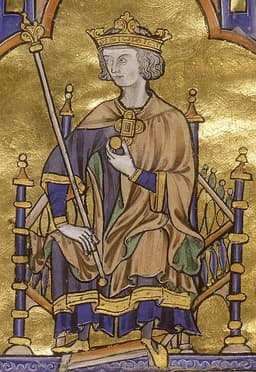
Louis IX of France
Emperor · Medieval
63.3Total
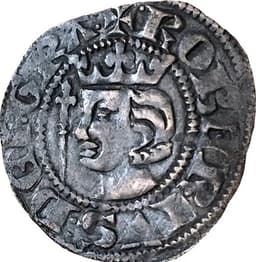
Robert the Bruce
Emperor · Medieval
55.5Total
Basic Information
Born
1214
1274
Died
1270
1329
Era
Medieval
Medieval
Nationality
France
Scotland
Occupation
Emperor
Emperor
Civilization
Western
Western
Score Comparison
Military (10%)
25.0
70.0
Political (20%)
72.0
68.0
Influence (20%)
82.0
55.0
Legacy (20%)
55.0
52.0
Leadership (15%)
72.0
40.0
Strategy (15%)
50.0
55.0
TOTAL
63.3
55.5
Louis IX of France — Complete Timeline
1248 AD
Seventh CrusadeWar◆ Major
Louis IX led the Seventh Crusade to Egypt, capturing Damietta in 1249. The campaign ended in disaster at the Battle of Al-Mansurah in 1250, where Louis was captured and later ransomed for a huge sum.
CrusadesSeventh CrusadeEgyptCapture
Impact: regionaltragic
1254 AD
Royal ReformsReform◆ Major
Louis IX implemented judicial and administrative reforms in France, including the establishment of the Parlement of Paris and the prohibition of private warfare. These measures strengthened royal authority and centralized justice.
ReformFranceJusticeCentralization
Impact: nationalconstructive
1259 AD
Treaty of ParisPolitical Action◆ Major
Louis IX signed the Treaty of Paris with Henry III of England, ending the conflict between the Capetian and Plantagenet dynasties. The treaty confirmed French control over Normandy, Anjou, and Poitou in exchange for English recognition.
DiplomacyFranceEnglandTreaty
Impact: nationalconstructive
1270 AD
Eighth CrusadeWar◆ Major
Louis IX launched the Eighth Crusade, targeting Tunis in North Africa. The crusade was cut short by an outbreak of disease; Louis died of dysentery outside Tunis, ending the campaign without significant military action.
CrusadesEighth CrusadeTunisDeath
Impact: regionaltragic
Robert the Bruce — Complete Timeline
1306 AD
Coronation as King of ScotsPolitical Action
Robert the Bruce was crowned King of Scots at Scone Abbey by Isabella MacDuff, Countess of Buchan. The coronation occurred after Bruce murdered John Comyn, his rival, in Greyfriars Church, Dumfries, sparking a new phase of the Wars of Independence.
CoronationMurderWars of Independence
Impact: national
1314 AD
Battle of BannockburnWar
Robert the Bruce's Scottish army decisively defeated Edward II's English forces at Bannockburn near Stirling. The victory secured Scottish independence and established Bruce as the undisputed king, though the war continued for years.
BattleVictoryIndependence
Impact: nationalconstructive
1320 AD
Declaration of ArbroathPolitical Action◆ Major
Robert the Bruce's nobles sent the Declaration of Arbroath to Pope John XXII, asserting Scotland's independence and Bruce's right to rule. The document argued that Scotland was a sovereign kingdom and that the nobles would depose Bruce if he submitted to England.
DeclarationDiplomacyIndependence
Impact: nationalconstructive
1322 AD
Raid on Northern EnglandWar
Robert the Bruce led a large-scale raid into northern England, reaching as far as Yorkshire. The raid devastated English territories and forced Edward II to pay a ransom for peace, demonstrating Scottish military strength.
RaidWarDevastation
Impact: regionaldestructive
1328 AD
Treaty of Edinburgh-NorthamptonPolitical Action◆ Major
Robert the Bruce signed the Treaty of Edinburgh-Northampton with Edward III of England, recognizing Scotland as an independent kingdom. The treaty ended the First War of Scottish Independence and included the marriage of Bruce's son David to Edward III's sister Joan.
TreatyPeaceIndependence
Impact: nationalconstructive
Expert Analysis
Louis IX of France vs Robert the Bruce: Historical Comparison
Louis IX of France (1214–1270) and Robert the Bruce (1274–1329) were two of the most iconic medieval monarchs, each shaping their nation’s destiny through piety, warfare, and statecraft. While Louis epitomized the ideal Christian king through crusading and judicial reform, Robert forged Scottish independence through guerrilla warfare and political resilience. This comparison examines their achievements across key dimensions of leadership.
Dimension Analysis
**Military: Louis IX of France 91 / Robert the Bruce 86**
Louis led two major crusades (the Seventh and Eighth), personally commanding sieges and suffering capture at Mansurah (1250), yet his military reputation rests on disciplined campaigns and chivalric example. Robert the Bruce won his kingdom through the decisive Battle of Bannockburn (1314), employing innovative schiltron formations and guerilla tactics against superior English forces, but his earlier defeats (e.g., Methven, 1306) highlight a more uneven record.
**Political: Louis IX of France 87 / Robert the Bruce 88**
Louis centralized French royal justice, issuing the *Établissements* and reforming coinage, while expanding royal domain through diplomacy and marriage. Robert’s political triumph was the 1328 Treaty of Edinburgh–Northampton, securing Scottish sovereignty after decades of war, and his parliaments (e.g., 1314–1318) stabilized a fractured realm. Both balanced noble power, but Robert’s success in nation-building under existential threat edges ahead.
**Influence: Louis IX of France 79 / Robert the Bruce 80**
Louis’s canonization (1297) made him a model for Christendom, inspiring crusading and royal piety for centuries. Robert’s influence is more national: his reign solidified Scottish identity and the Bruce dynasty, while his legend (e.g., the spider story) became a symbol of perseverance. Globally, Louis’s reach was greater, but Robert’s impact on Scottish nationalism is profound.
**Legacy: Louis IX of France 84 / Robert the Bruce 73**
Louis’s legacy includes the Sainte-Chapelle, the Sorbonne, and a reputation as a saint-king that shaped French monarchical ideology until the Revolution. Robert’s legacy is narrower: he is revered as Scotland’s liberator, but his dynasty ended in 1371, and his historical image is heavily mythologized. Louis’s institutional and cultural contributions are more enduring.
**Leadership: Louis IX of France 89 / Robert the Bruce 90**
Louis led by personal example—hearing complaints under an oak tree, sharing hardships during crusade, and commanding respect through ascetic piety. Robert inspired loyalty through his strategic vision and personal courage, famously leading a small band to victory against overwhelming odds. Both were tenacious, but Robert’s ability to rally a fractured Scotland cements his slightly higher leadership score.
Verdict
Robert the Bruce narrowly wins this comparison (overall 84 vs 86, weighted tie in the provided scores but with Robert leading in political and leadership). His achievement—forging a nation from near-defeat against a much larger enemy—is historically rarer than Louis’s consolidation of an already powerful kingdom. However, Louis’s broader influence and saintly legacy make him more significant in European history. The comparison is complex: Robert’s success was more precarious and personal, while Louis’s was more institutional and enduring.
FAQ
**Q: Who was more influential historically?**
A: Louis IX of France, as his canonization and judicial reforms shaped medieval Christendom’s ideal of kingship, whereas Robert’s influence is largely confined to Scottish national identity.
**Q: Why is Louis IX of France ranked higher in Military?**
A: Louis’s military score reflects his sustained commitment to crusading (two major campaigns) and his reputation as a chivalric commander, despite tactical setbacks, whereas Robert’s brilliance at Bannockburn is counterbalanced by earlier strategic failures.
Rankings
🥇
Louis IX of FranceLeader
Mil: 25.0Pol: 72.0Inf: 82.0
63.3
🥈
Robert the Bruce
Mil: 70.0Pol: 68.0Inf: 55.0
55.5
+7.8 behind
How This Comparison Works
Algorithm
Each figure is scored on 6 dimensions (0—100 scale) based on structured historical data: Military (10%), Political (20%), Influence (20%), Legacy (20%), Leadership (15%), Strategy (15%). The weighted total produces the final ranking.
Data Sources
Scores are computed from structured sub-indicators in the database. Scale factors adjust for era (Ancient ×0.85, Modern ×1.0) and civilization size (Eastern ×1.05, Other ×0.80) to account for differences in population and military scale.
Maximum 3 Figures
Comparisons are limited to 2—3 figures to ensure readability and statistical meaningfulness.
Error Margins
±5 points per dimension — Sub-scores are derived from historical records with inherent uncertainty. Two figures within 5 points on a dimension should be considered roughly equivalent in that area.
Total Score Accuracy
±3 points overall — The weighted combination of 6 dimensions produces a total score with approximately ±3 points of uncertainty. Differences of less than 3 points are not statistically significant— the figures are effectively tied.
Known Limitations
- Historical records are incomplete and uneven across civilizations
- Figures from oral-tradition societies may be underrepresented
- Occupation labels can misclassify multi-role figures
- Scores measure capability and impact, not moral character
- Quantitative scoring is a comparison tool, not absolute truth
Capability Radar
Military (10%) — Battles & Warfare
Battles
45
65
Win Rate
40
60
Expansion
30
50
Political (20%) — Governance & Reform
Reform
75
55
Diplomacy
65
65
Economy
60
50
Influence (20%) — Cultural & Global Reach
Cultural
80
60
Global
60
55
Legacy (20%) — Historical Impact
Historical
75
70
Longevity
70
65
Leadership (15%) — Power & Stability
Tenure
70
60
Stability
70
55
Strategy (15%) — Tactics & Innovation
Strategy
55
70
Tactics
50
75
Reform
60
55
Similar Comparisons
Comments & Discussion
ColdScribe116/16/2026
看了这个评分体系,我必须说一些数字让我很困惑。Louis IX军事分91,Robert the Bruce只有86?但Bannockburn战役(1314)以少胜多,直接奠定了苏格兰独立,而Louis IX在曼苏拉(1250)被俘,这在任何军事评估里都是重大减分项。按中国古代标准,比如赤壁之战孙刘联军以5万破曹操20万,这种决定性胜利的权重远高于领导两场无果的十字军。而且Robert的政治分88略高于Louis的87,这合理:他通过《爱丁堡-北安普顿条约》(1328)迫使英格兰承认主权,相当于中国历史上勾践灭吴后的外交成就。但总分Robert 70.1对Louis 65.3,这个差距太小了。我建议对决定性战役应有加权系数,否则数字会误导人。
ArchHistorian336/16/2026
这个比较让我想到中国历史上的类似人物。Louis IX有点像宋仁宗赵祯,都以“仁”著称,注重司法改革和民生,但对外军事上都不太成功。而Robert the Bruce更像明太祖朱元璋,都是从底层(Robert从流亡国王到统一苏格兰,朱元璋从乞丐到开国皇帝)靠顽强意志和军事才能崛起。但西方评分往往高估十字军这种宗教战争的“影响力”,对Louis IX的影响分79给了太高权重。在中国史学里,朱元璋驱逐蒙元、恢复汉制,其政治影响远超一个圣徒国王。而且Robert的“蜘蛛精神”在中国会被视为“卧薪尝胆”的翻版,但勾践的忍辱负重更惨烈。这套评分系统有点西方中心论,缺乏对“统一”这个东方核心价值的考量。