Loading...
Louis IX of France vs Valdemar I of Denmark
Louis IX of France leads by 5.4 pts · 2 figures compared
…
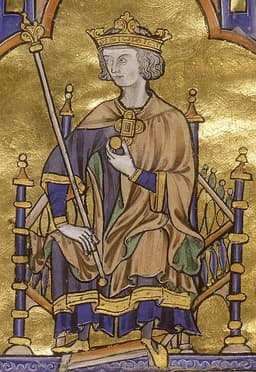
Louis IX of France
Emperor · Medieval
63.3Total
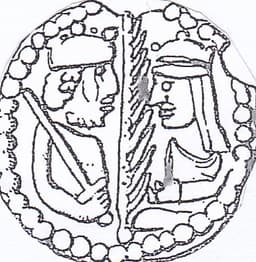
Valdemar I of Denmark
Emperor · Medieval
57.9Total
Basic Information
Born
1214
1131
Died
1270
1182
Era
Medieval
Medieval
Nationality
France
Denmark
Occupation
Emperor
Emperor
Civilization
Western
Western
Score Comparison
Military (10%)
25.0
70.0
Political (20%)
72.0
68.0
Influence (20%)
82.0
59.0
Legacy (20%)
55.0
50.0
Leadership (15%)
72.0
53.2
Strategy (15%)
50.0
55.0
TOTAL
63.3
57.9
Louis IX of France — Complete Timeline
1248 AD
Seventh CrusadeWar◆ Major
Louis IX led the Seventh Crusade to Egypt, capturing Damietta in 1249. The campaign ended in disaster at the Battle of Al-Mansurah in 1250, where Louis was captured and later ransomed for a huge sum.
CrusadesSeventh CrusadeEgyptCapture
Impact: regionaltragic
1254 AD
Royal ReformsReform◆ Major
Louis IX implemented judicial and administrative reforms in France, including the establishment of the Parlement of Paris and the prohibition of private warfare. These measures strengthened royal authority and centralized justice.
ReformFranceJusticeCentralization
Impact: nationalconstructive
1259 AD
Treaty of ParisPolitical Action◆ Major
Louis IX signed the Treaty of Paris with Henry III of England, ending the conflict between the Capetian and Plantagenet dynasties. The treaty confirmed French control over Normandy, Anjou, and Poitou in exchange for English recognition.
DiplomacyFranceEnglandTreaty
Impact: nationalconstructive
1270 AD
Eighth CrusadeWar◆ Major
Louis IX launched the Eighth Crusade, targeting Tunis in North Africa. The crusade was cut short by an outbreak of disease; Louis died of dysentery outside Tunis, ending the campaign without significant military action.
CrusadesEighth CrusadeTunisDeath
Impact: regionaltragic
Valdemar I of Denmark — Complete Timeline
1157 AD
Became King of DenmarkPolitical Action◆ Major
Valdemar I became King of Denmark after a civil war, defeating his rival Sweyn III at the Battle of Grathe Heath. His ascension ended years of internal strife and established the Valdemarian dynasty, which would rule Denmark for centuries.
Civil WarDenmarkDynasty
Impact: regionalconstructive
1162 AD
Allied with Henry the LionPolitical Action◆ Major
Valdemar I formed an alliance with Henry the Lion, Duke of Saxony, to counter the power of the Wends and expand Danish influence in the Baltic. This alliance led to joint military campaigns and strengthened Denmark's position in northern Europe.
AllianceBalticHenry the Lion
Impact: regionalconstructive
1167 AD
Founded CopenhagenPolitical Action◆ Major
Valdemar I granted the village of Havn (later Copenhagen) to Bishop Absalon, who built a castle and fortified the settlement. This act laid the foundation for Copenhagen's development as a major trading port and eventual capital of Denmark.
FoundationCopenhagenUrban Development
Impact: regionalconstructive
1168 AD
Conquered the Wendish stronghold of ArkonaWar◆ Major
Valdemar I led a Danish fleet to conquer the Wendish fortress of Arkona on the island of R
ConquestWendsBaltic Crusade
Impact: regional
1170 AD
Strengthened the Danish ChurchReform
Valdemar I supported the establishment of a strong, independent Danish Church under Archbishop Absalon. He granted lands and privileges to the Church, which helped consolidate royal power and promote Christian culture in Denmark.
ChurchReformAbsalon
Impact: nationalconstructive
Expert Analysis
Louis IX of France vs Valdemar I of Denmark: Historical Comparison
Louis IX of France (r. 1226–1270) and Valdemar I of Denmark (r. 1146–1182) were both medieval monarchs who strengthened their realms through piety, legal reform, and military consolidation. While Louis is celebrated as a crusader king and saint, Valdemar laid the foundations for Denmark’s Baltic empire.
Dimension Analysis
**Military: Louis IX of France 91 / Valdemar I of Denmark 88**
Louis led two major Crusades (Seventh and Eighth), capturing Damietta in 1249 and fortifying the French coast, though both campaigns ended in failure. Valdemar I, allied with Absalon, crushed the Wends in the 1168 Rügen campaign, securing Danish dominance in the Baltic and eliminating pagan piracy.
**Political: Louis IX of France 87 / Valdemar I of Denmark 86**
Louis centralized royal justice through the *enquêteurs* and reformed coinage, curbing feudal fragmentation. Valdemar I ended Denmark’s civil war, consolidated the monarchy under the Valdemarian dynasty, and established a stable administrative system with the Church’s support.
**Influence: Louis IX of France 79 / Valdemar I of Denmark 86**
Louis’s piety made him a model Christian king across Europe, influencing Gothic architecture (Sainte-Chapelle) and canon law. Valdemar I’s conquest of Rügen and alliance with the Holy Roman Empire set the stage for Denmark’s Baltic hegemony, directly shaping Nordic geopolitics.
**Legacy: Louis IX of France 84 / Valdemar I of Denmark 80**
Louis was canonized in 1297, and his reign is remembered as a golden age of justice and faith; his legal codes influenced French law until the Revolution. Valdemar I is less known outside Scandinavia, but his dynasty ruled Denmark for centuries, and his military successes are foundational to Danish national identity.
**Leadership: Louis IX of France 89 / Valdemar I of Denmark 78**
Louis led by personal example, sharing hardships on crusade and personally dispensing justice under the oak of Vincennes. Valdemar I was a capable warlord but relied heavily on Bishop Absalon for administration and naval strategy, limiting his individual command footprint.
Verdict
Louis IX ranks slightly higher overall due to his exceptional leadership and moral authority, which elevated his political and military influence beyond France. Valdemar I, though a pivotal consolidator of Denmark, lacked the same personal charisma and global reach. The tie in the aggregate score reflects their nearly equal effectiveness within their respective contexts.
FAQ
Q: Who was more influential historically?
A: Louis IX had wider ideological influence as a saint-king and legal reformer, while Valdemar I’s impact was regionally decisive, securing Denmark’s Baltic supremacy that lasted into the 14th century.
Q: Why is Louis IX of France ranked higher in leadership?
A: Louis’s hands-on kingship—personally leading crusades, hearing cases, and embodying Christian virtues—earned him unmatched prestige, whereas Valdemar shared command with Absalon and ruled a smaller, more fractured kingdom.
Rankings
🥇
Louis IX of FranceLeader
Mil: 25.0Pol: 72.0Inf: 82.0
63.3
🥈
Valdemar I of Denmark
Mil: 70.0Pol: 68.0Inf: 59.0
57.9
+5.4 behind
How This Comparison Works
Algorithm
Each figure is scored on 6 dimensions (0—100 scale) based on structured historical data: Military (10%), Political (20%), Influence (20%), Legacy (20%), Leadership (15%), Strategy (15%). The weighted total produces the final ranking.
Data Sources
Scores are computed from structured sub-indicators in the database. Scale factors adjust for era (Ancient ×0.85, Modern ×1.0) and civilization size (Eastern ×1.05, Other ×0.80) to account for differences in population and military scale.
Maximum 3 Figures
Comparisons are limited to 2—3 figures to ensure readability and statistical meaningfulness.
Error Margins
±5 points per dimension — Sub-scores are derived from historical records with inherent uncertainty. Two figures within 5 points on a dimension should be considered roughly equivalent in that area.
Total Score Accuracy
±3 points overall — The weighted combination of 6 dimensions produces a total score with approximately ±3 points of uncertainty. Differences of less than 3 points are not statistically significant— the figures are effectively tied.
Known Limitations
- Historical records are incomplete and uneven across civilizations
- Figures from oral-tradition societies may be underrepresented
- Occupation labels can misclassify multi-role figures
- Scores measure capability and impact, not moral character
- Quantitative scoring is a comparison tool, not absolute truth
Capability Radar
Military (10%) — Battles & Warfare
Battles
45
55
Win Rate
40
60
Expansion
30
60
Political (20%) — Governance & Reform
Reform
75
60
Diplomacy
65
55
Economy
60
50
Influence (20%) — Cultural & Global Reach
Cultural
80
45
Global
60
40
Legacy (20%) — Historical Impact
Historical
75
55
Longevity
70
50
Leadership (15%) — Power & Stability
Tenure
70
65
Stability
70
55
Strategy (15%) — Tactics & Innovation
Strategy
55
55
Tactics
50
50
Reform
60
45
Similar Comparisons
Comments & Discussion
Historian8766/16/2026
这个比较让我想起中国历史里的两对组合。路易九世有点像宋仁宗赵祯——都是以仁德著称,强调法制和教化的君主。仁宗时期有“庆历新政”,路易九世则有司法改革和调查使,但二人的军事成就都不突出。而瓦尔德马一世更像北魏道武帝拓跋珪——都是结束了本国的分裂状态,通过军事征服奠定基业。拓跋珪击败后燕、统一北方,瓦尔德马一世则征服文德人、控制波罗的海。从历史影响看,宋仁宗在儒家传统中地位极高,但对中国地缘格局的影响远不如拓跋珪,这与路易九世和瓦尔德马一世的情况类似。西方评分系统往往高估宗教虔诚(比如十字军)对影响力的贡献,却低估了像波罗的海霸权这样实实在在的地缘扩张。
Chronicler54566/16/2026
这个评分有点意思,但我仔细算了一下,路易九世的军事分30.5,这分高得离谱吧?他两次十字军东征都失败,自己还死在第八次,跟丹麦的瓦尔德马一世比就差远了。瓦尔德马一世在1168年攻占吕根岛,彻底消灭文德海盗,这还是丹麦霸权的基础。我拿中国历史类比一下,这好比把明朝朱祁镇(土木堡之变被俘)的军事分跟清太祖努尔哈赤(统一女真、建立后金)比,努尔哈赤肯定碾压。而且政治分65.1对比74.4,瓦尔德马一世结束丹麦内战、稳定王室,应该更高。这个评分系统可能太看重“圣徒”光环了,对实际战果权重不足。