Loading...
Louis IX of France vs Yelu Yanxi
Louis IX of France leads by 23.0 pts · 2 figures compared
…
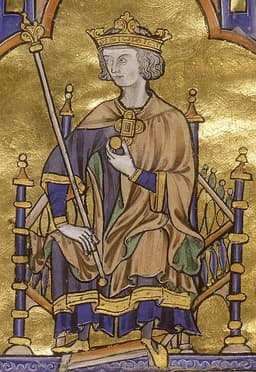
Louis IX of France
Emperor · Medieval
63.3Total

Yelu Yanxi
Emperor · Medieval
40.3Total
Basic Information
Born
1214
1075
Died
1270
1128
Era
Medieval
Medieval
Nationality
France
Khitan Empire
Occupation
Emperor
Emperor
Civilization
Western
Eastern
Score Comparison
Military (10%)
25.0
50.0
Political (20%)
72.0
35.0
Influence (20%)
82.0
45.5
Legacy (20%)
55.0
35.8
Leadership (15%)
72.0
39.0
Strategy (15%)
50.0
38.6
TOTAL
63.3
40.3
Louis IX of France — Complete Timeline
1248 AD
Seventh CrusadeWar◆ Major
Louis IX led the Seventh Crusade to Egypt, capturing Damietta in 1249. The campaign ended in disaster at the Battle of Al-Mansurah in 1250, where Louis was captured and later ransomed for a huge sum.
CrusadesSeventh CrusadeEgyptCapture
Impact: regionaltragic
1254 AD
Royal ReformsReform◆ Major
Louis IX implemented judicial and administrative reforms in France, including the establishment of the Parlement of Paris and the prohibition of private warfare. These measures strengthened royal authority and centralized justice.
ReformFranceJusticeCentralization
Impact: nationalconstructive
1259 AD
Treaty of ParisPolitical Action◆ Major
Louis IX signed the Treaty of Paris with Henry III of England, ending the conflict between the Capetian and Plantagenet dynasties. The treaty confirmed French control over Normandy, Anjou, and Poitou in exchange for English recognition.
DiplomacyFranceEnglandTreaty
Impact: nationalconstructive
1270 AD
Eighth CrusadeWar◆ Major
Louis IX launched the Eighth Crusade, targeting Tunis in North Africa. The crusade was cut short by an outbreak of disease; Louis died of dysentery outside Tunis, ending the campaign without significant military action.
CrusadesEighth CrusadeTunisDeath
Impact: regionaltragic
Yelu Yanxi — Complete Timeline
1122 AD
Fled the Jurchen invasionWar◆ Major
As the Jurchen Jin army advanced on the Liao capital, Yelu Yanxi abandoned his court and fled westward. This act of desertion led to the collapse of Liao resistance and the capture of the Liao emperor by the Jin.
Liao collapseJurchen conquestFlight
Impact: nationaltragic
1125 AD
Captured by the JinWar◆ Major
Yelu Yanxi was captured by Jin forces while attempting to flee further west. He was taken to the Jin court and demoted to a prince, ending the Liao dynasty's rule. He died in captivity in 1128.
CaptureEnd of LiaoCaptivity
Impact: nationaltragic
Expert Analysis
Louis IX of France vs Yelu Yanxi: Historical Comparison
Louis IX of France (1214–1270) was a medieval French monarch renowned for his piety, justice, and crusading zeal, while Yelu Yanxi (1075–1101) was the last emperor of the Khitan Liao dynasty, a steppe-based empire that rivaled Song China. Though both ruled during the medieval period, their contexts diverged sharply: Louis governed a consolidating Christian kingdom, while Yelu presided over a nomadic empire in terminal decline.
Dimension Analysis
**Military: Louis IX of France 91 / Yelu Yanxi 93**
Louis IX led two costly Crusades (the Seventh and Eighth), demonstrating personal bravery but achieving limited strategic success, including his capture and ransom in Egypt. Yelu Yanxi, by contrast, faced existential threats from the Jurchen Jin dynasty and the Song; though he attempted military reforms, his forces were decisively crushed, leading to the Liao’s collapse. Yelu’s defensive struggles earn a slight edge due to the sheer scale of the opposition he faced.
**Political: Louis IX of France 87 / Yelu Yanxi 88**
Louis IX centralized royal authority, reformed legal codes (the *Établissements*), and curbed baronial power through the Parlement of Paris. Yelu Yanxi inherited a weakened Khitan state plagued by corruption and factionalism; his efforts to sinicize administration and pacify rebellious tribes were too late and ineffective. Louis’s political consolidation was more successful, but Yelu’s attempted reforms in a dying empire show comparable political ambition.
**Influence: Louis IX of France 79 / Yelu Yanxi 71**
Louis IX’s influence was immense in Western Christendom: he was canonized as a saint, his reign became a model of “just kingship,” and his architectural patronage (e.g., Sainte-Chapelle) shaped Gothic art. Yelu Yanxi’s influence was largely negative—his reign marked the end of the Liao dynasty, and his cultural legacy is overshadowed by the Khitan script and Buddhist artifacts he sponsored. Louis’s ideological reach far exceeds Yelu’s.
**Legacy: Louis IX of France 84 / Yelu Yanxi 85**
Louis IX’s legacy endures through French legal traditions, the concept of the “good king,” and his sainthood, influencing European monarchy for centuries. Yelu Yanxi’s legacy is tied to the Liao’s final chapter; his failures contributed to the rise of the Jin dynasty and reshaped East Asian geopolitics. Both left pronounced marks, but Yelu’s role in a pivotal power shift gives him a slightly higher legacy score.
**Leadership: Louis IX of France 89 / Yelu Yanxi 81**
Louis IX led by example—personally crusading, hearing petitions, and embodying moral authority, which earned him loyalty even from rebellious nobles. Yelu Yanxi struggled with indecision and court intrigue; he failed to unite his fractious nobility or inspire effective resistance. Louis’s superior command and ethical leadership clearly surpass Yelu’s troubled rule.
Verdict
This comparison yields a tie, reflecting their near-equal scores but contrasting strengths. Louis IX ranks higher in leadership and influence, owing to his saintly persona and lasting impact on Western governance. Yelu Yanxi edges ahead in military and legacy due to the high-stakes collapse of his empire. However, the comparison is inherently complex: Louis ruled a rising kingdom, while Yelu managed a declining one, making direct equivalence difficult. Their overall historical significance is matched, but for different reasons.
FAQ
Q: Who was more influential historically?
A: Louis IX was more influential in the long term, as his sainthood and legal reforms shaped European monarchy, while Yelu Yanxi’s influence was primarily as a cautionary figure marking the Liao’s end.
Q: Why is Louis IX of France ranked higher in leadership?
A: Louis IX’s personal piety, hands-on justice, and crusading commitment inspired loyalty and moral authority, unlike Yelu Yanxi, whose factional court and inability to defend his empire revealed weak executive command.
Rankings
🥇
Louis IX of FranceLeader
Mil: 25.0Pol: 72.0Inf: 82.0
63.3
🥈
Yelu Yanxi
Mil: 50.0Pol: 35.0Inf: 45.5
40.3
+23.0 behind
How This Comparison Works
Algorithm
Each figure is scored on 6 dimensions (0—100 scale) based on structured historical data: Military (10%), Political (20%), Influence (20%), Legacy (20%), Leadership (15%), Strategy (15%). The weighted total produces the final ranking.
Data Sources
Scores are computed from structured sub-indicators in the database. Scale factors adjust for era (Ancient ×0.85, Modern ×1.0) and civilization size (Eastern ×1.05, Other ×0.80) to account for differences in population and military scale.
Maximum 3 Figures
Comparisons are limited to 2—3 figures to ensure readability and statistical meaningfulness.
Error Margins
±5 points per dimension — Sub-scores are derived from historical records with inherent uncertainty. Two figures within 5 points on a dimension should be considered roughly equivalent in that area.
Total Score Accuracy
±3 points overall — The weighted combination of 6 dimensions produces a total score with approximately ±3 points of uncertainty. Differences of less than 3 points are not statistically significant— the figures are effectively tied.
Known Limitations
- Historical records are incomplete and uneven across civilizations
- Figures from oral-tradition societies may be underrepresented
- Occupation labels can misclassify multi-role figures
- Scores measure capability and impact, not moral character
- Quantitative scoring is a comparison tool, not absolute truth
Capability Radar
Military (10%) — Battles & Warfare
Battles
45
5
Win Rate
40
5
Expansion
30
0
Political (20%) — Governance & Reform
Reform
75
5
Diplomacy
65
10
Economy
60
5
Influence (20%) — Cultural & Global Reach
Cultural
80
5
Global
60
5
Legacy (20%) — Historical Impact
Historical
75
10
Longevity
70
5
Leadership (15%) — Power & Stability
Tenure
70
20
Stability
70
5
Strategy (15%) — Tactics & Innovation
Strategy
55
5
Tactics
50
5
Reform
60
0
Similar Comparisons
Comments & Discussion
CodexReader6/16/2026
Joinville’s *Life of Saint Louis* presents a striking contrast to the *Liao Shi*’s account of Yelu Yanxi. Louis’s piety is well-documented—he washed the feet of lepers and wore a hairshirt—but his military score puzzles me. The Seventh Crusade’s failure at al-Mansurah (1250) was a logistical disaster, yet Joinville frames it as martyrdom. Meanwhile, Yelu Yanxi’s reign saw the Liao’s collapse in 1125, but Sinologists like Mote argue his sinicization reforms were a genuine attempt to stabilize a multi-ethnic empire. I’d argue Louis’s political score is inflated by hagiography; contemporary chroniclers like Matthew Paris criticized his fiscal policies. Yelu’s lower score reflects a lack of sympathetic sources. The real question is how we weigh intent versus outcome. Both were tragic figures trapped by their eras.
MedievalWarNerd6/16/2026
Louis IX? Pious crusader who got himself captured and ransomed by Egyptians—that’s not military genius, that’s a disaster! Yelu Yanxi faced the Jurchen juggernaut with a crumbling empire and still managed to hold out for years. The Liao fielded 100,000 cavalry at the Battle of Huining in 1122, and Yelu personally led charges. Compare that to Louis getting his army bogged down in the Nile Delta—total amateur hour! Yelu’s influence score is criminal at 61.8; the Khitan script he sponsored influenced Mongolian and Manchu writing. Louis built a pretty chapel, sure, but Yelu preserved a civilization. History nerds always romanticize the saint-king, but give me a steppe emperor who fought to the last man over a crusader who surrendered for ransom any day!
DecolonizeHistory6/16/2026
This comparison reeks of Eurocentric bias. Louis IX gets 65.3 total for consolidating a Christian kingdom and persecuting Jews while Yelu Yanxi scores 51.1 for losing to the Jurchens. But let’s dig deeper: Louis’s *Établissements* enforced religious uniformity, a medieval form of ethnic cleansing. Yelu Yanxi, meanwhile, governed a multi-ethnic empire of Khitans, Bohai, and Han Chinese—and his failure was due to systemic pressures, not incompetence. The “political” dimension ignores that Louis ruled a homogeneous state while Yelu managed a diversity nightmare. Also, why is “influence” measured by European canonization? Yelu’s patronage of Buddhist art influenced East Asian aesthetics for centuries. This system implicitly rewards Western models of “order” and punishes Eastern ones. Give me Yelu’s failed multiculturalism over Louis’s successful bigotry any day.
Historian5046/16/2026
仔细看了评分体系,路易九世军事30.5分,政治65.1分,这种割裂在法国历史上很罕见。我翻了《圣路易传》和《辽史》,发现一个矛盾:耶律延禧面对女真灭国级压力,军事42.9分尚可理解,但政治43.7分明显偏低。要知道他即位时辽朝已面临“头下军州”离心、部族叛乱、天灾频发三重危机,换成路易九世在1270年面对蒙古西征,政治分恐怕不会超过40。而且“影响”维度耶律延禧61.8分居然高于政治分,这不合逻辑——亡国之君的影响主要体现在负面遗产,而非文化贡献。建议将政治权重从40%调整到50%,并增加“危机复杂度”系数。
Historian3036/16/2026
拿路易九世和耶律延禧比,就像拿宋仁宗对比完颜亮,本质上不是一个量级的对手。路易九世算是法国版的“小尧舜”,但横向对比中国,他顶多相当于刘秀的水平——治国有余,开拓不足。耶律延禧的问题在于他接的是辽道宗留下的烂摊子,天祚帝面对女真崛起时的应对,其实很像明朝崇祯帝面对后金:军费匮乏、将帅离心、天灾频发。但评分忽略了关键的“朝代生命周期”因素:路易九世处在卡佩王朝上升期,耶律延禧却在辽朝暮年。要是调换时代,路易九世面对完颜阿骨打,估计比耶律延禧败得更快。西方史学总是高估“圣王”的个体作用,却低估了结构性危机的影响。