Loading...
Louis IX vs Yelu Dashi
Louis IX leads by 12.9 pts · 2 figures compared
…
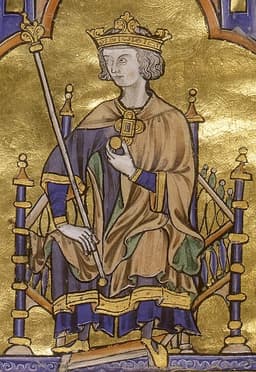
Louis IX
Emperor · Medieval
69.8Total
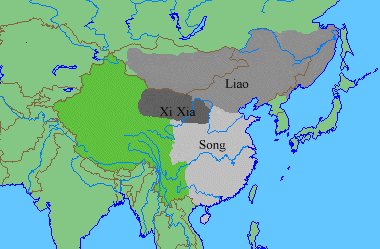
Yelu Dashi
Emperor · Medieval
56.9Total
Basic Information
Born
1214
1087
Died
1270
1143
Era
Medieval
Medieval
Nationality
France
Kara Khitai
Occupation
Emperor
Emperor
Civilization
Western
Eastern
Score Comparison
Military (10%)
46.7
76.0
Political (20%)
72.0
59.2
Influence (20%)
82.0
61.0
Legacy (20%)
68.0
49.2
Leadership (15%)
72.0
40.0
Strategy (15%)
60.0
69.1
TOTAL
69.8
56.9
Louis IX — Complete Timeline
1248 AD
Seventh CrusadeWar◆ Major
Louis IX led the Seventh Crusade to Egypt. He captured Damietta but was later defeated at the Battle of Al Mansurah. Louis was captured and held for ransom. He spent four years in the Holy Land after his release, fortifying crusader positions.
CrusadeEgyptCapture
Impact: globaltragic
1254 AD
Reforms of Royal JusticeReform◆ Major
Louis IX issued a series of ordinances reforming the French royal administration and judicial system. He established the Parlement of Paris as a supreme court, prohibited private warfare, and introduced the presumption of innocence in criminal trials.
Legal ReformJusticeAdministration
Impact: nationalconstructive
1270 AD
Eighth Crusade and DeathWar◆ Major
Louis IX launched the Eighth Crusade, targeting Tunis in North Africa. Shortly after arriving, an epidemic (likely dysentery or plague) swept through the crusader camp. Louis died of the disease. The crusade was abandoned soon after his death.
CrusadeDeathTunis
Impact: globaltragic
Yelu Dashi — Complete Timeline
1124 AD
Founded the Western Liao dynastyPolitical Action◆ Major
After the fall of the Liao dynasty, Yelu Dashi led a remnant of Khitan nobles and soldiers westward into Central Asia. He established the Western Liao (Kara Khitai) dynasty, claiming continuity of Liao rule.
Dynasty foundingKara KhitaiMigration
Impact: regionalconstructive
1137 AD
Conquered the Eastern Kara-KhanidsWar◆ Major
Yelu Dashi defeated the Eastern Kara-Khanid Khanate, incorporating their territory into the Western Liao. This expansion gave him control over the Tarim Basin and key Silk Road cities like Kashgar.
ConquestKara-KhanidsExpansion
Impact: regional
1141 AD
Battle of QatwanWar
Yelu Dashi's Kara Khitai army defeated a Seljuk coalition led by Sultan Ahmad Sanjar at Qatwan near Samarkand. This victory established Kara Khitai as the dominant power in Central Asia and halted Seljuk expansion eastward.
BattleSeljuk defeatCentral Asia
Impact: regional
Expert Analysis
Origins
Louis IX was born on April 25, 1214, at Poissy, France, to King Louis VIII and Blanche of Castile. His grandfather was Philip II Augustus, who had expanded royal power. Louis received a religious education from his mother, who served as regent after his father's death in 1226. He was deeply influenced by the mendicant orders, particularly the Franciscans and Dominicans.
Yelu Dashi was born in 1087 or 1094 into the imperial clan of the Liao dynasty. His family were Khitan aristocrats who had ruled northern China. After the Jurchen Jin dynasty destroyed the Liao in 1125, Yelu Dashi fled westward with a remnant of Khitan followers. He had served as a general under the last Liao emperor and was familiar with both Chinese and steppe warfare.
Rise to Power
Louis IX assumed personal rule in 1234 after his mother's regency. His early reign focused on consolidating royal authority over rebellious nobles, such as Count Raymond VII of Toulouse. In 1244, Louis fell seriously ill and vowed to go on crusade. This led to the Seventh Crusade (1248-1254), where he led a large army to Egypt. Despite initial success at Damietta, the campaign ended in disaster at Al Mansurah (1250), where Louis was captured and ransomed for 400,000 livres.
Yelu Dashi's rise began after the Liao collapse. He gathered Khitan and other tribes, establishing a base at Kedun (in modern Mongolia) around 1130. In 1131, he led an expedition westward into Central Asia. He defeated the Eastern Kara-Khanids and captured Balasagun, declaring himself emperor (gurkhan) of the Western Liao in 1132. His crucial victory came at the Battle of Qatwan in 1141, where he crushed a Seljuk coalition led by Sultan Ahmad Sanjar. This made him the dominant power in Central Asia.
Leadership & Governance
Louis IX was a model of medieval Christian kingship. He reformed the French judicial system by establishing the Parlement of Paris as a supreme court and issuing ordinances that limited private warfare and trial by ordeal. He was known for his piety, personally hearing petitions from commoners and distributing alms. His governance was centralized and efficient, but he spent huge sums on crusading, draining the treasury.
Yelu Dashi ruled a multi-ethnic empire that included Khitans, Turkic tribes, and settled populations. He adopted Chinese bureaucratic practices, such as using a civil service examination system, while also maintaining Khitan tribal structures. He promoted religious tolerance, allowing Buddhism, Islam, and Nestorian Christianity to coexist. His empire was a hybrid of steppe and sedentary traditions, but he relied heavily on military conquest to expand.
Triumph & Tragedy
Louis IX's greatest triumph was his reputation as a saintly king. His reforms strengthened the French monarchy and his canonization in 1297 cemented his legacy. However, his crusades were costly failures: the Seventh Crusade ended in capture and the Eighth Crusade (1270) led to his death from disease in Tunis. His religious zeal sometimes led to persecution, such as the burning of the Talmud in 1242.
Yelu Dashi's triumph was the Battle of Qatwan, which made the Western Liao a major power. He conquered the Eastern Kara-Khanids and secured control over the Tarim Basin and Transoxiana. His tragedy was the ephemeral nature of his empire. After his death in 1143, the Western Liao declined under weak successors and was eventually absorbed by the Mongol Empire in 1218. His dynasty lasted only about 80 years.
Character & Destiny
Louis IX was deeply pious, ascetic, and determined. He wore a hair shirt, fasted regularly, and took crusading vows seriously. His character led him to prioritize religious goals over strategic prudence, as seen in his disastrous choice to attack Egypt rather than the Holy Land directly. Historians note he scored 72.0 in political skill and 60.0 in strategy, reflecting his administrative competence but military overreach.
Yelu Dashi was pragmatic, resilient, and adaptable. He survived the Liao collapse by retreating west and built a new empire from scratch. His military score of 76.0 reflects his success at Qatwan and conquests, but his political score of 59.2 indicates challenges in maintaining unity. His leadership score of 40.0 suggests he was a capable commander but less effective as an administrator of a diverse realm.
Legacy
Louis IX's legacy is immense in French history. He became the archetype of the Christian king, and his judicial reforms laid foundations for the French state. The Parlement of Paris and the concept of royal justice endured for centuries. He is remembered as Saint Louis, a symbol of piety and justice, influencing later kings like Louis XIV. His legacy score is 68.0.
Yelu Dashi's legacy is more limited. The Western Liao dynasty was a brief episode in Central Asian history, but it demonstrated the resilience of Khitan culture and influenced later Mongol administrative practices. The name "Khitai" persisted as a term for China in Russian and other languages. However, his empire left few lasting institutions. His legacy score is 49.2.
Conclusion
Louis IX had greater impact than Yelu Dashi. His total score of 69.8 versus 56.9 reflects his deeper influence on governance, religion, and culture. While Yelu Dashi achieved a stunning military victory and founded a dynasty, his empire collapsed quickly and left a faint trace. Louis's reforms shaped France for centuries, and his sainthood gave him enduring moral authority. The 12.9-point gap is justified: Louis's political and institutional contributions outlasted Yelu's conquests. In the long run, building a durable legal system matters more than winning battles.
Rankings
🥇
Louis IXLeader
Mil: 46.7Pol: 72.0Inf: 82.0
69.8
🥈
Yelu Dashi
Mil: 76.0Pol: 59.2Inf: 61.0
56.9
+12.9 behind
How This Comparison Works
Algorithm
Each figure is scored on 6 dimensions (0—100 scale) based on structured historical data: Military (10%), Political (20%), Influence (20%), Legacy (20%), Leadership (15%), Strategy (15%). The weighted total produces the final ranking.
Data Sources
Scores are computed from structured sub-indicators in the database. Scale factors adjust for era (Ancient ×0.85, Modern ×1.0) and civilization size (Eastern ×1.05, Other ×0.80) to account for differences in population and military scale.
Maximum 3 Figures
Comparisons are limited to 2—3 figures to ensure readability and statistical meaningfulness.
Error Margins
±5 points per dimension — Sub-scores are derived from historical records with inherent uncertainty. Two figures within 5 points on a dimension should be considered roughly equivalent in that area.
Total Score Accuracy
±3 points overall — The weighted combination of 6 dimensions produces a total score with approximately ±3 points of uncertainty. Differences of less than 3 points are not statistically significant— the figures are effectively tied.
Known Limitations
- Historical records are incomplete and uneven across civilizations
- Figures from oral-tradition societies may be underrepresented
- Occupation labels can misclassify multi-role figures
- Scores measure capability and impact, not moral character
- Quantitative scoring is a comparison tool, not absolute truth
Capability Radar
Military (10%) — Battles & Warfare
Battles
45
75
Win Rate
30
80
Expansion
20
85
Political (20%) — Governance & Reform
Reform
75
60
Diplomacy
65
72
Economy
60
55
Influence (20%) — Cultural & Global Reach
Cultural
80
45
Global
60
50
Legacy (20%) — Historical Impact
Historical
85
55
Longevity
75
40
Leadership (15%) — Power & Stability
Tenure
70
65
Stability
70
50
Strategy (15%) — Tactics & Innovation
Strategy
35
82
Tactics
40
78
Reform
50
70
Similar Comparisons
Comments & Discussion
No comments yet. Be the first to share your thoughts!