Loading...
Henry II vs Yelu Dashi
Yelu Dashi leads by 2.2 pts · 2 figures compared
…
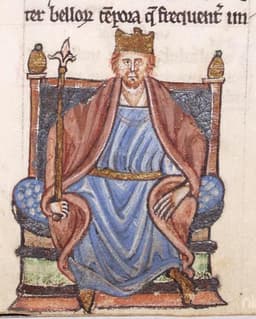
Henry II
Emperor · Medieval
54.7Total
Yelu Dashi
Emperor · Medieval
56.9Total
Basic Information
Born
973
1087
Died
1024
1143
Era
Medieval
Medieval
Nationality
Holy Roman Empire
Kara Khitai
Occupation
Emperor
Emperor
Civilization
Western
Eastern
Score Comparison
Military (10%)
30.0
76.0
Political (20%)
68.0
59.2
Influence (20%)
60.0
61.0
Legacy (20%)
50.0
49.2
Leadership (15%)
53.2
40.0
Strategy (15%)
60.0
69.1
TOTAL
54.7
56.9
Henry II — Complete Timeline
1002 AD
Election as King of GermanyPolitical Action◆ Major
Following the death of Otto III, Henry II was elected King of Germany in 1002 after a contested succession. He secured the throne against rival claimants, including Ekkehard of Meissen, consolidating Ottonian rule.
SuccessionOttonian Dynasty
Impact: regional
1007 AD
Foundation of the Diocese of BambergCultural◆ Major
Henry II founded the Diocese of Bamberg in 1007, establishing a new bishopric in Franconia. He endowed it with extensive lands and privileges, making it a center of imperial church policy and missionary activity.
Church FoundationImperial Church System
Impact: regionalconstructive
1014 AD
Coronation as Holy Roman EmperorPolitical Action◆ Major
Pope Benedict VIII crowned Henry II Holy Roman Emperor in Rome on February 14, 1014. This coronation reaffirmed the alliance between the Empire and the Papacy and legitimized Henry's imperial authority.
CoronationImperial Authority
Impact: regionalconstructive
1021 AD
Third Italian CampaignWar
Henry II led a military campaign to southern Italy in 1021-1022 to assert imperial authority over the Byzantine catapanate and Lombard principalities. He captured the fortress of Troia but failed to permanently secure Byzantine territories.
Italian CampaignByzantine Conflict
Impact: regional
Yelu Dashi — Complete Timeline
1124 AD
Founded the Western Liao dynastyPolitical Action◆ Major
After the fall of the Liao dynasty, Yelu Dashi led a remnant of Khitan nobles and soldiers westward into Central Asia. He established the Western Liao (Kara Khitai) dynasty, claiming continuity of Liao rule.
Dynasty foundingKara KhitaiMigration
Impact: regionalconstructive
1137 AD
Conquered the Eastern Kara-KhanidsWar◆ Major
Yelu Dashi defeated the Eastern Kara-Khanid Khanate, incorporating their territory into the Western Liao. This expansion gave him control over the Tarim Basin and key Silk Road cities like Kashgar.
ConquestKara-KhanidsExpansion
Impact: regional
1141 AD
Battle of QatwanWar
Yelu Dashi's Kara Khitai army defeated a Seljuk coalition led by Sultan Ahmad Sanjar at Qatwan near Samarkand. This victory established Kara Khitai as the dominant power in Central Asia and halted Seljuk expansion eastward.
BattleSeljuk defeatCentral Asia
Impact: regional
Expert Analysis
Origins
Henry II was born in 973 in Bavaria, the son of Henry II, Duke of Bavaria, and Gisela of Burgundy. He was a member of the Ottonian dynasty, but not the direct heir to the throne. Educated in the Church, he became Duke of Bavaria in 995 after his father's death. His early life was marked by the struggle to assert his claim to the German kingship after the death of his cousin Otto III in 1002.
Yelu Dashi was born in 1087 as a member of the Khitan imperial clan of the Liao dynasty. He studied Chinese and Khitan classics and passed the Khitan imperial examination, becoming a jinshi degree holder. He served as a governor and military commander in the Liao administration before the dynasty's collapse to the Jurchens.
Rise to Power
Henry II's rise was contested. After Otto III's death, he faced rivals including Hermann of Swabia and Ekkehard of Meissen. He secured election as King of Germany in 1002 after securing support from the Church and key nobles. He was crowned Holy Roman Emperor in 1014 by Pope Benedict VIII, solidifying his authority. His reign focused on consolidating power in Germany and Italy.
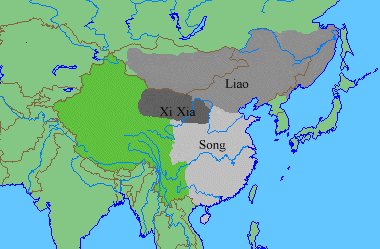
Yelu Dashi rose from a Liao official to founder of a new empire. After the Liao fell to the Jurchen Jin dynasty in 1125, he was captured but escaped. He gathered Khitan remnants and moved westward into Central Asia. In 1132, he proclaimed himself emperor, establishing the Western Liao dynasty (Kara Khitai). He then defeated the Eastern Kara-Khanids and expanded his realm.
Leadership & Governance
Henry II ruled as a medieval emperor deeply intertwined with the Church. He promoted the Cluniac reform, founded the Diocese of Bamberg in 1007, and supported missionary work. His governance was marked by conflicts with secular nobles and reliance on ecclesiastical officials. He scored 53.2 in leadership and 68.0 in political scores, reflecting his ability to navigate feudal politics but limited military success (30.0).
Yelu Dashi adopted a pragmatic rule, blending Khitan traditions with Chinese administration and Islamic local governance. He imposed a system of taxation and religious tolerance, allowing local rulers to remain in power under his suzerainty. His political score of 59.2 shows effectiveness, but his leadership score of 40.0 indicates challenges in maintaining unity among diverse subjects.
Triumph & Tragedy
Henry II's greatest triumph was his canonization in 1146, the only Holy Roman Emperor to become a saint. He also successfully secured the imperial crown and strengthened the Church. However, his military campaigns in Italy (1021-1022) achieved limited results, and his reign saw no major expansion of imperial territory. His score of 30.0 in military reflects this weakness.
Yelu Dashi's triumph was the Battle of Qatwan in 1141, where his army of 20,000 defeated a Seljuk coalition of 100,000 under Sultan Sanjar. This victory made Kara Khitai the dominant power in Central Asia. However, his empire faced internal strife after his death, and he never regained the Liao homeland. His military score of 76.0 and strategy of 69.1 highlight his battlefield prowess.
Character & Destiny
Henry II was devout and pious, earning his canonization. He was also determined and politically astute, but his reliance on Church support limited his secular power. His character shaped a reign focused on religious patronage rather than military conquest.
Yelu Dashi was a strategic thinker and resilient leader, able to rebuild a kingdom from exile. His decision to move west rather than fight the Jurchens proved wise. However, his authoritarian streak caused friction with nobles, contributing to later instability.
Legacy
Henry II's legacy is tied to his sanctity and the Diocese of Bamberg, a cultural center. He is remembered as a saintly emperor who strengthened the Church. His influence scored 60.0, but his limited military and political impact leaves his legacy niche.
Yelu Dashi's legacy is the Western Liao dynasty, which lasted until 1218. He introduced Chinese-style governance to Central Asia and halted Seljuk expansion. His military achievements earned him a score of 76.0, but his overall impact of 49.2 reflects the short-lived nature of his empire.
Conclusion
While Henry II scores 54.7 total and Yelu Dashi scores 56.9, the gap of 2.2 points is narrow. However, Yelu Dashi's greater military and strategic scores (76.0 and 69.1 vs 30.0 and 60.0) demonstrate a more decisive impact on history through the Battle of Qatwan and the establishment of a multi-ethnic empire. Henry II's influence was confined to religious and ecclesiastical spheres, whereas Yelu Dashi altered the political landscape of Central Asia. Therefore, Yelu Dashi had greater impact.
Rankings
🥇
Yelu DashiLeader
Mil: 76.0Pol: 59.2Inf: 61.0
56.9
🥈
Henry II
Mil: 30.0Pol: 68.0Inf: 60.0
54.7
+2.2 behind
How This Comparison Works
Algorithm
Each figure is scored on 6 dimensions (0—100 scale) based on structured historical data: Military (10%), Political (20%), Influence (20%), Legacy (20%), Leadership (15%), Strategy (15%). The weighted total produces the final ranking.
Data Sources
Scores are computed from structured sub-indicators in the database. Scale factors adjust for era (Ancient ×0.85, Modern ×1.0) and civilization size (Eastern ×1.05, Other ×0.80) to account for differences in population and military scale.
Maximum 3 Figures
Comparisons are limited to 2—3 figures to ensure readability and statistical meaningfulness.
Error Margins
±5 points per dimension — Sub-scores are derived from historical records with inherent uncertainty. Two figures within 5 points on a dimension should be considered roughly equivalent in that area.
Total Score Accuracy
±3 points overall — The weighted combination of 6 dimensions produces a total score with approximately ±3 points of uncertainty. Differences of less than 3 points are not statistically significant— the figures are effectively tied.
Known Limitations
- Historical records are incomplete and uneven across civilizations
- Figures from oral-tradition societies may be underrepresented
- Occupation labels can misclassify multi-role figures
- Scores measure capability and impact, not moral character
- Quantitative scoring is a comparison tool, not absolute truth
Capability Radar
Military (10%) — Battles & Warfare
Battles
45
75
Win Rate
50
80
Expansion
35
85
Political (20%) — Governance & Reform
Reform
55
60
Diplomacy
60
72
Economy
50
55
Influence (20%) — Cultural & Global Reach
Cultural
50
45
Global
40
50
Legacy (20%) — Historical Impact
Historical
55
55
Longevity
45
40
Leadership (15%) — Power & Stability
Tenure
65
65
Stability
55
50
Strategy (15%) — Tactics & Innovation
Strategy
45
82
Tactics
40
78
Reform
30
70
Similar Comparisons
Comments & Discussion
No comments yet. Be the first to share your thoughts!