Loading...
Louis the German vs Ulugh Beg
Ulugh Beg leads by 2.1 pts · 2 figures compared
…
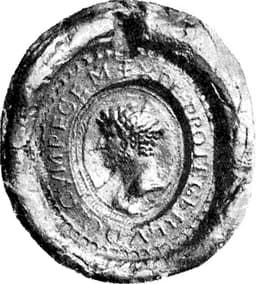
Louis the German
Emperor · Medieval
48.6Total

Ulugh Beg
Emperor · Medieval
50.7Total
Basic Information
Born
806
1394
Died
876
1449
Era
Medieval
Medieval
Nationality
East Francia
Timurid Empire
Occupation
Emperor
Emperor
Civilization
Western
Middle Eastern
Score Comparison
Military (10%)
30.0
50.0
Political (20%)
54.7
37.9
Influence (20%)
54.1
68.0
Legacy (20%)
47.5
55.0
Leadership (15%)
40.0
41.5
Strategy (15%)
60.0
30.3
TOTAL
48.6
50.7
Louis the German — Complete Timeline
841 AD
Battle of Fontenoy (841)War◆ Major
Louis the German allied with Charles the Bald to defeat their brother Lothair I at the Battle of Fontenoy. This battle was a decisive conflict in the Carolingian civil war that followed the death of Louis the Pious. The victory led to the Treaty of Verdun.
Civil WarBattleCarolingian
Impact: regional
842 AD
Oaths of Strasbourg (842)Political Action◆ Major
Louis the German and Charles the Bald swore mutual allegiance against Lothair I at Strasbourg. The oaths were recorded in both Old High German and Old French, providing early evidence of the linguistic divergence between German and French. This alliance solidified their partnership.
AllianceOathLinguistic Record
Impact: regionalconstructive
843 AD
Treaty of Verdun (843)Political Action
Louis the German, along with his brothers Lothair I and Charles the Bald, signed the Treaty of Verdun, dividing the Carolingian Empire into three kingdoms. Louis received East Francia, comprising roughly modern Germany, laying the foundation for a distinct German kingdom.
TreatyDivision of EmpireEast Francia
Impact: global
844 AD
Campaigns against the SlavsWar◆ Major
Louis the German led multiple campaigns against Slavic tribes along his eastern borders, including the Obotrites, Sorbs, and Bohemians. These campaigns expanded East Frankish influence and secured the frontier, but faced mixed success and frequent rebellions.
ExpansionSlavic WarsFrontier
Impact: regional
876 AD
Death of Louis the GermanOther
Louis the German died on August 28, 876, at Frankfurt. His kingdom of East Francia was divided among his three sons: Carloman, Louis the Younger, and Charles the Fat. His death led to further fragmentation of the Carolingian realm.
DeathSuccessionDivision
Impact: regional
Ulugh Beg — Complete Timeline
1420 AD
Patronage of Mathematics and AstronomyCultural
Ulugh Beg gathered scholars like Al-Kashi and Qadi Zada al-Rumi at his court in Samarkand. He funded the study of mathematics, trigonometry, and astronomy, making Samarkand a leading scientific center of the 15th century.
SciencePatronageSamarkand
Impact: regionalconstructive
1424 AD
Construction of the Ulugh Beg ObservatoryInvention◆ Major
Ulugh Beg built a large observatory in Samarkand, equipped with a 40-meter sextant. He used it to compile the Zij-i Sultani, a star catalog of over 1,000 stars, which was the most accurate in the world for 250 years.
AstronomyScienceSamarkand
Impact: globalconstructive
1437 AD
Publication of the Zij-i SultaniCultural◆ Major
Ulugh Beg published the Zij-i Sultani, a star catalog and astronomical tables. It corrected errors in Ptolemy's Almagest and provided accurate positions of stars and planets, influencing later astronomers like Copernicus and Tycho Brahe.
AstronomyScienceStar Catalog
Impact: globalconstructive
1447 AD
Accession as Timurid SultanPolitical Action◆ Major
Upon the death of his father Shah Rukh, Ulugh Beg became the ruler of the Timurid Empire, based in Samarkand. His reign was short and marked by conflict with his nephew Abd al-Latif and other rivals.
SuccessionTimurid EmpireSamarkand
Impact: regional
1449 AD
Defeat and Execution by Abd al-LatifPolitical Action
Ulugh Beg was defeated in battle by his son Abd al-Latif, who had rebelled against him. He was captured and executed on Abd al-Latif's orders, ending his reign. His death marked the decline of the Timurid Empire.
DeathCivil WarTimurid Decline
Impact: regionaltragic
Expert Analysis
Origins
Louis the German (c. 806-876) was the third son of Emperor Louis the Pious and grandson of Charlemagne. Born in the Frankish heartland, he was groomed for rule as part of the Carolingian dynasty. His early life was shaped by the politics of imperial succession, and he was given the sub-kingdom of Bavaria at a young age. In contrast, Ulugh Beg (1394-1449) was born in Sultaniya as the grandson of Timur (Tamerlane). His father, Shah Rukh, ruled the Timurid Empire from Herat. Ulugh Beg grew up in Samarqand, which Timur had made a cultural capital. He was educated in mathematics and astronomy by scholars like Qadi Zada al-Rumi, developing a passion for science that would define his reign.
Rise to Power
Louis the German rose to prominence through the Carolingian civil wars following his father's death. In 841, he allied with his brother Charles the Bald against their eldest brother Lothair I at the Battle of Fontenoy (scoring 30.0 in military). The Oaths of Strasbourg in 842 solidified their alliance, with oaths recorded in Old High German and Old French. The Treaty of Verdun in 843 divided the empire into three kingdoms, with Louis receiving East Francia (roughly modern Germany). Ulugh Beg became ruler of the Timurid Empire upon his father's death in 1447. However, his reign was brief and troubled. He had already served as governor of Samarqand since 1409, where he built his observatory. His political score of 37.9 reflects his inability to maintain control.
Leadership & Governance
Louis the German focused on consolidating his kingdom and defending its borders. He led campaigns against Slavic tribes (Obotrites, Sorbs, Bohemians) and fought off Viking raids. His governance was typical of early medieval kingship: relying on local counts and bishops. He scored 40.0 in leadership. Ulugh Beg, by contrast, was a patron of science rather than a warrior. He built the Samarqand Observatory with a 40-meter sextant and gathered scholars like Al-Kashi. His leadership score of 41.5 reflects his neglect of military and political affairs. He focused on the Zij-i Sultani star catalog, which corrected Ptolemy's Almagest.
Triumph & Tragedy
Louis the German's triumphs included securing East Francia as a distinct kingdom and expanding eastward. His tragedy was the division of his kingdom among his sons after his death, leading to instability. Ulugh Beg's triumph was his astronomical work: the Zij-i Sultani provided accurate positions for over 1,000 stars and was used for centuries. His tragedy was his defeat and execution by his own son Abd al-Latif in 1449, after a brief civil war. Ulugh Beg's military score of 50.0 reflects his inability to defend his throne.
Character & Destiny
Louis the German was pragmatic and focused on territorial integrity. His decision to ally with Charles the Bald showed strategic thinking (score 60.0 in strategy). Ulugh Beg was scholarly and introverted, preferring observatories to battlefields. His character led to his downfall: he was assassinated by his son's orders. Historical assessments note his scientific contributions but political naivety.
Legacy
Louis the German's legacy is the foundation of East Francia, which evolved into the Holy Roman Empire and modern Germany. His influence score of 54.1 reflects this. Ulugh Beg's legacy is his astronomical work. The Zij-i Sultani was used by later astronomers like Copernicus. His observatory was destroyed, but his star catalog endured. His legacy score of 55.0 is slightly higher than Louis's 47.5.
Conclusion
Ulugh Beg had greater impact overall, scoring 50.7 total vs Louis's 48.6. While Louis founded a kingdom, Ulugh Beg advanced human knowledge. His astronomical corrections influenced science globally. Louis's political achievements were significant but limited to one region. Ulugh Beg's legacy transcends borders and centuries. Therefore, Ulugh Beg is the more impactful figure.
Rankings
🥇
Ulugh BegLeader
Mil: 50.0Pol: 37.9Inf: 68.0
50.7
🥈
Louis the German
Mil: 30.0Pol: 54.7Inf: 54.1
48.6
+2.1 behind
How This Comparison Works
Algorithm
Each figure is scored on 6 dimensions (0—100 scale) based on structured historical data: Military (10%), Political (20%), Influence (20%), Legacy (20%), Leadership (15%), Strategy (15%). The weighted total produces the final ranking.
Data Sources
Scores are computed from structured sub-indicators in the database. Scale factors adjust for era (Ancient ×0.85, Modern ×1.0) and civilization size (Eastern ×1.05, Other ×0.80) to account for differences in population and military scale.
Maximum 3 Figures
Comparisons are limited to 2—3 figures to ensure readability and statistical meaningfulness.
Error Margins
±5 points per dimension — Sub-scores are derived from historical records with inherent uncertainty. Two figures within 5 points on a dimension should be considered roughly equivalent in that area.
Total Score Accuracy
±3 points overall — The weighted combination of 6 dimensions produces a total score with approximately ±3 points of uncertainty. Differences of less than 3 points are not statistically significant— the figures are effectively tied.
Known Limitations
- Historical records are incomplete and uneven across civilizations
- Figures from oral-tradition societies may be underrepresented
- Occupation labels can misclassify multi-role figures
- Scores measure capability and impact, not moral character
- Quantitative scoring is a comparison tool, not absolute truth
Capability Radar
Military (10%) — Battles & Warfare
Battles
45
20
Win Rate
50
20
Expansion
35
10
Political (20%) — Governance & Reform
Reform
40
40
Diplomacy
55
25
Economy
45
35
Influence (20%) — Cultural & Global Reach
Cultural
35
70
Global
30
65
Legacy (20%) — Historical Impact
Historical
45
75
Longevity
40
70
Leadership (15%) — Power & Stability
Tenure
65
30
Stability
50
20
Strategy (15%) — Tactics & Innovation
Strategy
45
15
Tactics
40
15
Reform
30
10
Similar Comparisons
Comments & Discussion
No comments yet. Be the first to share your thoughts!