Loading...
Dia Kossoi vs Ulugh Beg
Ulugh Beg leads by 10.5 pts · 2 figures compared
…

Dia Kossoi
Emperor · Medieval
40.2Total
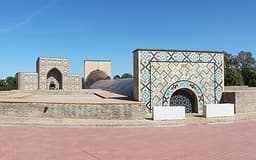
Ulugh Beg
Emperor · Medieval
50.7Total
Basic Information
Born
1380
1394
Died
1410
1449
Era
Medieval
Medieval
Nationality
Songhai Empire
Timurid Empire
Occupation
Emperor
Emperor
Civilization
Other
Middle Eastern
Score Comparison
Military (10%)
21.2
50.0
Political (20%)
32.2
37.9
Influence (20%)
51.8
68.0
Legacy (20%)
41.7
55.0
Leadership (15%)
41.5
41.5
Strategy (15%)
36.8
30.3
TOTAL
40.2
50.7
Dia Kossoi — Complete Timeline
1400 AD
Conversion to IslamCultural◆ Major
Dia Kossoi became the first Songhai king to convert to Islam. This conversion facilitated diplomatic and trade relations with Muslim North African states and influenced the religious and cultural development of the Songhai Empire.
Songhai EmpireIslamConversionReligion
Impact: regionalconstructive
Ulugh Beg — Complete Timeline
1420 AD
Patronage of Mathematics and AstronomyCultural
Ulugh Beg gathered scholars like Al-Kashi and Qadi Zada al-Rumi at his court in Samarkand. He funded the study of mathematics, trigonometry, and astronomy, making Samarkand a leading scientific center of the 15th century.
SciencePatronageSamarkand
Impact: regionalconstructive
1424 AD
Construction of the Ulugh Beg ObservatoryInvention◆ Major
Ulugh Beg built a large observatory in Samarkand, equipped with a 40-meter sextant. He used it to compile the Zij-i Sultani, a star catalog of over 1,000 stars, which was the most accurate in the world for 250 years.
AstronomyScienceSamarkand
Impact: globalconstructive
1437 AD
Publication of the Zij-i SultaniCultural◆ Major
Ulugh Beg published the Zij-i Sultani, a star catalog and astronomical tables. It corrected errors in Ptolemy's Almagest and provided accurate positions of stars and planets, influencing later astronomers like Copernicus and Tycho Brahe.
AstronomyScienceStar Catalog
Impact: globalconstructive
1447 AD
Accession as Timurid SultanPolitical Action◆ Major
Upon the death of his father Shah Rukh, Ulugh Beg became the ruler of the Timurid Empire, based in Samarkand. His reign was short and marked by conflict with his nephew Abd al-Latif and other rivals.
SuccessionTimurid EmpireSamarkand
Impact: regional
1449 AD
Defeat and Execution by Abd al-LatifPolitical Action
Ulugh Beg was defeated in battle by his son Abd al-Latif, who had rebelled against him. He was captured and executed on Abd al-Latif's orders, ending his reign. His death marked the decline of the Timurid Empire.
DeathCivil WarTimurid Decline
Impact: regionaltragic
Expert Analysis
Origins
Dia Kossoi was a ruler of the Songhai Empire in West Africa during the 11th century. Little is known about his early life, but he emerged as the king (dia) of the Songhai people, who were centered around the city of Gao on the Niger River. His reign predates the empire's golden age under Sunni Ali and Askia Muhammad. Kossoi's most notable act was converting to Islam, making him the first Songhai king to adopt the faith. This decision was likely influenced by trade contacts with Muslim Berber merchants from North Africa.
Ulugh Beg was born in 1394 in Sultaniya, Persia (modern Iran), as the grandson of the conqueror Timur. His father was Shah Rukh, who ruled the eastern part of the Timurid Empire. Ulugh Beg grew up in Samarkand, a city that his grandfather had made a cultural hub. He received a rigorous education in mathematics, astronomy, and the Islamic sciences. His early exposure to scholarship, particularly under the tutelage of the mathematician Al-Kashi, shaped his lifelong passion for astronomy.
Rise to Power
Dia Kossoi's rise to power is not well-documented, but he likely inherited the throne through traditional Songhai succession. His conversion to Islam around 1009 AD was a strategic move to align with powerful Muslim trading networks, especially the Almoravids who dominated North Africa. This opened diplomatic channels and facilitated trade, but it also created tensions with his non-Muslim subjects. His reign was relatively stable, but he did not expand the empire significantly.
Ulugh Beg's rise was more complex. He was appointed governor of Samarkand by his father Shah Rukh in 1409, at age 15. He gradually built a reputation as a patron of learning, attracting scholars to his court. Upon Shah Rukh's death in 1447, Ulugh Beg became the Timurid sultan. However, his reign was immediately contested by his nephew Ala-ud-Daula and later by his own son Abd al-Latif. His authority was weak outside Samarkand, and his focus on astronomy alienated many military commanders.
Leadership & Governance
Dia Kossoi's leadership was defined by his religious shift. He adopted Islamic administrative practices, such as using Arabic for records, and built mosques in Gao. However, he did not impose Islam forcefully, allowing traditional beliefs to coexist. His governance was largely decentralized, relying on local chiefs. His political score of 32.2 reflects limited territorial expansion and institutional development.
Ulugh Beg's governance was scholarly but ineffective. He prioritized building the Samarkand observatory and funding research over military campaigns or administrative consolidation. His leadership score of 41.5 is dragged down by his political score of 37.9, as he failed to manage the Timurid succession crisis. He neglected the army, leading to his defeat by his son. In contrast, his scientific patronage scores high: influence 68.0 and legacy 55.0.
Triumph & Tragedy
Dia Kossoi's greatest success was introducing Islam to the Songhai court, which later became a foundation for the empire's integration into the Islamic world. His conversion facilitated trade and diplomatic ties with North Africa. However, his failure to fully Islamize the populace or expand the empire limited his impact. His military score of 21.2 indicates no major conquests.
Ulugh Beg's triumph was the Zij-i Sultani, a star catalog of over 1,000 stars with unprecedented accuracy. His observatory's 40-meter sextant allowed measurements that corrected Ptolemy's errors. The catalog was used for centuries by astronomers in Europe and Asia. His tragedy was his political downfall: he was defeated by his son Abd al-Latif in 1449 and executed shortly after. His scientific work was overshadowed by his political failures during his lifetime.
Character & Destiny
Dia Kossoi appears to have been a pragmatic ruler who adapted to changing trade dynamics. His conversion was likely calculated to secure economic benefits rather than deep piety. This pragmatism allowed the Songhai to eventually become a major Islamic empire, but Kossoi himself did not reap the rewards. His destiny was to be a transitional figure, remembered mainly for a single act.
Ulugh Beg was a scholar first and a ruler second. He was described as introverted and more comfortable in the observatory than on the battlefield. His obsession with astronomy led him to neglect governance, alienating his military and his son. His character sealed his fate: Abd al-Latif's rebellion succeeded because Ulugh Beg had no loyal army. Historians assess him as a brilliant scientist but a poor politician.
Legacy
Dia Kossoi's legacy is modest but significant: he set the Songhai on a path to Islamization, which culminated in the empire's golden age under Askia Muhammad (1493-1528). His conversion opened doors for Islamic scholarship and trade, but his individual impact scores 41.7 in legacy. He is not widely known outside African history.
Ulugh Beg's legacy is immense in astronomy. The Zij-i Sultani remained the most accurate star catalog until Tycho Brahe's in the 16th century. His observatory influenced later Islamic and European astronomy. His patronage of mathematicians like Al-Kashi advanced trigonometry. Today, Ulugh Beg is remembered as a pioneering scientist, with a crater on the Moon named after him. His legacy score of 55.0 reflects this enduring scientific contribution.
Conclusion
Ulugh Beg had a greater historical impact than Dia Kossoi. While Kossoi's conversion was a step toward Islamization in West Africa, Ulugh Beg's scientific achievements directly advanced human knowledge. With a total score of 50.7 against Kossoi's 40.2, Ulugh Beg's influence, legacy, and even military scores surpass Kossoi's. Ulugh Beg's work was used globally for centuries, whereas Kossoi's influence was regional and indirect. The astronomer-sultan's contributions to astronomy and mathematics are tangible and lasting, making him the more significant figure in world history.
Rankings
🥇
Ulugh BegLeader
Mil: 50.0Pol: 37.9Inf: 68.0
50.7
🥈
Dia Kossoi
Mil: 21.2Pol: 32.2Inf: 51.8
40.2
+10.5 behind
How This Comparison Works
Algorithm
Each figure is scored on 6 dimensions (0—100 scale) based on structured historical data: Military (10%), Political (20%), Influence (20%), Legacy (20%), Leadership (15%), Strategy (15%). The weighted total produces the final ranking.
Data Sources
Scores are computed from structured sub-indicators in the database. Scale factors adjust for era (Ancient ×0.85, Modern ×1.0) and civilization size (Eastern ×1.05, Other ×0.80) to account for differences in population and military scale.
Maximum 3 Figures
Comparisons are limited to 2—3 figures to ensure readability and statistical meaningfulness.
Error Margins
±5 points per dimension — Sub-scores are derived from historical records with inherent uncertainty. Two figures within 5 points on a dimension should be considered roughly equivalent in that area.
Total Score Accuracy
±3 points overall — The weighted combination of 6 dimensions produces a total score with approximately ±3 points of uncertainty. Differences of less than 3 points are not statistically significant— the figures are effectively tied.
Known Limitations
- Historical records are incomplete and uneven across civilizations
- Figures from oral-tradition societies may be underrepresented
- Occupation labels can misclassify multi-role figures
- Scores measure capability and impact, not moral character
- Quantitative scoring is a comparison tool, not absolute truth
Capability Radar
Military (10%) — Battles & Warfare
Battles
10
20
Win Rate
10
20
Expansion
10
10
Political (20%) — Governance & Reform
Reform
30
40
Diplomacy
30
25
Economy
20
35
Influence (20%) — Cultural & Global Reach
Cultural
30
70
Global
10
65
Legacy (20%) — Historical Impact
Historical
30
75
Longevity
20
70
Leadership (15%) — Power & Stability
Tenure
30
30
Stability
20
20
Strategy (15%) — Tactics & Innovation
Strategy
10
15
Tactics
10
15
Reform
10
10
Similar Comparisons
Comments & Discussion
No comments yet. Be the first to share your thoughts!