Loading...
Analysis will be generated on first visit.
Scores and timeline are available below. The page will refresh automatically when ready.
Louis XII vs Napoleon Bonaparte
Napoleon Bonaparte leads by 16.1 pts · 2 figures compared
…

Louis XII
Emperor · Medieval
66.3Total
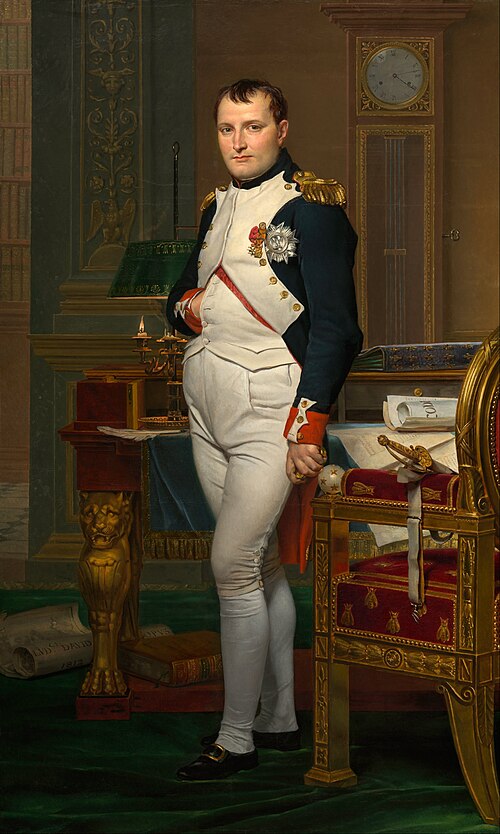
Napoleon Bonaparte
General · Modern
82.4Total
Basic Information
Born
1462
1769
Died
1515
1821
Era
Medieval
Modern
Nationality
France
France
Occupation
Emperor
General
Civilization
Western
Western
Score Comparison
Military (10%)
34.6
94.0
Political (20%)
72.3
75.0
Influence (20%)
74.0
82.0
Legacy (20%)
64.1
78.0
Leadership (15%)
84.4
80.0
Strategy (15%)
53.9
93.0
TOTAL
66.3
82.4
Rankings
🥇
Napoleon BonaparteLeader
Mil: 94.0Pol: 75.0Inf: 82.0
82.4
🥈
Louis XII
Mil: 34.6Pol: 72.3Inf: 74.0
66.3
+16.1 behind
How This Comparison Works
Algorithm
Each figure is scored on 6 dimensions (0—100 scale) based on structured historical data: Military (10%), Political (20%), Influence (20%), Legacy (20%), Leadership (15%), Strategy (15%). The weighted total produces the final ranking.
Data Sources
Scores are computed from structured sub-indicators in the database. Scale factors adjust for era (Ancient ×0.85, Modern ×1.0) and civilization size (Eastern ×1.05, Other ×0.80) to account for differences in population and military scale.
Maximum 3 Figures
Comparisons are limited to 2—3 figures to ensure readability and statistical meaningfulness.
Error Margins
±5 points per dimension — Sub-scores are derived from historical records with inherent uncertainty. Two figures within 5 points on a dimension should be considered roughly equivalent in that area.
Total Score Accuracy
±3 points overall — The weighted combination of 6 dimensions produces a total score with approximately ±3 points of uncertainty. Differences of less than 3 points are not statistically significant— the figures are effectively tied.
Known Limitations
- Historical records are incomplete and uneven across civilizations
- Figures from oral-tradition societies may be underrepresented
- Occupation labels can misclassify multi-role figures
- Scores measure capability and impact, not moral character
- Quantitative scoring is a comparison tool, not absolute truth
Capability Radar
Military (10%) — Battles & Warfare
Battles
45
95
Win Rate
50
90
Expansion
40
95
Political (20%) — Governance & Reform
Reform
70
95
Diplomacy
60
80
Economy
75
85
Influence (20%) — Cultural & Global Reach
Cultural
40
85
Global
30
90
Legacy (20%) — Historical Impact
Historical
45
95
Longevity
35
90
Leadership (15%) — Power & Stability
Tenure
65
85
Stability
65
70
Strategy (15%) — Tactics & Innovation
Strategy
45
95
Tactics
40
98
Reform
30
92
Analysis will be generated on first visit.
Scores and timeline are available below. The page will refresh automatically when ready.
Louis XII — Complete Timeline
1498 AD
Reduced Taxes and Reformed JusticeReform◆ Major
Upon becoming king, Louis XII reduced the taille (land tax) and reformed the judicial system. He established the Grand Conseil to oversee justice and curbed abuses by royal officials. These measures earned him the title 'Father of the People' from the Estates-General.
Tax ReformJustice ReformPopularity
Impact: nationalconstructive
1499 AD
Invasion of Italy and Conquest of MilanWar◆ Major
Louis XII invaded Italy, claiming the Duchy of Milan through his grandmother's lineage. His forces captured Milan without major resistance, and he was proclaimed Duke of Milan. This began the Italian Wars of the early 16th century.
Italian WarsMilanConquest
Impact: regional
Married Anne of BrittanyPolitical Action◆ Major
Louis XII married Anne of Brittany, widow of his predecessor Charles VIII. This marriage ensured the permanent union of Brittany with France, ending Breton autonomy. The marriage was politically motivated and required papal dispensation due to consanguinity.
MarriageBreton UnionDynastic Policy
Impact: nationalconstructive
1508 AD
League of Cambrai against VenicePolitical Action◆ Major
Louis XII joined Pope Julius II, Emperor Maximilian I, and Ferdinand of Aragon in the League of Cambrai, aimed at partitioning Venetian territories. The French victory at Agnadello (1509) initially succeeded, but the alliance later fractured, and France lost its gains.
AllianceItalian WarsVenice
Impact: regionaldestructive
1513 AD
Defeat at the Battle of NovaraWar◆ Major
Louis XII's forces were defeated by the Swiss at Novara, forcing the French to abandon Milan. The defeat ended French control of northern Italy and marked the collapse of Louis's Italian ambitions. The war drained French finances and led to a peace treaty in 1514.
BattleItalian WarsDefeat
Impact: regionaltragic
Similar Comparisons
Comments & Discussion
No comments yet. Be the first to share your thoughts!