Loading...
Ma Ying-jeou vs Quintino Bocaiuva
Ma Ying-jeou leads by 3.9 pts · 2 figures compared
…
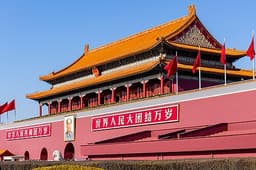
Ma Ying-jeou
Politician · Modern
51.5Total
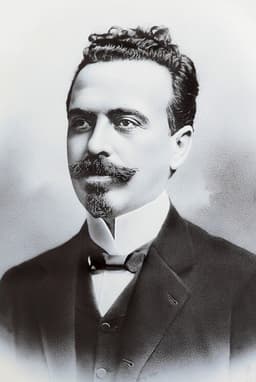
Quintino Bocaiuva
Politician · Modern
47.6Total
Basic Information
Born
1950
1836
Died
—
1912
Era
Modern
Modern
Nationality
China
Brazil
Occupation
Politician
Politician
Civilization
Eastern
Western
Score Comparison
Military (10%)
13.0
49.5
Political (20%)
72.0
53.8
Influence (20%)
58.0
53.3
Legacy (20%)
45.8
44.2
Leadership (15%)
66.0
40.0
Strategy (15%)
36.0
42.5
TOTAL
51.5
47.6
Ma Ying-jeou — Complete Timeline
2008 AD
Elected President of TaiwanPolitical Action◆ Major
Ma Ying-jeou won the presidential election as the Kuomintang candidate, promising to improve relations with China. His victory marked a return to KMT rule after eight years of DPP governance.
ElectionCross-Strait Relations
Impact: nationalconstructive
Direct cross-strait flightsPolitical Action
Ma's administration established direct flights between Taiwan and mainland China, ending a 60-year ban. This facilitated tourism and business exchanges, significantly increasing cross-strait travel.
TransportationCross-Strait Relations
Impact: regionalconstructive
2010 AD
Economic Cooperation Framework AgreementPolitical Action◆ Major
Ma's government signed the ECFA with China, a preferential trade agreement that reduced tariffs and promoted economic integration. The deal was controversial in Taiwan, with critics fearing it increased dependence on China.
Trade AgreementCross-Strait Relations
Impact: regionalconstructive
Quintino Bocaiuva — Complete Timeline
1870 AD
Founded the newspaper 'A República'Cultural◆ Major
Bocaiuva founded the newspaper 'A Rep
PressPropagandaRepublicanism
Impact: nationalconstructive
1873 AD
Participated in the Republican Convention of ItuPolitical Action◆ Major
Bocaiuva participated in the Republican Convention of Itu, which formally organized the Republican Party of S
Political PartyRepublicanismConvention
Impact: nationalconstructive
1889 AD
Appointed Minister of Foreign AffairsPolitical Action◆ Major
Quintino Bocaiuva was appointed Minister of Foreign Affairs in the provisional government of the First Brazilian Republic. He was responsible for securing international recognition of the new regime and establishing its foreign policy.
DiplomacyForeign PolicyRepublic
Impact: nationalconstructive
1890 AD
Signed the Treaty of MontevideoPolitical Action◆ Major
As Foreign Minister, Bocaiuva signed the Treaty of Montevideo with Uruguay, resolving border disputes between the two countries. This treaty helped stabilize relations in the Southern Cone.
TreatyBorder DisputeDiplomacy
Impact: regionalconstructive
Expert Analysis
Origins
Ma Ying-jeou was born on July 13, 1950, in Hong Kong, to a family of Chinese nationalists who fled the mainland after the Communist victory. His father, Ma Hok-son, was a civil servant. Ma studied law at National Taiwan University and later earned a master's from New York University and a doctorate from Harvard Law School. His academic background in international law shaped his pragmatic approach.
Quintino Bocaiuva was born on November 30, 1836, in Rio de Janeiro, Brazil. He began his career as a journalist and typographer. Largely self-taught, he became a fervent republican propagandist. His early life was marked by involvement in the liberal movements of the time, and he used his skills in writing to advance political ideas.
Rise to Power
Ma Ying-jeou rose through the Kuomintang (KMT) ranks, serving in various government positions, including Minister of Justice (1996–1998) and Mayor of Taipei (1998–2006). His reputation as a clean, technocratic politician helped him win the presidency in 2008 with 58.4% of the vote, ending eight years of Democratic Progressive Party (DPP) rule. Key allies included the KMT establishment and business elites seeking closer ties with China.
Quintino Bocaiuva gained prominence through his journalistic work. In 1870, he founded the newspaper 'A República' in Rio de Janeiro, which became the leading voice for the republican movement. He participated in the Republican Convention of Itu in 1873, which formally organized the Republican Party of São Paulo. His advocacy and networking among military officers and intellectuals positioned him as a key figure in the proclamation of the republic in 1889. He was appointed Minister of Foreign Affairs in the provisional government, a role that gave him significant influence.
Leadership & Governance
Ma Ying-jeou's leadership focused on improving cross-strait relations through economic integration and diplomatic pragmatism. He signed the Economic Cooperation Framework Agreement (ECFA) with China in 2010, reducing tariffs and boosting trade. He also established direct flights between Taiwan and mainland China, ending a 60-year ban. His governance style was cautious and legalistic, emphasizing stability over reform. Domestically, he pursued judicial integrity and anti-corruption measures, but faced criticism for slow economic growth and increasing income inequality. His political score of 72.0 reflects his effective management of cross-strait relations but limited domestic achievements.
Quintino Bocaiuva, as Foreign Minister, focused on securing international recognition for the new Brazilian Republic. He signed the Treaty of Montevideo with Uruguay in 1890, resolving border disputes. He also negotiated with other South American nations to establish diplomatic ties. His leadership was characterized by diplomatic skill and a commitment to republican ideals. However, his influence waned after the consolidation of the republic, and he later served as a senator. His political score of 53.8 indicates moderate effectiveness, hampered by factional politics and the transitional nature of his role.
Triumph & Tragedy
Ma Ying-jeou's greatest triumph was the signing of the ECFA, which deepened economic ties with China and brought tangible benefits to Taiwanese businesses and consumers. Cross-strait trade increased by 30% during his tenure. His greatest failure was his inability to manage domestic opposition to closer ties with China, culminating in the 2014 Sunflower Movement student protests against the Cross-Strait Service Trade Agreement. The movement eroded his popularity and weakened his mandate. His overall score of 51.5 reflects a mixed legacy.
Quintino Bocaiuva's triumph was his role in founding the Brazilian Republic and securing its international legitimacy. The Treaty of Montevideo was a significant diplomatic achievement. His tragedy was that his republican ideals were gradually overshadowed by the authoritarian turn of the early republic under President Deodoro da Fonseca. Bocaiuva's influence declined as the military consolidated power, and he died in relative obscurity in 1912. His total score of 47.6 places him slightly below Ma.
Character & Destiny
Ma Ying-jeou was methodical, disciplined, and risk-averse. His legal training made him cautious, but his adherence to rules sometimes paralyzed decision-making. His character shaped his destiny: his pragmatic approach allowed for historic breakthroughs with China, but his aloofness and inability to connect with the public led to declining support. He scored 66.0 in leadership, reflecting competence but not charisma.
Quintino Bocaiuva was passionate, idealistic, and persuasive. His journalistic background made him a skilled propagandist, but he lacked the ruthlessness needed to navigate the turbulent politics of the early republic. His character destined him to be a founder rather than a sustainer; his influence peaked during the transition and faded as more pragmatic leaders took over. He scored 40.0 in leadership, indicating limited executive ability.
Legacy
Ma Ying-jeou's legacy is defined by his successful thawing of cross-strait relations. The ECFA and direct flights remain in place, benefiting millions. However, his legacy is contested in Taiwan, where he is criticized for being too pro-China. He scored 45.8 in legacy, reflecting a mixed but enduring impact.
Quintino Bocaiuva's legacy is as a founding father of the Brazilian Republic. His newspaper 'A República' and his diplomatic work laid the groundwork for the new regime. However, his personal contributions are often overshadowed by more prominent figures like Deodoro da Fonseca and Benjamin Constant. He scored 44.2 in legacy, similar to Ma's but with less contemporary relevance.
Conclusion
Ma Ying-jeou had a greater impact than Quintino Bocaiuva, as evidenced by his higher total score (51.5 vs. 47.6). Ma's policies directly affected the lives of 23 million Taiwanese and reshaped cross-strait dynamics, a matter of global significance. Bocaiuva's contributions, while important for Brazil's history, were more limited in scope and duration. Ma's political score of 72.0 significantly outpaces Bocaiuva's 53.8, reflecting his ability to implement major policies. While both figures faced limitations, Ma's concrete achievements in trade, travel, and diplomacy give him the edge. Bocaiuva's role as a republican propagandist was crucial, but his impact was largely confined to a transitional period. Thus, Ma Ying-jeou emerges as the more consequential historical figure.
Rankings
🥇
Ma Ying-jeouLeader
Mil: 13.0Pol: 72.0Inf: 58.0
51.5
🥈
Quintino Bocaiuva
Mil: 49.5Pol: 53.8Inf: 53.3
47.6
+3.9 behind
How This Comparison Works
Algorithm
Each figure is scored on 6 dimensions (0—100 scale) based on structured historical data: Military (10%), Political (20%), Influence (20%), Legacy (20%), Leadership (15%), Strategy (15%). The weighted total produces the final ranking.
Data Sources
Scores are computed from structured sub-indicators in the database. Scale factors adjust for era (Ancient ×0.85, Modern ×1.0) and civilization size (Eastern ×1.05, Other ×0.80) to account for differences in population and military scale.
Maximum 3 Figures
Comparisons are limited to 2—3 figures to ensure readability and statistical meaningfulness.
Error Margins
±5 points per dimension — Sub-scores are derived from historical records with inherent uncertainty. Two figures within 5 points on a dimension should be considered roughly equivalent in that area.
Total Score Accuracy
±3 points overall — The weighted combination of 6 dimensions produces a total score with approximately ±3 points of uncertainty. Differences of less than 3 points are not statistically significant— the figures are effectively tied.
Known Limitations
- Historical records are incomplete and uneven across civilizations
- Figures from oral-tradition societies may be underrepresented
- Occupation labels can misclassify multi-role figures
- Scores measure capability and impact, not moral character
- Quantitative scoring is a comparison tool, not absolute truth
Capability Radar
Military (10%) — Battles & Warfare
Battles
15
29
Win Rate
16
32
Expansion
21
34
Political (20%) — Governance & Reform
Reform
55
55
Diplomacy
70
60
Economy
60
30
Influence (20%) — Cultural & Global Reach
Cultural
40
30
Global
40
20
Legacy (20%) — Historical Impact
Historical
45
40
Longevity
30
25
Leadership (15%) — Power & Stability
Tenure
60
40
Stability
55
35
Strategy (15%) — Tactics & Innovation
Strategy
23
38
Tactics
26
40
Reform
28
45
Similar Comparisons
Comments & Discussion
No comments yet. Be the first to share your thoughts!