Loading...
This comparison has not been analyzed yet.
One-time AI generation (~1 minute). Scores and timeline are already available below.
Mahendra Chaudhry vs William Laud
William Laud leads by 7.0 pts · 2 figures compared
…

Mahendra Chaudhry
Politician · Modern
45.9Total
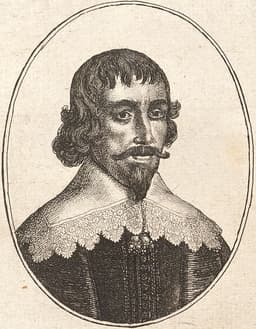
William Laud
Politician · Modern
52.9Total
Basic Information
Born
1942
1573
Died
—
1645
Era
Modern
Modern
Nationality
Fiji
England
Occupation
Politician
Politician
Civilization
Other
Western
Score Comparison
Military (10%)
42.8
50.0
Political (20%)
46.6
43.7
Influence (20%)
52.5
54.9
Legacy (20%)
40.0
46.7
Leadership (15%)
48.4
67.0
Strategy (15%)
42.9
59.0
TOTAL
45.9
52.9
Mahendra Chaudhry — Complete Timeline
1999 AD
Became first Indo-Fijian Prime MinisterPolitical Action
Chaudhry, leader of the Fiji Labour Party, won the 1999 general election and became Fiji's first Prime Minister of Indian descent. His election was a historic milestone for ethnic representation.
ElectionIndo-FijianEthnic Politics
Impact: nationalconstructive
2000 AD
Deposed in the 2000 Fijian coup d'étatPolitical Action◆ Major
Chaudhry and his government were taken hostage by armed gunmen led by George Speight, who sought to overturn the Indo-Fijian-led government. The coup resulted in Chaudhry's removal from office.
CoupHostage CrisisPolitical Instability
Impact: nationaltragic
2006 AD
Returned as Finance MinisterPolitical Action
After the 2006 election, Chaudhry served as Finance Minister in the government of Laisenia Qarase. His tenure was marked by tensions with the military, leading to another coup.
Finance MinisterCoalitionPolitical Tensions
Impact: national
William Laud — Complete Timeline
1633 AD
Appointed Archbishop of CanterburyPolitical Action◆ Major
Laud was appointed Archbishop of Canterbury by Charles I. He enforced uniformity in worship, emphasizing ritual and ceremony, which alienated Puritans and contributed to rising tensions.
Religious Policy
Impact: national
1637 AD
Imposed the Book of Common Prayer on ScotlandPolitical Action◆ Major
Laud attempted to impose a new Prayer Book on the Scottish Church, sparking riots in Edinburgh. This led to the National Covenant and the Bishops' Wars, precursors to the English Civil War.
Religious ConflictCivil War
Impact: regionaldestructive
1641 AD
Imprisoned in the Tower of LondonPolitical Action
Laud was arrested by the Long Parliament and imprisoned in the Tower of London on charges of treason. His policies were blamed for the political and religious crisis.
ImprisonmentPolitical Fall
Impact: national
1645 AD
Executed for TreasonPolitical Action◆ Major
Laud was tried and executed by beheading on Tower Hill after a lengthy imprisonment. His death marked a victory for Parliamentarian forces during the English Civil War.
ExecutionCivil War
Impact: nationaltragic
This comparison has not been analyzed yet.
One-time AI generation (~1 minute). Scores and timeline are already available below.
Rankings
🥇
William LaudLeader
Mil: 50.0Pol: 43.7Inf: 54.9
52.9
🥈
Mahendra Chaudhry
Mil: 42.8Pol: 46.6Inf: 52.5
45.9
+7.0 behind
How This Comparison Works
Algorithm
Each figure is scored on 6 dimensions (0—100 scale) based on structured historical data: Military (10%), Political (20%), Influence (20%), Legacy (20%), Leadership (15%), Strategy (15%). The weighted total produces the final ranking.
Data Sources
Scores are computed from structured sub-indicators in the database. Scale factors adjust for era (Ancient ×0.85, Modern ×1.0) and civilization size (Eastern ×1.05, Other ×0.80) to account for differences in population and military scale.
Maximum 3 Figures
Comparisons are limited to 2—3 figures to ensure readability and statistical meaningfulness.
Error Margins
±5 points per dimension — Sub-scores are derived from historical records with inherent uncertainty. Two figures within 5 points on a dimension should be considered roughly equivalent in that area.
Total Score Accuracy
±3 points overall — The weighted combination of 6 dimensions produces a total score with approximately ±3 points of uncertainty. Differences of less than 3 points are not statistically significant— the figures are effectively tied.
Known Limitations
- Historical records are incomplete and uneven across civilizations
- Figures from oral-tradition societies may be underrepresented
- Occupation labels can misclassify multi-role figures
- Scores measure capability and impact, not moral character
- Quantitative scoring is a comparison tool, not absolute truth
Capability Radar
Military (10%) — Battles & Warfare
Battles
21
30
Win Rate
24
29
Expansion
29
35
Political (20%) — Governance & Reform
Reform
40
55
Diplomacy
35
30
Economy
40
20
Influence (20%) — Cultural & Global Reach
Cultural
30
40
Global
25
20
Legacy (20%) — Historical Impact
Historical
30
50
Longevity
20
30
Leadership (15%) — Power & Stability
Tenure
30
60
Stability
10
10
Strategy (15%) — Tactics & Innovation
Strategy
28
36
Tactics
35
42
Reform
38
47
Similar Comparisons
Comments & Discussion
No comments yet. Be the first to share your thoughts!