Loading...
Mahmoud Abbas vs Washington Luis
Mahmoud Abbas leads by 2.0 pts · 2 figures compared
…

Mahmoud Abbas
Politician · Modern
49.5Total
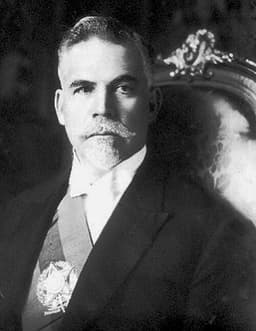
Washington Luis
Politician · Modern
47.5Total
Basic Information
Born
1935
1869
Died
—
1957
Era
Modern
Modern
Nationality
Palestine
Brazil
Occupation
Politician
Politician
Civilization
Middle Eastern
Western
Score Comparison
Military (10%)
47.1
34.0
Political (20%)
42.3
43.7
Influence (20%)
54.1
47.1
Legacy (20%)
45.0
38.3
Leadership (15%)
64.0
68.0
Strategy (15%)
40.7
60.0
TOTAL
49.5
47.5
Mahmoud Abbas — Complete Timeline
1993 AD
Signed Oslo Accords as NegotiatorPolitical Action
As a key PLO negotiator, Abbas was instrumental in the secret talks that led to the Oslo Accords. He signed the Declaration of Principles on behalf of the PLO, establishing the Palestinian Authority and a framework for Israeli-Palestinian peace.
Oslo AccordsPeace ProcessPLO
Impact: globalconstructive
2004 AD
Elected Chairman of the Palestine Liberation OrganizationPolitical Action◆ Major
Following Yasser Arafat's death, Abbas was elected Chairman of the PLO. This position made him the central figure in Palestinian leadership, responsible for negotiations with Israel and internal Palestinian governance.
Palestinian LeadershipPLOSuccession
Impact: regional
2005 AD
Elected President of the Palestinian AuthorityPolitical Action◆ Major
Abbas won the Palestinian presidential election with 62% of the vote. His election followed Arafat's death and was seen as a mandate for peace negotiations with Israel, though his term expired in 2009 without new elections.
Palestinian AuthorityElectionPeace Process
Impact: regional
2007 AD
Hamas Takeover of GazaPolitical Action◆ Major
After winning the 2006 Palestinian legislative election, Hamas forcibly seized control of the Gaza Strip from Fatah forces loyal to Abbas. This split the Palestinian territories into two rival governments: Fatah in the West Bank and Hamas in Gaza.
Palestinian SplitHamasFatahCivil Conflict
Impact: regionaldestructive
2011 AD
Submitted Palestinian UN Membership BidPolitical Action◆ Major
Abbas formally submitted an application to the United Nations seeking full membership for the State of Palestine. The bid was not approved by the Security Council but led to Palestine being granted non-member observer state status in 2012.
United NationsStatehoodDiplomacy
Impact: global
Washington Luis — Complete Timeline
1926 AD
Elected President of BrazilPolitical Action◆ Major
Washington Lu
PresidencyOld RepublicElection
Impact: national
1927 AD
Implemented the 'Washington Luís' Road Construction ProgramReform◆ Major
Luís launched a major road-building program, including the construction of the Rio-São Paulo highway. This infrastructure project aimed to modernize Brazil's transportation network and promote economic integration.
InfrastructureRoad ConstructionModernization
Impact: nationalconstructive
1930 AD
Supported the 1930 Presidential Election of Júlio PrestesPolitical Action◆ Major
Luís supported the candidacy of Júlio Prestes in the 1930 presidential election, breaking the traditional alternation of power between São Paulo and Minas Gerais. This decision triggered political opposition and led to the Revolution of 1930.
1930 ElectionPolitical CrisisRevolution
Impact: national
Overthrown by the 1930 RevolutionPolitical Action◆ Major
Luís was overthrown by a military coup led by Getúlio Vargas, ending the Old Republic. He was arrested and exiled, marking the end of the First Brazilian Republic and the beginning of the Vargas era.
1930 RevolutionCoupExile
Impact: nationaltragic
Exiled to EuropePolitical Action
After his overthrow, Lu
ExilePost-PresidencyOld Republic
Impact: nationaltragic
Expert Analysis
Origins
Mahmoud Abbas was born in 1935 in Safed, British Mandate of Palestine. His family fled to Syria during the 1948 Arab-Israeli war. He studied law in Damascus and later earned a PhD in history from the Patrice Lumumba University in Moscow, focusing on Zionism. His early career involved working as a teacher and journalist, and he joined Fatah in the 1960s.
Washington Luís was born in 1869 in Macaé, Brazil, to a coffee-producing family. He studied law at the University of São Paulo and later served as a judge and mayor of Batatais. His political career began in the Republican Party of São Paulo, and he was elected governor of São Paulo in 1920, where he implemented fiscal reforms.
Rise to Power
Abbas rose within the PLO as a moderate figure. He was a key negotiator in the Oslo Accords, signing the Declaration of Principles in 1993. After Yasser Arafat's death, Abbas was elected Chairman of the PLO in 2004 and President of the Palestinian Authority in 2005 with 62% of the vote. His rise was marked by a mandate for peace negotiations.
Luís rose through state politics. He was elected President of Brazil in 1926, succeeding Artur Bernardes. His presidency was the last of the First Brazilian Republic (Old Republic). He continued the coffee valorization policies and initiated a major road-building program.
Leadership & Governance
Abbas led the Palestinian Authority with a focus on diplomacy and state-building. He pursued a two-state solution and submitted a UN membership bid for Palestine in 2011. However, his governance was hampered by the Hamas takeover of Gaza in 2007, splitting Palestinian territories. His leadership score of 64.0 reflects his diplomatic efforts but also his failure to unify Palestinians.
Luís governed with a conservative, pro-coffee oligarchy approach. He implemented the 'Washington Luís' Road Construction Program, including the Rio-São Paulo highway, aiming to modernize Brazil. However, he supported Júlio Prestes in the 1930 election, breaking the alternation of power between São Paulo and Minas Gerais, which triggered the 1930 Revolution. His leadership score is 68.0, slightly higher than Abbas, but his political score of 43.7 is just above Abbas's 42.3.
Triumph & Tragedy
Abbas's greatest triumph was his role in the Oslo Accords, which established the Palestinian Authority. His greatest tragedy was the Hamas takeover of Gaza, which shattered Palestinian unity and his legitimacy. He also failed to achieve a final peace deal with Israel.
Luís's greatest triumph was his road-building program, which improved Brazilian infrastructure. His greatest tragedy was his overthrow in the 1930 Revolution and subsequent exile. He never returned to Brazil, dying in Europe in 1957.
Character & Destiny
Abbas is seen as a cautious, pragmatic leader, often criticized for his inability to adapt to changing circumstances. His character led to stagnation in Palestinian politics. His strategy score of 40.7 is low, indicating poor long-term planning.
Luís was a determined but inflexible leader who underestimated the political forces against him. His support for Prestes alienated key allies, leading to his downfall. His strategy score of 60.0 is higher than Abbas's, but his political miscalculation proved fatal.
Legacy
Abbas's legacy is mixed: he is remembered as a peace negotiator but also as the leader who presided over the Palestinian split. His influence score of 54.1 reflects his ongoing role but diminished stature.
Luís is remembered as the last president of the Old Republic, his legacy overshadowed by the Vargas era. His road program is a lasting contribution, but his political errors led to the end of an era. His legacy score of 38.3 is lower than Abbas's 45.0.
Conclusion
While both leaders faced significant challenges, Mahmoud Abbas had a greater impact on history due to his central role in the Oslo Accords and the Palestinian national movement. His total score of 49.5 edges out Luís's 47.5. Despite his failures, Abbas's actions shaped Middle Eastern diplomacy for decades. Luís, while influential in Brazil, was a transitional figure whose legacy was eclipsed by the Vargas revolution. Therefore, Abbas's impact is more significant on a global scale.
Rankings
🥇
Mahmoud AbbasLeader
Mil: 47.1Pol: 42.3Inf: 54.1
49.5
🥈
Washington Luis
Mil: 34.0Pol: 43.7Inf: 47.1
47.5
+2.0 behind
How This Comparison Works
Algorithm
Each figure is scored on 6 dimensions (0—100 scale) based on structured historical data: Military (10%), Political (20%), Influence (20%), Legacy (20%), Leadership (15%), Strategy (15%). The weighted total produces the final ranking.
Data Sources
Scores are computed from structured sub-indicators in the database. Scale factors adjust for era (Ancient ×0.85, Modern ×1.0) and civilization size (Eastern ×1.05, Other ×0.80) to account for differences in population and military scale.
Maximum 3 Figures
Comparisons are limited to 2—3 figures to ensure readability and statistical meaningfulness.
Error Margins
±5 points per dimension — Sub-scores are derived from historical records with inherent uncertainty. Two figures within 5 points on a dimension should be considered roughly equivalent in that area.
Total Score Accuracy
±3 points overall — The weighted combination of 6 dimensions produces a total score with approximately ±3 points of uncertainty. Differences of less than 3 points are not statistically significant— the figures are effectively tied.
Known Limitations
- Historical records are incomplete and uneven across civilizations
- Figures from oral-tradition societies may be underrepresented
- Occupation labels can misclassify multi-role figures
- Scores measure capability and impact, not moral character
- Quantitative scoring is a comparison tool, not absolute truth
Capability Radar
Military (10%) — Battles & Warfare
Battles
22
46
Win Rate
26
53
Expansion
26
54
Political (20%) — Governance & Reform
Reform
25
20
Diplomacy
55
30
Economy
20
25
Influence (20%) — Cultural & Global Reach
Cultural
20
10
Global
45
10
Legacy (20%) — Historical Impact
Historical
40
20
Longevity
30
10
Leadership (15%) — Power & Stability
Tenure
60
40
Stability
15
15
Strategy (15%) — Tactics & Innovation
Strategy
29
57
Tactics
35
60
Reform
39
60
Similar Comparisons
Comments & Discussion
No comments yet. Be the first to share your thoughts!