Loading...
This comparison has not been analyzed yet.
One-time AI generation (~1 minute). Scores and timeline are already available below.
Malam Bacai Sanha vs William Massey
William Massey leads by 12.9 pts · 2 figures compared
…

Malam Bacai Sanha
Politician · Modern
42.4Total
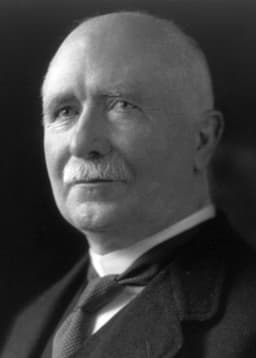
William Massey
Politician · Modern
55.3Total
Basic Information
Born
1947
1856
Died
—
1925
Era
Modern
Modern
Nationality
Guinea-Bissau
New Zealand
Occupation
Politician
Politician
Civilization
Other
Western
Score Comparison
Military (10%)
50.0
49.6
Political (20%)
30.8
60.0
Influence (20%)
47.1
52.5
Legacy (20%)
37.5
45.0
Leadership (15%)
48.4
85.0
Strategy (15%)
43.8
41.9
TOTAL
42.4
55.3
Malam Bacai Sanha — Complete Timeline
2009 AD
Election of Malam Bacai SanhaPolitical Action◆ Major
Sanha won the presidential election after the assassination of Joao Bernardo Vieira. His victory was seen as an attempt to restore stability and democratic governance in Guinea-Bissau.
ElectionDemocracyGuinea-Bissau
Impact: nationalconstructive
2012 AD
Death in Office of Malam Bacai SanhaPolitical Action◆ Major
Sanha died in office in Paris after a prolonged illness. His death triggered a political crisis and a military coup that disrupted the democratic transition.
Death in OfficePolitical CrisisGuinea-Bissau
Impact: nationaltragic
William Massey — Complete Timeline
1912 AD
Became Prime Minister of New ZealandPolitical Action◆ Major
Massey became Prime Minister on 10 July 1912, leading the Reform Party. He succeeded Joseph Ward and began a 13-year tenure that shaped New Zealand's early 20th-century politics.
Prime MinisterReform Party
Impact: national
1914 AD
Led New Zealand in World War IWar◆ Major
Massey led New Zealand through World War I, committing troops to the Allied cause. He supported the British Empire's war effort and oversaw the mobilization of New Zealand's military and economy.
World War IMilitary Mobilization
Impact: global
1919 AD
Signed the Treaty of VersaillesPolitical Action◆ Major
Massey attended the Paris Peace Conference and signed the Treaty of Versailles on behalf of New Zealand. He secured New Zealand's membership in the League of Nations, marking a step in its international recognition.
Treaty of VersaillesLeague of Nations
Impact: globalconstructive
1925 AD
Died in OfficePolitical Action◆ Major
Massey died in office on 10 May 1925, becoming the first New Zealand prime minister to die while serving. His death marked the end of the Reform Party's long dominance.
Death in OfficeEnd of Era
Impact: nationaltragic
This comparison has not been analyzed yet.
One-time AI generation (~1 minute). Scores and timeline are already available below.
Rankings
🥇
William MasseyLeader
Mil: 49.6Pol: 60.0Inf: 52.5
55.3
🥈
Malam Bacai Sanha
Mil: 50.0Pol: 30.8Inf: 47.1
42.4
+12.9 behind
How This Comparison Works
Algorithm
Each figure is scored on 6 dimensions (0—100 scale) based on structured historical data: Military (10%), Political (20%), Influence (20%), Legacy (20%), Leadership (15%), Strategy (15%). The weighted total produces the final ranking.
Data Sources
Scores are computed from structured sub-indicators in the database. Scale factors adjust for era (Ancient ×0.85, Modern ×1.0) and civilization size (Eastern ×1.05, Other ×0.80) to account for differences in population and military scale.
Maximum 3 Figures
Comparisons are limited to 2—3 figures to ensure readability and statistical meaningfulness.
Error Margins
±5 points per dimension — Sub-scores are derived from historical records with inherent uncertainty. Two figures within 5 points on a dimension should be considered roughly equivalent in that area.
Total Score Accuracy
±3 points overall — The weighted combination of 6 dimensions produces a total score with approximately ±3 points of uncertainty. Differences of less than 3 points are not statistically significant— the figures are effectively tied.
Known Limitations
- Historical records are incomplete and uneven across civilizations
- Figures from oral-tradition societies may be underrepresented
- Occupation labels can misclassify multi-role figures
- Scores measure capability and impact, not moral character
- Quantitative scoring is a comparison tool, not absolute truth
Capability Radar
Military (10%) — Battles & Warfare
Battles
22
27
Win Rate
25
33
Expansion
30
36
Political (20%) — Governance & Reform
Reform
20
55
Diplomacy
25
60
Economy
15
50
Influence (20%) — Cultural & Global Reach
Cultural
10
30
Global
10
25
Legacy (20%) — Historical Impact
Historical
15
40
Longevity
10
30
Leadership (15%) — Power & Stability
Tenure
30
65
Stability
10
55
Strategy (15%) — Tactics & Innovation
Strategy
29
37
Tactics
35
38
Reform
34
45
Similar Comparisons
Comments & Discussion
No comments yet. Be the first to share your thoughts!