Loading...
Malcolm Fraser vs Tafawa Balewa
Malcolm Fraser leads by 4.6 pts · 2 figures compared
…
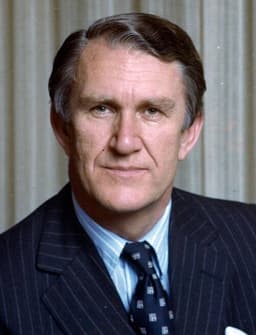
Malcolm Fraser
Politician · Modern
57.4Total

Tafawa Balewa
Politician · Modern
52.8Total
Basic Information
Born
1930
1912
Died
—
1966
Era
Modern
Modern
Nationality
Australia
Nigeria
Occupation
Politician
Politician
Civilization
Western
Other
Score Comparison
Military (10%)
48.2
42.8
Political (20%)
72.0
62.7
Influence (20%)
59.0
59.0
Legacy (20%)
48.3
49.2
Leadership (15%)
72.0
53.2
Strategy (15%)
41.3
41.3
TOTAL
57.4
52.8
Malcolm Fraser — Complete Timeline
1975 AD
Appointed Prime Minister After DismissalPolitical Action◆ Major
Fraser was appointed caretaker prime minister by Governor-General Sir John Kerr after the dismissal of Gough Whitlam. He led the Liberal-National coalition to a landslide victory in the subsequent election, winning 91 of 127 seats.
Constitutional CrisisElectionLiberal Party
Impact: national
1977 AD
Opposed Apartheid in South AfricaPolitical Action◆ Major
Fraser's government took a strong stance against apartheid, supporting economic sanctions against South Africa and opposing sporting contacts. He played a key role in the Commonwealth's Gleneagles Agreement, which discouraged sporting ties with South Africa.
ApartheidForeign PolicyCommonwealth
Impact: globalprogressive
1978 AD
Introduced Multiculturalism PolicyReform◆ Major
Fraser's government formally adopted a policy of multiculturalism, establishing the Australian Institute of Multicultural Affairs and funding ethnic community organizations. This marked a shift from the previous assimilationist approach to immigration.
MulticulturalismImmigrationSocial Policy
Impact: nationalprogressive
1979 AD
Accepted Vietnamese RefugeesPolitical Action◆ Major
Fraser's government significantly increased the intake of Vietnamese boat people, resettling over 70,000 refugees. This humanitarian response set a precedent for Australia's refugee program and diversified the nation's cultural makeup.
RefugeesHumanitarianVietnam
Impact: nationalprogressive
1983 AD
Defeated in 1983 ElectionPolitical Action◆ Major
Fraser called a snap election in March 1983, but was defeated by Bob Hawke's Labor Party. The election ended Fraser's seven-year tenure as prime minister and marked the beginning of a long period of Labor government.
ElectionDefeatLabor Party
Impact: national
Tafawa Balewa — Complete Timeline
1960 AD
Became First Prime Minister of NigeriaPolitical Action◆ Major
Tafawa Balewa was appointed the first Prime Minister of independent Nigeria on October 1, 1960. He led a coalition government dominated by the Northern People's Congress, focusing on national unity, economic development, and a pro-Western foreign policy.
IndependencePrime MinisterGovernment
Impact: nationalconstructive
Signed Anglo-Nigerian Defence PactPolitical Action
Balewa signed a defence agreement with the United Kingdom, allowing British military access to Nigerian facilities. The pact was controversial and criticized by nationalists as neo-colonial, leading to its eventual abrogation in 1962.
Foreign PolicyDefenceUK
Impact: national
1964 AD
Suppressed Tiv UprisingWar
Balewa's government deployed the Nigerian Army to suppress a rebellion by the Tiv ethnic group in the Middle Belt region. The uprising, caused by grievances over taxation and local governance, resulted in hundreds of deaths and deepened ethnic tensions.
TivRebellionMilitary Action
Impact: regionaldestructive
1966 AD
Assassinated in Military CoupPolitical Action◆ Major
Balewa was kidnapped and killed by mutinous soldiers during the January 1966 Nigerian coup d'
AssassinationCoupFirst Republic
Impact: nationaltragic
Expert Analysis
Origins
Malcolm Fraser was born on 21 May 1930 in Toorak, Victoria, Australia, into a wealthy pastoralist family. He was educated at Melbourne Grammar School and later at Magdalen College, Oxford, where he studied philosophy, politics, and economics. His privileged background gave him access to political networks early on.
Tafawa Balewa was born in 1912 in Bauchi, Northern Nigeria, into a humble Muslim family. He trained as a teacher at Katsina College and later studied at the University of London Institute of Education. His rise was rooted in the Northern Nigerian elite, but he remained connected to traditional Islamic values.
Rise to Power
Fraser entered the House of Representatives in 1955 as a member of the Liberal Party. He served as Minister for Defence (1969-1971) and Minister for Education and Science (1971-1972). His major break came in 1975 when Governor-General Sir John Kerr dismissed Prime Minister Gough Whitlam. Fraser, as opposition leader, was appointed caretaker prime minister on 11 November 1975. He then won a landslide election in December 1975, securing 91 of 127 seats.
Balewa entered politics in the 1940s, becoming a member of the Northern People's Congress (NPC). He served as a minister in the colonial government and became the first Prime Minister of independent Nigeria on 1 October 1960. He led a coalition government dominated by the NPC and the NCNC, balancing regional and ethnic tensions.
Leadership & Governance
Fraser's leadership style was pragmatic and internationalist. He scored 72.0 in political skills, reflecting his ability to navigate crises. Domestically, he introduced multiculturalism as official policy in 1978, establishing the Australian Institute of Multicultural Affairs. He also accepted over 70,000 Vietnamese refugees, a humanitarian move that reshaped Australia's demographic landscape. However, his economic policies were less successful; he inherited high inflation and unemployment, and his attempts at fiscal austerity did not revive the economy.
Balewa, scoring 53.2 in leadership, governed a fragile federation. He pursued a pro-Western foreign policy, signing the Anglo-Nigerian Defence Pact in 1960, which allowed British military access. This was criticized as neo-colonial. He also deployed the army to suppress the Tiv uprising in 1964, revealing ethnic tensions. His governance was marked by corruption and regional imbalances, with the North dominating politics.
Triumph & Tragedy
Fraser's greatest triumph was his stance against apartheid in South Africa. He pushed for economic sanctions and opposed sporting contacts, even cancelling a rugby tour. His government also played a key role in the Commonwealth's anti-apartheid efforts. His tragedy was his defeat in the 1983 election. He called a snap election in March 1983, but lost to Bob Hawke's Labor Party, ending his seven-year tenure. His legacy was overshadowed by the subsequent Hawke and Keating governments.
Balewa's triumph was leading Nigeria to independence peacefully. He symbolized national unity and was respected internationally. His tragedy was his assassination on 15 January 1966 during a military coup. His body was found on a road near Lagos. The coup ended Nigeria's First Republic and plunged the country into civil war. Balewa's death marked the failure of civilian governance.
Character & Destiny
Fraser was known for his integrity and moral conviction, especially on human rights. He was a decisive leader, but also seen as aloof and aristocratic. His decision to call a snap election in 1983 was a strategic blunder, as he misjudged the popularity of the new Labor leader. His character drove his humanitarian policies, but also contributed to his political downfall.
Balewa was a calm, conciliatory figure, but his leadership was constrained by ethnic and regional loyalties. He was a product of the Northern elite, which limited his ability to address corruption and inequality. His fate was sealed by the military's impatience with civilian incompetence. His assassination highlighted the fragility of Nigeria's democracy.
Legacy
Fraser's legacy is mixed. He is remembered for his humanitarianism: accepting Vietnamese refugees, promoting multiculturalism, and opposing apartheid. His scores: military 48.2, political 72.0, influence 59.0, legacy 48.3, leadership 72.0, strategy 41.3, total 57.4. However, his economic record was poor, and he is often seen as a transitional figure between Whitlam and Hawke.
Balewa's legacy is that of a founding father, but his tenure was brief and unstable. He scored 42.8 in military, 62.7 political, 59.0 influence, 49.2 legacy, 53.2 leadership, 41.3 strategy, total 52.8. His death symbolized the failure of Nigeria's First Republic. He is honored as a nationalist, but his governance did not address deep-seated problems.
Conclusion
Malcolm Fraser had greater impact than Tafawa Balewa, as reflected in his higher total score (57.4 vs 52.8). Fraser's policies on refugees and apartheid had lasting effects on Australia's identity and global standing. Balewa, while historically significant, was unable to prevent Nigeria's descent into chaos. Fraser's leadership was more effective in shaping a nation's trajectory, even if his domestic economic agenda faltered. The 4.6-point gap underscores Fraser's superior political skill and enduring influence.
Rankings
🥇
Malcolm FraserLeader
Mil: 48.2Pol: 72.0Inf: 59.0
57.4
🥈
Tafawa Balewa
Mil: 42.8Pol: 62.7Inf: 59.0
52.8
+4.6 behind
How This Comparison Works
Algorithm
Each figure is scored on 6 dimensions (0—100 scale) based on structured historical data: Military (10%), Political (20%), Influence (20%), Legacy (20%), Leadership (15%), Strategy (15%). The weighted total produces the final ranking.
Data Sources
Scores are computed from structured sub-indicators in the database. Scale factors adjust for era (Ancient ×0.85, Modern ×1.0) and civilization size (Eastern ×1.05, Other ×0.80) to account for differences in population and military scale.
Maximum 3 Figures
Comparisons are limited to 2—3 figures to ensure readability and statistical meaningfulness.
Error Margins
±5 points per dimension — Sub-scores are derived from historical records with inherent uncertainty. Two figures within 5 points on a dimension should be considered roughly equivalent in that area.
Total Score Accuracy
±3 points overall — The weighted combination of 6 dimensions produces a total score with approximately ±3 points of uncertainty. Differences of less than 3 points are not statistically significant— the figures are effectively tied.
Known Limitations
- Historical records are incomplete and uneven across civilizations
- Figures from oral-tradition societies may be underrepresented
- Occupation labels can misclassify multi-role figures
- Scores measure capability and impact, not moral character
- Quantitative scoring is a comparison tool, not absolute truth
Capability Radar
Military (10%) — Battles & Warfare
Battles
32
23
Win Rate
32
25
Expansion
35
26
Political (20%) — Governance & Reform
Reform
60
55
Diplomacy
70
65
Economy
55
50
Influence (20%) — Cultural & Global Reach
Cultural
40
45
Global
55
50
Legacy (20%) — Historical Impact
Historical
50
55
Longevity
40
40
Leadership (15%) — Power & Stability
Tenure
65
60
Stability
60
40
Strategy (15%) — Tactics & Innovation
Strategy
36
32
Tactics
40
35
Reform
44
35
Similar Comparisons
Comments & Discussion
No comments yet. Be the first to share your thoughts!