Loading...
This comparison has not been analyzed yet.
One-time AI generation (~1 minute). Scores and timeline are already available below.
Man Singh Tomar vs Valdemar II of Denmark
Valdemar II of Denmark leads by 4.2 pts · 2 figures compared
…

Man Singh Tomar
Emperor · Medieval
54.6Total
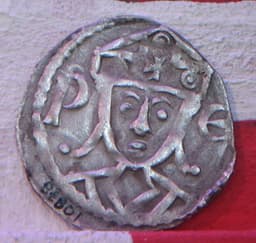
Valdemar II of Denmark
Emperor · Medieval
58.8Total
Basic Information
Born
1486
1170
Died
1516
1241
Era
Medieval
Medieval
Nationality
India
Denmark
Occupation
Emperor
Emperor
Civilization
Indian
Western
Score Comparison
Military (10%)
40.0
61.7
Political (20%)
68.0
62.7
Influence (20%)
59.0
58.0
Legacy (20%)
49.2
50.0
Leadership (15%)
66.0
68.0
Strategy (15%)
35.0
60.7
TOTAL
54.6
58.8
Man Singh Tomar — Complete Timeline
1500 AD
Patronage of Dhrupad musicCultural◆ Major
Man Singh Tomar was a major patron of Dhrupad, a classical vocal style in Hindustani music. He invited musicians like Nayak Bakshu and Nayak Gopal to his court. His patronage helped develop and popularize Dhrupad as a distinct musical form.
MusicPatronageDhrupad
Impact: regionalconstructive
Construction of Gujari MahalCultural◆ Major
Man Singh Tomar built the Gujari Mahal in Gwalior for his wife Mrignayani, a Gujar princess. The palace was constructed in the Gujarati architectural style. It later served as a museum and is a notable example of Rajput architecture.
ArchitecturePalaceRomance
Impact: regionalconstructive
Construction of Man Mandir PalaceCultural◆ Major
Man Singh Tomar built the Man Mandir Palace within the Gwalior Fort. The palace featured intricate carvings and blue-tiled decorations. It became a symbol of Tomar power and architectural achievement.
ArchitectureFortPalace
Impact: regionalconstructive
1505 AD
Battle against Sikandar LodiWar◆ Major
Man Singh Tomar fought against the Delhi Sultanate under Sikandar Lodi. The conflict arose over territorial disputes. Man Singh successfully defended Gwalior from Lodi's attacks, maintaining Tomar independence.
DefenseDelhi SultanateRajput Resistance
Impact: regional
Valdemar II of Denmark — Complete Timeline
1202 AD
Became King of DenmarkPolitical Action◆ Major
Valdemar II became King of Denmark after the death of his brother, King Canute VI. He inherited a kingdom that was already a major Baltic power, and he continued his predecessor's expansionist policies, aiming to control the Baltic Sea trade routes.
SuccessionDenmarkBaltic Power
Impact: regional
1219 AD
Conquered EstoniaWar◆ Major
Valdemar II led a Danish crusade to conquer Estonia, defeating the Estonian tribes at the Battle of Lyndanisse (near modern Tallinn). According to legend, the Danish flag Dannebrog fell from the sky during this battle. Estonia became a Danish possession until 1346.
ConquestEstoniaCrusade
Impact: regional
1223 AD
Captured by Count Henry of SchwerinPolitical Action◆ Major
Valdemar II was captured by Count Henry of Schwerin during a hunting trip and held prisoner for over two years. His captivity forced Denmark to pay a huge ransom and cede territories in northern Germany, weakening Danish power in the region.
CaptureRansomGermany
Impact: regionaltragic
1227 AD
Defeated at the Battle of BornhövedWar◆ Major
After his release, Valdemar II attempted to regain lost territories but was decisively defeated by a coalition of German princes at the Battle of Bornh
BattleDefeatGermany
Impact: regionaldestructive
1241 AD
Codified Danish law with the Jutland CodeReform◆ Major
Valdemar II oversaw the compilation of the Jutland Code (Jyske Lov), a comprehensive legal code for Denmark. The code standardized laws, reduced the power of local chieftains, and established a uniform legal system that influenced Danish law for centuries.
Legal CodeReformDenmark
Impact: nationalconstructive
This comparison has not been analyzed yet.
One-time AI generation (~1 minute). Scores and timeline are already available below.
Rankings
🥇
Valdemar II of DenmarkLeader
Mil: 61.7Pol: 62.7Inf: 58.0
58.8
🥈
Man Singh Tomar
Mil: 40.0Pol: 68.0Inf: 59.0
54.6
+4.2 behind
How This Comparison Works
Algorithm
Each figure is scored on 6 dimensions (0—100 scale) based on structured historical data: Military (10%), Political (20%), Influence (20%), Legacy (20%), Leadership (15%), Strategy (15%). The weighted total produces the final ranking.
Data Sources
Scores are computed from structured sub-indicators in the database. Scale factors adjust for era (Ancient ×0.85, Modern ×1.0) and civilization size (Eastern ×1.05, Other ×0.80) to account for differences in population and military scale.
Maximum 3 Figures
Comparisons are limited to 2—3 figures to ensure readability and statistical meaningfulness.
Error Margins
±5 points per dimension — Sub-scores are derived from historical records with inherent uncertainty. Two figures within 5 points on a dimension should be considered roughly equivalent in that area.
Total Score Accuracy
±3 points overall — The weighted combination of 6 dimensions produces a total score with approximately ±3 points of uncertainty. Differences of less than 3 points are not statistically significant— the figures are effectively tied.
Known Limitations
- Historical records are incomplete and uneven across civilizations
- Figures from oral-tradition societies may be underrepresented
- Occupation labels can misclassify multi-role figures
- Scores measure capability and impact, not moral character
- Quantitative scoring is a comparison tool, not absolute truth
Capability Radar
Military (10%) — Battles & Warfare
Battles
35
65
Win Rate
40
70
Expansion
35
70
Political (20%) — Governance & Reform
Reform
45
60
Diplomacy
50
65
Economy
55
60
Influence (20%) — Cultural & Global Reach
Cultural
65
50
Global
30
40
Legacy (20%) — Historical Impact
Historical
55
55
Longevity
50
45
Leadership (15%) — Power & Stability
Tenure
60
70
Stability
55
55
Strategy (15%) — Tactics & Innovation
Strategy
40
65
Tactics
45
60
Reform
30
55
Similar Comparisons
Comments & Discussion
No comments yet. Be the first to share your thoughts!