Loading...
Mansa Musa vs Oleg of Novgorod
Mansa Musa leads by 16.9 pts · 2 figures compared
…
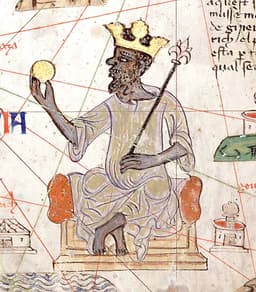
Mansa Musa
Emperor · Medieval
71.7Total
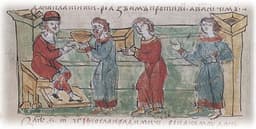
Oleg of Novgorod
Emperor · Medieval
54.8Total
Basic Information
Born
1280
845
Died
1337
912
Era
Medieval
Medieval
Nationality
Mali Empire
Kievan Rus
Occupation
Emperor
Emperor
Civilization
Other
Western
Score Comparison
Military (10%)
63.3
70.0
Political (20%)
78.0
40.8
Influence (20%)
75.0
54.9
Legacy (20%)
70.0
47.5
Leadership (15%)
72.0
67.0
Strategy (15%)
66.3
60.0
TOTAL
71.7
54.8
Mansa Musa — Complete Timeline
1324 AD
Pilgrimage to Mecca (Hajj)Cultural◆ Major
Mansa Musa embarked on a pilgrimage to Mecca, traveling with a large caravan and distributing vast amounts of gold in Cairo, Medina, and Mecca. His spending caused significant inflation in Egypt and the broader region, lasting for over a decade, and introduced the wealth of Mali to the Islamic world.
PilgrimageEconomic ImpactIslamic World
Impact: regional
1325 AD
Annexation of the Songhai Empire's western provincesWar◆ Major
Mansa Musa led a military campaign that annexed the western provinces of the Songhai Empire, including the city of Gao, into the Mali Empire. This expansion extended Mali's control over key trans-Saharan trade routes and increased its access to gold and salt resources.
ConquestTerritorial ExpansionTrade
Impact: regional
1327 AD
Construction of the Djinguereber MosqueCultural◆ Major
Mansa Musa commissioned the construction of the Djinguereber Mosque in Timbuktu, designed by the Andalusian architect Abu Ishaq al-Sahili. The mosque became a major center of Islamic learning and a symbol of Mali's wealth and cultural patronage, solidifying Timbuktu's status as a scholarly hub.
ArchitectureIslamic ScholarshipTimbuktu
Impact: regionalconstructive
Oleg of Novgorod — Complete Timeline
882 AD
Conquest of KievWar
Oleg, a Varangian prince, captured Kiev from Askold and Dir, two Varangian leaders. He made Kiev the capital of his realm, uniting Novgorod and Kiev under his rule and founding the Kievan Rus state.
Founding of Kievan RusCapitalUnification
Impact: regional
907 AD
Rus' Siege of ConstantinopleWar◆ Major
Oleg led a fleet of 2,000 ships against the Byzantine capital, Constantinople. He blockaded the city and forced Emperor Leo VI to negotiate a favorable trade treaty, securing tribute and commercial rights for Rus merchants.
Byzantine-Rus WarTrade TreatyNaval Campaign
Impact: regional
911 AD
Rus'-Byzantine Treaty of 911Political Action◆ Major
Oleg's envoys finalized a comprehensive treaty with the Byzantine Empire in Constantinople. The treaty regulated trade, legal disputes, and military service, establishing formal diplomatic relations between Kievan Rus and Byzantium.
DiplomacyTradeByzantine Empire
Impact: regionalconstructive
Expert Analysis
Origins
Mansa Musa (c. 1280–1337) was born into the Keita dynasty of the Mali Empire. His grandfather, Sundiata Keita, founded the empire after the Battle of Kirina (c. 1235). Musa's early life is obscure, but he likely received training in Islamic scholarship and governance. He ascended the throne after his predecessor, Abu Bakr II, embarked on an Atlantic expedition and never returned. Mali was already a major gold producer, controlling the trans-Saharan trade routes.
Oleg of Novgorod (died c. 912) was a Varangian prince, likely of Scandinavian origin. The Varangians were Norse traders and warriors who operated along the river systems of Eastern Europe. According to the Primary Chronicle, Oleg was a relative of Rurik, the founder of the Rurik dynasty. After Rurik's death, Oleg became regent for Rurik's young son, Igor. He ruled Novgorod before moving south to seize Kiev.
Rise to Power
Mansa Musa became emperor around 1312. His reign is best known for his 1324 pilgrimage to Mecca (hajj). He traveled with a caravan of tens of thousands, including 60,000 porters, 500 slaves each carrying a gold staff, and 80 camels carrying 300 pounds of gold each. In Cairo, he distributed so much gold that its value depreciated by 10–25% for over a decade. This journey cemented his reputation across the Islamic world and Europe, appearing on the Catalan Atlas (1375) holding a gold nugget.
Oleg's rise began when he captured Kiev in 882. He tricked Askold and Dir, the ruling Varangians, by pretending to be a merchant and then killing them. He declared Kiev the "mother of Rus cities" and united Novgorod and Kiev under his rule. In 907, he launched a massive naval expedition against Constantinople with 2,000 ships (possibly exaggerated). He blockaded the city and forced Emperor Leo VI to negotiate. The Rus'-Byzantine Treaty of 911 was a commercial and legal agreement favorable to the Rus, granting them tax-free trade and access to Byzantine markets.
Leadership & Governance
Mansa Musa ruled through a centralized bureaucracy with appointed governors in provinces like Timbuktu, Gao, and Jenne. He promoted Islam, building mosques and establishing Islamic courts. He invited scholars and architects, notably Abu Ishaq al-Sahili, who designed the Djinguereber Mosque and the royal palace in Timbuktu. Under Musa, the Sankore Madrasa became a center of learning. He maintained control over gold production and trade, ensuring the empire's prosperity. His governance scored 78.0 in political metrics, reflecting his administrative consolidation.
Oleg's leadership was more militaristic and less bureaucratic. His political score of 40.8 indicates weaker state-building. He relied on tribute from Slavic tribes and Varangian warriors. The Treaty of 911 shows his diplomatic skill, but his governance was personal and lacked institutional permanence. He established a pattern of tribute extraction that later Rus princes continued, but did not create a lasting administrative framework.
Triumph & Tragedy
Mansa Musa's greatest triumph was the hajj, which projected Mali's wealth and Islamic piety globally. He expanded Mali's territory, annexing western Songhai provinces including Gao (c. 1325). He made Timbuktu a cultural center. His greatest failure was the economic disruption caused by his gold distribution, which destabilized Egyptian and Mediterranean economies. After his death, the empire declined due to weak successors and internal strife.
Oleg's triumph was the successful siege of Constantinople and the treaty that secured trade privileges. He unified the Rus realm and established Kiev as a capital. His tragedy is the lack of a stable succession: Oleg died from a snakebite (according to legend), and his successor Igor faced rebellions and eventually was killed by the Drevlians. Oleg's gains were not institutionalized, and the Kievan Rus remained fragmented after his death.
Character & Destiny
Mansa Musa was deeply religious, using the hajj to legitimize his rule. He was a builder and patron of learning, but his generosity bordered on profligacy. His character combined piety with a desire for recognition, which led to both his fame and the economic side effects. His scores: military 63.3, strategy 66.3, leadership 72.0.
Oleg was cunning and ruthless, as shown by his deceit in capturing Kiev. He was a pragmatist who secured tribute through force. His military score of 70.0 and strategy of 60.0 reflect his effectiveness in the field. However, his lack of political foresight (40.8) meant his achievements did not outlast him. His character was that of a Viking warlord, not a state-builder.
Legacy
Mansa Musa's legacy is immense: he put Mali on the global map. The Catalan Atlas depiction made him a symbol of African wealth. His patronage of Timbuktu's mosques and universities influenced West African scholarship for centuries. However, his empire collapsed within 100 years of his death. His total score of 71.7 reflects broad impact.
Oleg's legacy is foundational for the Kievan Rus and later Russia. The Rurik dynasty continued until 1598. The Treaty of 911 set precedents for Russo-Byzantine relations. Yet his individual score of 54.8 is lower because his personal achievements were less transformative. He is remembered as a founder, but his contributions were more immediate than enduring.
Conclusion
Mansa Musa had a greater impact than Oleg of Novgorod. Musa's total score of 71.7 exceeds Oleg's 54.8 by 16.9 points. While Oleg's military conquests and treaty were significant for the Rus, Musa's influence spanned continents and centuries, affecting economies, culture, and religion in Africa and the Islamic world. Oleg's achievements were localized and short-lived; Musa's legacy is global and enduring. The wealth and cultural flourishing of Mali under Musa overshadow Oleg's more limited contributions.
Rankings
🥇
Mansa MusaLeader
Mil: 63.3Pol: 78.0Inf: 75.0
71.7
🥈
Oleg of Novgorod
Mil: 70.0Pol: 40.8Inf: 54.9
54.8
+16.9 behind
How This Comparison Works
Algorithm
Each figure is scored on 6 dimensions (0—100 scale) based on structured historical data: Military (10%), Political (20%), Influence (20%), Legacy (20%), Leadership (15%), Strategy (15%). The weighted total produces the final ranking.
Data Sources
Scores are computed from structured sub-indicators in the database. Scale factors adjust for era (Ancient ×0.85, Modern ×1.0) and civilization size (Eastern ×1.05, Other ×0.80) to account for differences in population and military scale.
Maximum 3 Figures
Comparisons are limited to 2—3 figures to ensure readability and statistical meaningfulness.
Error Margins
±5 points per dimension — Sub-scores are derived from historical records with inherent uncertainty. Two figures within 5 points on a dimension should be considered roughly equivalent in that area.
Total Score Accuracy
±3 points overall — The weighted combination of 6 dimensions produces a total score with approximately ±3 points of uncertainty. Differences of less than 3 points are not statistically significant— the figures are effectively tied.
Known Limitations
- Historical records are incomplete and uneven across civilizations
- Figures from oral-tradition societies may be underrepresented
- Occupation labels can misclassify multi-role figures
- Scores measure capability and impact, not moral character
- Quantitative scoring is a comparison tool, not absolute truth
Capability Radar
Military (10%) — Battles & Warfare
Battles
60
55
Win Rate
65
60
Expansion
75
60
Political (20%) — Governance & Reform
Reform
70
30
Diplomacy
80
45
Economy
95
35
Influence (20%) — Cultural & Global Reach
Cultural
85
40
Global
85
30
Legacy (20%) — Historical Impact
Historical
90
45
Longevity
80
40
Leadership (15%) — Power & Stability
Tenure
75
50
Stability
70
40
Strategy (15%) — Tactics & Innovation
Strategy
70
55
Tactics
55
50
Reform
50
20
Similar Comparisons
Comments & Discussion
No comments yet. Be the first to share your thoughts!