Loading...
Charles IV of Luxembourg vs Mansa Musa
Mansa Musa leads by 5.1 pts · 2 figures compared
…
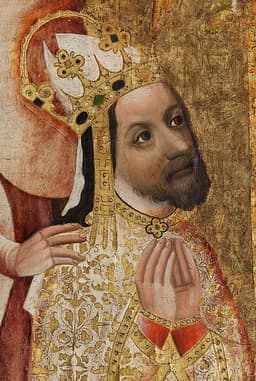
Charles IV of Luxembourg
Emperor · Medieval
66.6Total
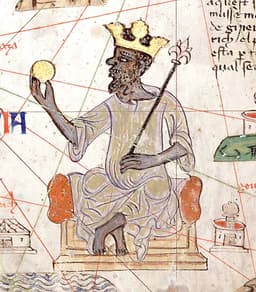
Mansa Musa
Emperor · Medieval
71.7Total
Basic Information
Born
1316
1280
Died
1378
1337
Era
Medieval
Medieval
Nationality
Holy Roman Empire
Mali Empire
Occupation
Emperor
Emperor
Civilization
Western
Other
Score Comparison
Military (10%)
45.0
63.3
Political (20%)
70.3
78.0
Influence (20%)
72.0
75.0
Legacy (20%)
72.0
70.0
Leadership (15%)
78.0
72.0
Strategy (15%)
38.6
66.3
TOTAL
66.6
71.7
Charles IV of Luxembourg — Complete Timeline
1346 AD
Election as King of GermanyPolitical Action◆ Major
Charles, Margrave of Moravia and grandson of Henry VII, was elected King of Germany by a faction of electors opposed to Louis IV. His election was supported by Pope Clement VI, leading to a double kingship.
ElectionDouble Kingship
Impact: national
1348 AD
Foundation of the University of PragueCultural◆ Major
Charles IV founded the University of Prague (Charles University), the first university in Central Europe. It became a major center of learning and culture, attracting scholars from across Europe.
University FoundationEducation
Impact: regionalconstructive
1355 AD
Coronation as Holy Roman EmperorPolitical Action◆ Major
Charles IV was crowned Holy Roman Emperor in Rome by a papal legate. His coronation was the first by a pope in decades and marked a reconciliation between the empire and papacy.
CoronationImperial-Papal Reconciliation
Impact: globalconstructive
1356 AD
Promulgation of the Golden Bull of 1356Reform
Charles IV issued the Golden Bull, a constitutional document that regulated the election of the German king by seven prince-electors. It established a fixed electoral college and reduced papal influence, remaining in effect until 1806.
Constitutional ReformGolden Bull
Impact: globalconstructive
Mansa Musa — Complete Timeline
1324 AD
Pilgrimage to Mecca (Hajj)Cultural◆ Major
Mansa Musa embarked on a pilgrimage to Mecca, traveling with a large caravan and distributing vast amounts of gold in Cairo, Medina, and Mecca. His spending caused significant inflation in Egypt and the broader region, lasting for over a decade, and introduced the wealth of Mali to the Islamic world.
PilgrimageEconomic ImpactIslamic World
Impact: regional
1325 AD
Annexation of the Songhai Empire's western provincesWar◆ Major
Mansa Musa led a military campaign that annexed the western provinces of the Songhai Empire, including the city of Gao, into the Mali Empire. This expansion extended Mali's control over key trans-Saharan trade routes and increased its access to gold and salt resources.
ConquestTerritorial ExpansionTrade
Impact: regional
1327 AD
Construction of the Djinguereber MosqueCultural◆ Major
Mansa Musa commissioned the construction of the Djinguereber Mosque in Timbuktu, designed by the Andalusian architect Abu Ishaq al-Sahili. The mosque became a major center of Islamic learning and a symbol of Mali's wealth and cultural patronage, solidifying Timbuktu's status as a scholarly hub.
ArchitectureIslamic ScholarshipTimbuktu
Impact: regionalconstructive
Expert Analysis
Origins
Charles IV of Luxembourg was born in 1316 in Prague, the eldest son of John of Luxembourg, King of Bohemia, and Elizabeth of Bohemia. His family was part of the House of Luxembourg, a prominent noble family in the Holy Roman Empire. Charles was educated at the French court and later in Italy, where he studied at the University of Paris. His early exposure to diplomacy and governance came from serving as Margrave of Moravia, where he gained administrative experience.
Mansa Musa, born around 1280 in the Mali Empire, was a descendant of Sundiata Keita, the founder of the empire. His family ruled the wealthy West African kingdom, enriched by gold and salt trade. Little is known about his early life, but he likely received training in military and statecraft, as was customary for heirs. He ascended to the throne in 1312 after his predecessor, Mansa Abubakari II, embarked on an Atlantic expedition and never returned.
Rise to Power
Charles IV's rise was contested. In 1346, he was elected King of Germany by a faction of electors opposed to Louis IV, but his position was weak until Louis died in 1347. Charles then secured recognition from Pope Clement VI, who had supported his candidacy. His coronation as Holy Roman Emperor in 1355 marked a reconciliation between the empire and the papacy, ending decades of conflict. Key to his rise was the support of the prince-electors, whom he later regulated via the Golden Bull.
Mansa Musa came to power through a smooth succession, inheriting a stable empire. His major rise to fame occurred during his pilgrimage to Mecca in 1324, where he displayed immense wealth. This journey not only fulfilled a religious duty but also established his reputation as a powerful and pious ruler. His control over the gold mines of West Africa gave him unparalleled economic leverage, which he used to expand Mali's influence.
Leadership & Governance
Charles IV's leadership was characterized by legal and administrative reforms. His most significant act was the Golden Bull of 1356, which codified the election of the German king by seven prince-electors, reducing papal influence and preventing civil wars. He also made Prague the imperial capital, founding the University of Prague in 1348, the first in Central Europe. His governance focused on centralization and legal clarity, scoring 70.3 in political skill. However, his military score of 45.0 reflects a preference for diplomacy over war.
Mansa Musa's governance was more expansionist and cultural. He annexed the western provinces of the Songhai Empire, including Gao, extending Mali's borders. He transformed Timbuktu into a center of learning, building the Djinguereber Mosque and attracting scholars. His political score of 78.0 reflects his ability to manage a vast empire through trade and religion. While his military score of 63.3 is higher than Charles's, his strategy score of 66.3 suggests a balanced approach.
Triumph & Tragedy
Charles IV's greatest triumph was the Golden Bull, which stabilized the Holy Roman Empire's governance for centuries. He also fostered a cultural renaissance in Prague, building structures like St. Vitus Cathedral. However, his failure to expand the empire's territory or reform the imperial military limited his military legacy. His strategic score of 38.6 reflects a cautious approach that avoided major conflicts but also missed opportunities.
Mansa Musa's triumph was his pilgrimage, which showcased Mali's wealth and brought him international fame. He also built institutions that made Timbuktu a scholarly hub. However, his spending during the hajj caused inflation in Cairo that took years to recover. After his death, the empire declined due to weak successors, suggesting his administrative foundations were not as strong as Charles's legal ones.
Character & Destiny
Charles IV was pragmatic and scholarly, favoring law over war. His decisions were calculated, as seen in the Golden Bull, which ensured his family's succession. His personality shaped a destiny of stability but limited expansion. Historians praise his governance but note his lack of ambition in military affairs.
Mansa Musa was ostentatious and devout, using wealth as a tool for influence. His character led to a legendary pilgrimage but also to economic disruption. His legacy is tied to gold and grandeur, but his empire's fragility after his death suggests overreliance on personal wealth rather than institutions.
Legacy
Charles IV's legacy is the Golden Bull, which remained the constitutional framework for the Holy Roman Empire until its dissolution in 1806. The University of Prague continues as a major institution. His legal and cultural impact scores a legacy score of 72.0.
Mansa Musa's legacy is the image of African wealth and the cultural flowering of Timbuktu. He put West Africa on the map for medieval geographers. However, his empire's decline within decades of his death limits his long-term institutional impact. His legacy score of 70.0 is slightly lower.
Conclusion
While Mansa Musa has a higher total score (71.7 vs 66.6), Charles IV's institutional reforms had a more enduring impact on European governance. The Golden Bull shaped the Holy Roman Empire for 450 years, providing a stable electoral system that prevented succession wars. Mansa Musa's influence, though globally famous, was more ephemeral. Charles IV's political and leadership scores (70.3 and 78.0) reflect a ruler who built systems, while Musa's scores (78.0 and 72.0) indicate personal brilliance but less sustainable structures. Therefore, Charles IV of Luxembourg had a greater historical impact due to his lasting constitutional contributions.
Rankings
🥇
Mansa MusaLeader
Mil: 63.3Pol: 78.0Inf: 75.0
71.7
🥈
Charles IV of Luxembourg
Mil: 45.0Pol: 70.3Inf: 72.0
66.6
+5.1 behind
How This Comparison Works
Algorithm
Each figure is scored on 6 dimensions (0—100 scale) based on structured historical data: Military (10%), Political (20%), Influence (20%), Legacy (20%), Leadership (15%), Strategy (15%). The weighted total produces the final ranking.
Data Sources
Scores are computed from structured sub-indicators in the database. Scale factors adjust for era (Ancient ×0.85, Modern ×1.0) and civilization size (Eastern ×1.05, Other ×0.80) to account for differences in population and military scale.
Maximum 3 Figures
Comparisons are limited to 2—3 figures to ensure readability and statistical meaningfulness.
Error Margins
±5 points per dimension — Sub-scores are derived from historical records with inherent uncertainty. Two figures within 5 points on a dimension should be considered roughly equivalent in that area.
Total Score Accuracy
±3 points overall — The weighted combination of 6 dimensions produces a total score with approximately ±3 points of uncertainty. Differences of less than 3 points are not statistically significant— the figures are effectively tied.
Known Limitations
- Historical records are incomplete and uneven across civilizations
- Figures from oral-tradition societies may be underrepresented
- Occupation labels can misclassify multi-role figures
- Scores measure capability and impact, not moral character
- Quantitative scoring is a comparison tool, not absolute truth
Capability Radar
Military (10%) — Battles & Warfare
Battles
25
60
Win Rate
30
65
Expansion
20
75
Political (20%) — Governance & Reform
Reform
90
70
Diplomacy
85
80
Economy
80
95
Influence (20%) — Cultural & Global Reach
Cultural
75
85
Global
60
85
Legacy (20%) — Historical Impact
Historical
80
90
Longevity
70
80
Leadership (15%) — Power & Stability
Tenure
85
75
Stability
80
70
Strategy (15%) — Tactics & Innovation
Strategy
25
70
Tactics
20
55
Reform
15
50
Similar Comparisons
Comments & Discussion
No comments yet. Be the first to share your thoughts!