Loading...
Manuel Azana vs Yanagisawa Yoshiyasu
Yanagisawa Yoshiyasu leads by 0.7 pts · 2 figures compared
…
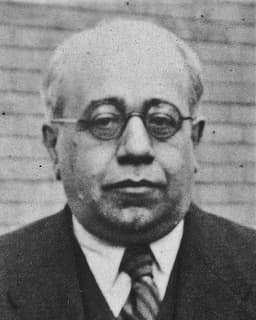
Manuel Azana
Politician · Modern
49.7Total

Yanagisawa Yoshiyasu
Politician · Modern
50.4Total
Basic Information
Born
1880
1658
Died
1940
1714
Era
Modern
Modern
Nationality
Spain
Japan
Occupation
Politician
Politician
Civilization
Western
Eastern
Score Comparison
Military (10%)
10.0
15.1
Political (20%)
68.0
68.0
Influence (20%)
53.3
54.9
Legacy (20%)
45.0
45.0
Leadership (15%)
67.0
68.0
Strategy (15%)
38.3
35.2
TOTAL
49.7
50.4
Manuel Azana — Complete Timeline
1931 AD
Prime Minister and Azaña ReformsReform◆ Major
As Prime Minister from 1931 to 1933, Azana implemented major reforms including military reduction, land redistribution, and secularization of education. These reforms aimed to modernize Spain but faced opposition from conservatives and the military.
ReformsModernizationSecond Republic
Impact: nationalprogressive
1933 AD
Casas Viejas IncidentPolitical Action
During Azana's premiership, the Guardia Civil violently suppressed an anarchist uprising in Casas Viejas, killing 24 villagers. The incident caused a political scandal, damaged Azana's reputation, and contributed to his government's fall.
RepressionAnarchismScandal
Impact: nationaldestructive
1936 AD
President of the Second Spanish RepublicPolitical Action◆ Major
Azana was elected President of the Second Spanish Republic in May 1936, succeeding Niceto Alcala-Zamora. His presidency coincided with increasing political polarization and the outbreak of the Spanish Civil War in July 1936.
PresidencySpanish RepublicCivil War
Impact: national
1939 AD
Exile and Death in FrancePolitical Action◆ Major
After the Republican defeat in the Spanish Civil War, Azana fled to France in February 1939. He resigned as President in March 1939 and died in exile in Montauban in November 1940, never returning to Spain.
ExileSpanish Civil WarDeath
Impact: nationaltragic
Yanagisawa Yoshiyasu — Complete Timeline
1680 AD
Rise as Favorite of Tokugawa TsunayoshiPolitical Action◆ Major
Yanagisawa Yoshiyasu became the close confidant and favorite of Shogun Tokugawa Tsunayoshi, rising from a minor page to the highest ranks of the shogunate. His influence grew as he managed Tsunayoshi's personal affairs and policy decisions.
FavoritismTokugawa TsunayoshiRise to power
Impact: national
1688 AD
Appointment as Senior Councilor (Roju)Political Action◆ Major
Yoshiyasu was appointed roju, formalizing his control over shogunate policy. He used this position to amass wealth and power, appointing allies and suppressing critics, becoming one of the most powerful officials in Edo Japan.
AppointmentRojuPower consolidation
Impact: national
1690 AD
Patronage of Confucian Scholarship and ArtsCultural
Yoshiyasu patronized Confucian scholars like Arai Hakuseki and supported the publication of historical works. He also sponsored the construction of temples and gardens, contributing to the cultural flourishing of the Genroku era.
PatronageConfucianismGenroku culture
Impact: nationalconstructive
1709 AD
Fall from Power after Tsunayoshi's DeathPolitical Action◆ Major
Upon Shogun Tsunayoshi's death, Yoshiyasu lost his protector and was forced to retire from his official positions. His influence ended abruptly, and he spent his remaining years in retirement, though he avoided execution or exile.
Fall from powerRetirementTokugawa Tsunayoshi
Impact: nationaltragic
Expert Analysis
Origins
Manuel Azaña was born on January 10, 1880, in Alcalá de Henares, Spain, into a middle-class family. His father was a notary. Azaña studied law at the University of Madrid, earning a doctorate in 1900. He later became a civil servant and journalist, developing a reputation as a sharp intellectual and republican critic of the monarchy. His early career included work as a secretary to the Ministry of Justice and founding the political party Acción Republicana.
Yanagisawa Yoshiyasu was born in 1658 in Edo, Japan, as the son of a minor samurai. He entered the service of Tokugawa Tsunayoshi as a page in 1678. His intelligence and charm quickly attracted the shogun's attention. Yoshiyasu was educated in Confucian classics and poetry, skills he used to gain influence in the shogunate. Unlike Azaña's formal legal training, Yoshiyasu's rise relied on personal relationships and courtly maneuvering.
Rise to Power
Manuel Azaña's rise came through political activism and oratory. He was elected to the Cortes in 1931 after the fall of the monarchy. His appointment as Minister of War in the provisional government led to his premiership in October 1931. Azaña's reforms, including military reduction and secularization, made him a leader of the left. He became President of the Republic in May 1936, but his power was undermined by the growing polarization that led to the Spanish Civil War.
Yanagisawa Yoshiyasu's rise was more personal. He became Tsunayoshi's favorite in the 1680s, using his wit and flattery to gain promotions. By 1689, he was appointed as a chamberlain, and in 1691, he became a member of the Council of State (Rōjū). He consolidated power by placing allies in key positions and removing rivals. His influence peaked in the 1690s, when he effectively controlled shogunate policy, especially in financial matters.
Leadership & Governance
Azaña's governance was reformist and democratic. As Prime Minister, he reduced the army from 120,000 to 80,000 men, closed the Jesuit schools, and granted autonomy to Catalonia. He also pursued land reform, redistributing estates to peasants. However, his secularization alienated the Catholic Church and conservative landowners. His leadership scored 67.0, reflecting his commitment to constitutional rule but also his inability to control violence, such as the Casas Viejas incident in 1933, where Guardia Civil killed 24 anarchist villagers.
Yoshiyasu's governance was autocratic and corrupt. He used his position to amass a personal fortune, accepting bribes for appointments. He patronized Confucian scholarship, sponsoring the historian Arai Hakuseki, but his policies favored the samurai class and increased taxes on peasants. His leadership score of 68.0 is similar to Azaña's, but his methods were more about personal enrichment than institutional reform. He had no military experience, scoring 15.1 in military, while Azaña scored 10.0.
Triumph & Tragedy
Azaña's greatest success was his role in establishing the Second Spanish Republic and implementing progressive reforms. His military reduction and secularization modernized Spain. However, his greatest failure was the inability to prevent the Spanish Civil War. His presidency from 1936 was marked by internal factionalism, and he fled to France in 1939 as the Republic fell. He died in exile in 1940, a tragic end for a democrat.
Yoshiyasu's triumph was his rise from minor samurai to the most powerful official in Japan, controlling the shogunate for over a decade. He built the Rinshunkaku villa and promoted cultural activities. His tragedy came after Tsunayoshi's death in 1709. His enemies forced him into retirement, and his wealth was confiscated. He died in 1714, largely forgotten. His influence score of 54.9 is slightly higher than Azaña's 53.3, but his legacy was fleeting.
Character & Destiny
Azaña was an intellectual, principled, and stubborn. He believed in parliamentary democracy but was aloof and struggled to connect with the masses. His decision to become president in 1936, despite the escalating crisis, showed his commitment but also his lack of pragmatism. Historians like Stanley Payne note that Azaña's reforms, while well-intentioned, alienated too many groups, leading to civil war.
Yoshiyasu was shrewd, ambitious, and sycophantic. He knew how to manipulate Tsunayoshi's vanity, even adopting the shogun's love of dogs (Tsunayoshi was known as the "Dog Shogun"). His destiny was tied entirely to his patron. When Tsunayoshi died, Yoshiyasu's power vanished. His character made him successful in a court environment but unable to build an independent base.
Legacy
Azaña's legacy is mixed. In Spain, he is remembered as a symbol of the Republic and democracy. His writings, like "La Velada en Benicarló," are studied. However, his failure to prevent the war overshadows his reforms. His legacy score of 45.0 reflects this ambiguity. The Republic's ideals, however, influenced later Spanish democracy after Franco.
Yoshiyasu's legacy is minor. He is known primarily as a favorite of Tsunayoshi, not as a reformer. His patronage of Confucian scholarship had some lasting cultural impact, but his political influence evaporated. His legacy score of 45.0 matches Azaña's. In Japan, he is a footnote in the Edo period, while Azaña remains a key figure in Spanish history.
Conclusion
Manuel Azaña had a greater impact than Yanagisawa Yoshiyasu. Despite similar total scores (49.7 vs 50.4), Azaña's role as president of the Second Spanish Republic and his reforms shaped Spanish history for decades. His democratic ideals, though failed in his lifetime, influenced the transition to democracy after 1975. Yoshiyasu's influence was temporary and dependent on a single patron. Azaña's political score of 68.0 matches Yoshiyasu's, but his context—leading a nation during a civil war—was more consequential. While Yoshiyasu manipulated a court, Azaña tried to build a modern state. Thus, Azaña's legacy, though tragic, is more significant.
Rankings
🥇
Yanagisawa YoshiyasuLeader
Mil: 15.1Pol: 68.0Inf: 54.9
50.4
🥈
Manuel Azana
Mil: 10.0Pol: 68.0Inf: 53.3
49.7
+0.7 behind
How This Comparison Works
Algorithm
Each figure is scored on 6 dimensions (0—100 scale) based on structured historical data: Military (10%), Political (20%), Influence (20%), Legacy (20%), Leadership (15%), Strategy (15%). The weighted total produces the final ranking.
Data Sources
Scores are computed from structured sub-indicators in the database. Scale factors adjust for era (Ancient ×0.85, Modern ×1.0) and civilization size (Eastern ×1.05, Other ×0.80) to account for differences in population and military scale.
Maximum 3 Figures
Comparisons are limited to 2—3 figures to ensure readability and statistical meaningfulness.
Error Margins
±5 points per dimension — Sub-scores are derived from historical records with inherent uncertainty. Two figures within 5 points on a dimension should be considered roughly equivalent in that area.
Total Score Accuracy
±3 points overall — The weighted combination of 6 dimensions produces a total score with approximately ±3 points of uncertainty. Differences of less than 3 points are not statistically significant— the figures are effectively tied.
Known Limitations
- Historical records are incomplete and uneven across civilizations
- Figures from oral-tradition societies may be underrepresented
- Occupation labels can misclassify multi-role figures
- Scores measure capability and impact, not moral character
- Quantitative scoring is a comparison tool, not absolute truth
Capability Radar
Military (10%) — Battles & Warfare
Battles
0
16
Win Rate
0
17
Expansion
0
18
Political (20%) — Governance & Reform
Reform
60
55
Diplomacy
30
50
Economy
20
55
Influence (20%) — Cultural & Global Reach
Cultural
30
40
Global
20
20
Legacy (20%) — Historical Impact
Historical
40
40
Longevity
20
30
Leadership (15%) — Power & Stability
Tenure
40
60
Stability
10
45
Strategy (15%) — Tactics & Innovation
Strategy
0
24
Tactics
0
25
Reform
10
29
Similar Comparisons
Comments & Discussion
No comments yet. Be the first to share your thoughts!