Loading...
This comparison has not been analyzed yet.
One-time AI generation (~1 minute). Scores and timeline are already available below.
Manuel I of Portugal vs Matope Nyanhehwe
Manuel I of Portugal leads by 11.1 pts · 2 figures compared
…
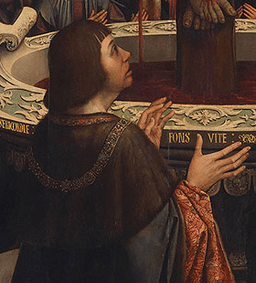
Manuel I of Portugal
Emperor · Medieval
65.0Total
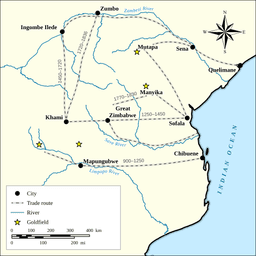
Matope Nyanhehwe
Emperor · Medieval
53.9Total
Basic Information
Born
1469
1440
Died
1521
1480
Era
Medieval
Medieval
Nationality
Portugal
Mutapa Empire
Occupation
Emperor
Emperor
Civilization
Western
Other
Score Comparison
Military (10%)
47.5
63.3
Political (20%)
70.3
68.0
Influence (20%)
72.0
53.3
Legacy (20%)
58.0
45.8
Leadership (15%)
80.0
40.0
Strategy (15%)
51.7
66.3
TOTAL
65.0
53.9
Manuel I of Portugal — Complete Timeline
1496 AD
Expulsion of the Jews from PortugalPolitical Action◆ Major
Manuel I ordered the expulsion of Jews from Portugal, but later forced them to convert to Christianity rather than leave. This created a large population of New Christians (conversos) and led to ongoing religious tensions and persecution.
Religious PersecutionJewish HistoryInquisition
Impact: nationaldestructive
1498 AD
Voyage of Vasco da Gama to IndiaInvention
Manuel I sponsored Vasco da Gama's expedition that reached Calicut in India, establishing the first direct sea route from Europe to Asia. This opened the spice trade to Portugal and broke the Venetian monopoly on Asian goods.
Age of DiscoveryNavigationSpice Trade
Impact: globalconstructive
1500 AD
Discovery of BrazilInvention
Pedro Álvares Cabral's fleet, sent by Manuel I to India, made landfall on the coast of Brazil. Manuel I claimed the territory for Portugal, initiating colonization and the exploitation of brazilwood, which later expanded into a major colony.
Age of DiscoveryColonizationBrazil
Impact: global
1501 AD
Construction of the Jerónimos MonasteryCultural◆ Major
Manuel I commissioned the Jer
ArchitectureManueline StyleHeritage
Impact: nationalconstructive
1502 AD
Second India Armada and Battle of CalicutWar◆ Major
Manuel I sent a second fleet to India under Vasco da Gama, who bombarded Calicut and established Portuguese dominance in the Indian Ocean. This aggressive policy secured trading posts and forced local rulers to accept Portuguese terms.
Age of DiscoveryNaval WarfareSpice Trade
Impact: globaldestructive
1510 AD
Conquest of GoaWar◆ Major
Manuel I's governor Afonso de Albuquerque captured Goa from the Sultan of Bijapur. The city became the capital of Portuguese India, a strategic naval base, and a center for trade and missionary activity in Asia.
Portuguese IndiaColonial ConquestNaval Base
Impact: global
Matope Nyanhehwe — Complete Timeline
1460 AD
Expansion of the Mutapa EmpireWar
Matope Nyanhehwe expanded the Mutapa Empire to its greatest territorial extent, conquering lands from the Zambezi River to the Indian Ocean. He incorporated the kingdoms of Manyika and Danda.
ExpansionConquestImperial Peak
Impact: regional
1465 AD
Conquest of the Manyika KingdomWar◆ Major
Matope Nyanhehwe defeated the Manyika kingdom, gaining control of gold-producing regions. This conquest boosted Mutapa's wealth and trade with Swahili merchants on the coast.
Gold TradeConquestManyika
Impact: regional
1470 AD
Consolidation of Trade NetworksPolitical Action◆ Major
Matope Nyanhehwe established trade agreements with Swahili city-states, exporting gold, ivory, and slaves in exchange for cloth and beads. This integrated Mutapa into the Indian Ocean trade network.
TradeIndian OceanEconomic Integration
Impact: regionalconstructive
1475 AD
Administrative ReformsReform
Matope Nyanhehwe reorganized the Mutapa administration, appointing provincial governors (makurukota) to oversee conquered territories. This system improved tax collection and imperial control.
AdministrationGovernanceCentralization
Impact: regionalconstructive
This comparison has not been analyzed yet.
One-time AI generation (~1 minute). Scores and timeline are already available below.
Rankings
🥇
Manuel I of PortugalLeader
Mil: 47.5Pol: 70.3Inf: 72.0
65.0
🥈
Matope Nyanhehwe
Mil: 63.3Pol: 68.0Inf: 53.3
53.9
+11.1 behind
How This Comparison Works
Algorithm
Each figure is scored on 6 dimensions (0—100 scale) based on structured historical data: Military (10%), Political (20%), Influence (20%), Legacy (20%), Leadership (15%), Strategy (15%). The weighted total produces the final ranking.
Data Sources
Scores are computed from structured sub-indicators in the database. Scale factors adjust for era (Ancient ×0.85, Modern ×1.0) and civilization size (Eastern ×1.05, Other ×0.80) to account for differences in population and military scale.
Maximum 3 Figures
Comparisons are limited to 2—3 figures to ensure readability and statistical meaningfulness.
Error Margins
±5 points per dimension — Sub-scores are derived from historical records with inherent uncertainty. Two figures within 5 points on a dimension should be considered roughly equivalent in that area.
Total Score Accuracy
±3 points overall — The weighted combination of 6 dimensions produces a total score with approximately ±3 points of uncertainty. Differences of less than 3 points are not statistically significant— the figures are effectively tied.
Known Limitations
- Historical records are incomplete and uneven across civilizations
- Figures from oral-tradition societies may be underrepresented
- Occupation labels can misclassify multi-role figures
- Scores measure capability and impact, not moral character
- Quantitative scoring is a comparison tool, not absolute truth
Capability Radar
Military (10%) — Battles & Warfare
Battles
30
60
Win Rate
40
65
Expansion
85
75
Political (20%) — Governance & Reform
Reform
70
50
Diplomacy
75
55
Economy
80
50
Influence (20%) — Cultural & Global Reach
Cultural
65
40
Global
70
20
Legacy (20%) — Historical Impact
Historical
75
45
Longevity
60
30
Leadership (15%) — Power & Stability
Tenure
85
60
Stability
70
55
Strategy (15%) — Tactics & Innovation
Strategy
50
70
Tactics
20
55
Reform
40
50
Similar Comparisons
Comments & Discussion
No comments yet. Be the first to share your thoughts!