Loading...
Manuel I of Portugal vs Napoleon Bonaparte
Napoleon Bonaparte leads by 5.9 pts · 2 figures compared
…
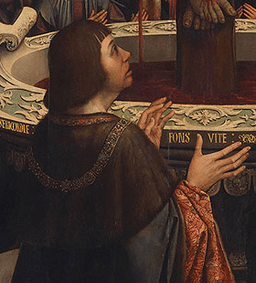
Manuel I of Portugal
Emperor · Medieval
65.0Total

Napoleon Bonaparte
General · Modern
70.9Total
Basic Information
Born
1469
1769
Died
1521
1821
Era
Medieval
Modern
Nationality
Portugal
France
Occupation
Emperor
General
Civilization
Western
Western
Score Comparison
Military (10%)
47.5
94.0
Political (20%)
70.3
72.0
Influence (20%)
72.0
40.0
Legacy (20%)
58.0
80.0
Leadership (15%)
80.0
78.0
Strategy (15%)
51.7
90.0
TOTAL
65.0
70.9
Manuel I of Portugal — Complete Timeline
1496 AD
Expulsion of the Jews from PortugalPolitical Action◆ Major
Manuel I ordered the expulsion of Jews from Portugal, but later forced them to convert to Christianity rather than leave. This created a large population of New Christians (conversos) and led to ongoing religious tensions and persecution.
Religious PersecutionJewish HistoryInquisition
Impact: nationaldestructive
1498 AD
Voyage of Vasco da Gama to IndiaInvention
Manuel I sponsored Vasco da Gama's expedition that reached Calicut in India, establishing the first direct sea route from Europe to Asia. This opened the spice trade to Portugal and broke the Venetian monopoly on Asian goods.
Age of DiscoveryNavigationSpice Trade
Impact: globalconstructive
1500 AD
Discovery of BrazilInvention
Pedro Álvares Cabral's fleet, sent by Manuel I to India, made landfall on the coast of Brazil. Manuel I claimed the territory for Portugal, initiating colonization and the exploitation of brazilwood, which later expanded into a major colony.
Age of DiscoveryColonizationBrazil
Impact: global
1501 AD
Construction of the Jerónimos MonasteryCultural◆ Major
Manuel I commissioned the Jer
ArchitectureManueline StyleHeritage
Impact: nationalconstructive
1502 AD
Second India Armada and Battle of CalicutWar◆ Major
Manuel I sent a second fleet to India under Vasco da Gama, who bombarded Calicut and established Portuguese dominance in the Indian Ocean. This aggressive policy secured trading posts and forced local rulers to accept Portuguese terms.
Age of DiscoveryNaval WarfareSpice Trade
Impact: globaldestructive
1510 AD
Conquest of GoaWar◆ Major
Manuel I's governor Afonso de Albuquerque captured Goa from the Sultan of Bijapur. The city became the capital of Portuguese India, a strategic naval base, and a center for trade and missionary activity in Asia.
Portuguese IndiaColonial ConquestNaval Base
Impact: global
Napoleon Bonaparte — Complete Timeline
1799 AD
Coup of 18 BrumaireOther◆ Major
Napoleon Bonaparte, with support from his brother Lucien and key political figures, overthrew the Directory in a bloodless coup. He established the Consulate with himself as First Consul, effectively becoming the ruler of France. This event ended the French Revolution's most unstable period.
French RevolutionCoupRise to Power
Impact: regional
1804 AD
Promulgation of the Napoleonic CodeOther◆ Major
Napoleon enacted the Civil Code of the French, known as the Napoleonic Code, a comprehensive set of laws that replaced the fragmented feudal legal systems. The code established legal equality, protected property rights, and secularized law. It became the basis for legal systems in many European and world countries.
Legal ReformNapoleonic CodeCivil Law
Impact: globalconstructive
1805 AD
Battle of AusterlitzWar◆ Major
Napoleon's Grande Arm
Napoleonic WarsBattleDecisive Victory
Impact: global
1812 AD
Invasion of RussiaWar◆ Major
Napoleon led the Grande Arm
Napoleonic WarsInvasionDisaster
Impact: globaldestructive
1815 AD
Battle of WaterlooWar◆ Major
Napoleon's French army was defeated by the combined forces of the Duke of Wellington's Anglo-Allied army and Gebhard Leberecht von Bl
Napoleonic WarsBattleFinal Defeat
Impact: globaldestructive
Expert Analysis
manuel-i-of-portugal-vs-napoleon-bonaparte
# The Conqueror and the Navigator: Two Visions of Empire
On a June morning in 1815, Napoleon Bonaparte stood on a muddy field near Waterloo, watching his Imperial Guard march toward certain death. Twenty years earlier, in a very different world, King Manuel I of Portugal had stood on a windswept balcony in Lisbon, watching ships depart for India—ships that would return laden with spices and glory. One man commanded armies; the other commanded oceans. One built an empire that collapsed in a single day; the other built an empire that would last for centuries. The question haunts history: why did one fall so fast, while the other endured?
Origins
Napoleon Bonaparte was born in 1769 on the island of Corsica, a land only recently annexed by France. His family was minor nobility, poor and resentful of French rule. He spoke Italian before French, carried the chip of an outsider on his shoulder, and learned early that the world rewards ambition. The French Revolution, which erupted when he was twenty, shattered the old order and opened doors for men of talent. Napoleon walked through them.
Manuel I of Portugal was born in 1469 into the House of Aviz, the royal family that had ruled Portugal for a century. He was not meant to be king—his older brother was the heir—but fate intervened. In 1495, his brother died, and Manuel ascended the throne at twenty-six. Unlike Napoleon, he inherited stability, not chaos. Portugal had already begun its great maritime adventure under Prince Henry the Navigator, and Manuel’s task was not to create but to accelerate.
The contrast in their eras is stark. Napoleon grew up in a world of revolution, where thrones crumbled and new men rose. Manuel grew up in a world of discovery, where the horizon mattered more than the battlefield. One learned to storm barricades; the other learned to read maps.
Rise to Power
Napoleon’s rise was meteoric and violent. In 1793, at age twenty-four, he expelled British forces from Toulon and was promoted to brigadier general. By 1796, he commanded the French army in Italy, where he defeated the Austrians in a campaign that dazzled Europe. In 1799, he seized power in a coup, becoming First Consul of France. He was thirty years old. Every step was taken at gunpoint.
Manuel’s rise was quiet and legal. He inherited a throne, not a revolution. But his power was no less absolute. As king of Portugal, he controlled the wealth of a kingdom that had spent decades perfecting the art of oceanic navigation. His opportunity came not from conquest but from patronage: he funded the voyages that would transform the world.
The key turning point for Napoleon was the Battle of Austerlitz in 1805, where he crushed the combined armies of Russia and Austria. For Manuel, the turning point was 1498, when Vasco da Gama’s ships returned from India with news of a sea route to the East. Napoleon’s rise depended on destroying his enemies; Manuel’s depended on discovering new worlds.
Leadership & Governance
Napoleon ruled through force and charisma. He reorganized France into a centralized state, created the Napoleonic Code—a legal system that influenced civil law across Europe—and appointed men based on merit, not birth. But he also suppressed dissent, censored the press, and crowned himself emperor in 1804. His style was personal and theatrical: he led his armies from the front, slept on the ground with his soldiers, and believed his destiny was written in the stars.
Manuel ruled through delegation and vision. He never set foot on a ship, never saw India or Brazil, yet his reign oversaw the greatest expansion of Portuguese power in history. He appointed brilliant governors like Afonso de Albuquerque, who captured Goa in 1510 and turned it into the capital of Portugal’s eastern empire. Manuel’s style was bureaucratic and symbolic: he built the Jerónimos Monastery in Belém to commemorate Vasco da Gama’s voyage, a monument in stone to a world he would never visit.
Their military genius reflects this difference. Napoleon’s strategy score of 93.0 places him among history’s greatest commanders. He revolutionized warfare with rapid marches, massed artillery, and the corps system. Manuel’s military score of 36.1 reflects a king who never led an army. Yet Manuel’s admirals and captains fought battles from Calicut to the Indian Ocean, and his fleet dominated the seas. Napoleon won on land; Manuel won on water.
Triumph & Tragedy
Napoleon’s greatest moment was Austerlitz, where he destroyed the Third Coalition and forced the Holy Roman Empire to dissolve. His worst was the invasion of Russia in 1812, where 600,000 men marched east and fewer than 100,000 returned. The disaster broke his aura of invincibility. By 1814, his enemies had captured Paris; by 1815, Waterloo ended his story.
Manuel’s greatest moment was the discovery of Brazil in 1500, when Pedro Álvares Cabral’s fleet, bound for India, stumbled upon the South American coast. Manuel claimed the territory and began a colonial empire that would last until 1822. His worst moment was the expulsion of the Jews in 1496, a dark decision that stripped Portugal of merchants, scholars, and capital. Manuel ordered the expulsion, then forced conversions, creating a class of “New Christians” who would be persecuted for centuries.
Napoleon’s tragedy was hubris—he could not stop conquering. Manuel’s tragedy was intolerance—he could not stop persecuting. Both men had the power to reshape the world; both used it in ways that would haunt their legacies.
Character & Destiny
Napoleon was restless, brilliant, and insatiable. “I love power as a musician loves his violin,” he once said. He could not sit still, could not accept limits, could not share glory. His personality drove him to conquer Europe, but it also drove him to destroy his own empire. He trusted no one, delegated nothing, and believed he was the only man capable of ruling France.
Manuel was cautious, devout, and strategic. He was called “the Fortunate” because his reign coincided with Portugal’s golden age, but fortune favors the prepared. He understood that his power came not from his own sword but from the ships and men he sent across the oceans. He was a king who ruled from a desk, not a battlefield, and his patience allowed his empire to grow while Napoleon’s impatience caused his to collapse.
Napoleon’s destiny was shaped by revolution; Manuel’s by exploration. One man lived in an age of upheaval, the other in an age of discovery. Their characters reflected their times.
Legacy
Napoleon’s legacy is complex. He is remembered as a military genius, a lawgiver, and a tyrant. The Napoleonic Code remains the foundation of civil law in many countries. His campaigns are studied in military academies worldwide. But his empire vanished within a decade of his death, and his name is associated with war, ambition, and defeat.
Manuel’s legacy is quieter but more enduring. The Manueline style of architecture, with its ornate maritime motifs, still decorates Lisbon. The Portuguese language is spoken in Brazil, Angola, Mozambique, and beyond—a direct result of Manuel’s patronage. His empire lasted for centuries, not years. His ships connected continents.
Napoleon’s total score is 82.4; Manuel’s is 67.9. But scores measure only certain things. Napoleon conquered Europe; Manuel helped create the modern world. One burned bright and faded; the other burned steady and endured.
Conclusion
As evening fell over Waterloo, Napoleon watched his dreams die. As evening fell over Lisbon in 1521, King Manuel I died in his bed, surrounded by the wealth of three continents. Both men sought glory; both found it. But Napoleon’s glory was a fire that consumed everything it touched, while Manuel’s glory was a tide that rose slowly and receded even more slowly.
Perhaps the difference is not in their genius but in their patience. Napoleon wanted everything now; Manuel was willing to wait for ships to return from the other side of the earth. One built an empire in a decade; the other built one over a lifetime. History remembers both, but it lives with the legacy of only one.
Rankings
🥇
Napoleon BonaparteLeader
Mil: 94.0Pol: 72.0Inf: 40.0
70.9
🥈
Manuel I of Portugal
Mil: 47.5Pol: 70.3Inf: 72.0
65.0
+5.9 behind
How This Comparison Works
Algorithm
Each figure is scored on 6 dimensions (0—100 scale) based on structured historical data: Military (10%), Political (20%), Influence (20%), Legacy (20%), Leadership (15%), Strategy (15%). The weighted total produces the final ranking.
Data Sources
Scores are computed from structured sub-indicators in the database. Scale factors adjust for era (Ancient ×0.85, Modern ×1.0) and civilization size (Eastern ×1.05, Other ×0.80) to account for differences in population and military scale.
Maximum 3 Figures
Comparisons are limited to 2—3 figures to ensure readability and statistical meaningfulness.
Error Margins
±5 points per dimension — Sub-scores are derived from historical records with inherent uncertainty. Two figures within 5 points on a dimension should be considered roughly equivalent in that area.
Total Score Accuracy
±3 points overall — The weighted combination of 6 dimensions produces a total score with approximately ±3 points of uncertainty. Differences of less than 3 points are not statistically significant— the figures are effectively tied.
Known Limitations
- Historical records are incomplete and uneven across civilizations
- Figures from oral-tradition societies may be underrepresented
- Occupation labels can misclassify multi-role figures
- Scores measure capability and impact, not moral character
- Quantitative scoring is a comparison tool, not absolute truth
Capability Radar
Military (10%) — Battles & Warfare
Battles
30
95
Win Rate
40
90
Expansion
85
95
Political (20%) — Governance & Reform
Reform
70
95
Diplomacy
75
80
Economy
80
85
Influence (20%) — Cultural & Global Reach
Cultural
65
85
Global
70
90
Legacy (20%) — Historical Impact
Historical
75
95
Longevity
60
90
Leadership (15%) — Power & Stability
Tenure
85
85
Stability
70
70
Strategy (15%) — Tactics & Innovation
Strategy
50
95
Tactics
20
98
Reform
40
92
Similar Comparisons
Comments & Discussion
AvizOrElse6/17/2026
The irony is delicious—Manuel inherited an empire while Napoleon had to claw his way up from Corsican obscurity. The 'Battle of Trafalgar' after Manuel's era proved maritime empires could vanish overnight too. Manuel’s luck was timing: he rode Portugal's wave before rivals like the Dutch East India Company could break it. Napoleon’s tragedy was overreach—he invaded Russia, not the spice routes. Give me the navigator’s patience over the general’s impatience. One built for centuries, the other for
海洋统计者6/17/2026
数据不说谎:拿破仑的帝国存续约15年,葡萄牙海外帝国维持了400多年。但别急着吹航海家——葡萄牙在非洲搞的奴隶贸易,是18世纪葡萄牙黄金的主要来源,而拿破仑贩卖的则是革命理想。数据上曼努埃尔赢了持久战,但论对全球格局的瞬时冲击,拿破仑用一次战役就能改变欧洲地图。曼努埃尔只发动了一次殖民扩张,拿破仑却发动了五次毁灭性战争。#数据怀疑论者
古典学学徒6/17/2026
这里藏着个文明密码:曼努埃尔统治时期,葡萄牙迎来了“幸运的1500年”——达伽马到达印度,卡布拉尔发现巴西。而拿破仑在1798年远征埃及,带着167名学者去学古代文明。一个向外求香料,一个向内求知识。拿破仑在埃及发现了罗塞塔石碑,曼努埃尔却在里斯本建了贝伦塔。前者想读懂历史,后者想书写历史。哈,两个人都在寻找自己的“长生不老药”,只是一个用剑,一个用帆。#古典学学者
LostInTranslation6/17/2026
Reviewing this as a Portuguese-American, I have to call out the bias. The summary frames Manuel’s empire as 'enduring' while Napoleon’s 'collapsed in a day.' But look at the Revolução dos Cravos in 1974—Portugal’s empire didn’t slowly fade; it was dismantled violently. And Napoleon’s ideas—the Code of Law, meritocracy—they outlasted his empire. Today, we still debate 'Napoleonic law' but who discusses Manueline architecture outside of tourism? Both were ruthless expansionists; let’s stop romanti
GloryHunterGeneral6/17/2026
Military historians know the truth: Napoleon’s battles are still studied at Sandhurst, while Manuel’s naval campaigns are footnotes. Waterloo wasn’t a 'single day collapse'—it was the climax of a brilliant decade of warfare. Napoleon’s greatest failure was strategic—he couldn’t organize a logistics chain from Paris to Moscow. Manuel’s empire thrived because Portuguese sailors like Vasco da Gama risked scurvy and