Loading...
This comparison has not been analyzed yet.
One-time AI generation (~1 minute). Scores and timeline are already available below.
Marcelo Rebelo de Sousa vs V. P. Singh
V. P. Singh leads by 2.3 pts · 2 figures compared
…

Marcelo Rebelo de Sousa
Politician · Modern
53.8Total
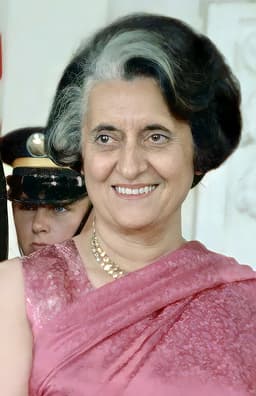
V. P. Singh
Politician · Modern
56.1Total
Basic Information
Born
1948
1931
Died
—
—
Era
Modern
Modern
Nationality
Portugal
India
Occupation
Politician
Politician
Civilization
Western
Indian
Score Comparison
Military (10%)
50.0
29.8
Political (20%)
68.0
68.0
Influence (20%)
53.3
58.3
Legacy (20%)
40.8
52.0
Leadership (15%)
72.0
62.2
Strategy (15%)
42.8
60.0
TOTAL
53.8
56.1
Marcelo Rebelo de Sousa — Complete Timeline
2015 AD
Constitutional Role in Government FormationPolitical Action◆ Major
As president-elect, Marcelo Rebelo de Sousa played a key role in forming a government after the 2015 election. He appointed Ant
GovernmentConstitutionDemocracy
Impact: nationalconstructive
2016 AD
Elected President of PortugalPolitical Action◆ Major
Marcelo Rebelo de Sousa won the Portuguese presidential election with 52% of the vote. He succeeded An
ElectionPresidency
Impact: nationalconstructive
2020 AD
COVID-19 Pandemic ResponsePolitical Action◆ Major
Marcelo Rebelo de Sousa used his presidential powers to declare states of emergency during the COVID-19 pandemic. He supported the government's lockdown measures and gave regular addresses to the nation, promoting unity.
PandemicLeadershipCrisis
Impact: nationalconstructive
2021 AD
Re-election as PresidentPolitical Action◆ Major
Marcelo Rebelo de Sousa was re-elected with 60.7% of the vote in the first round. His victory reflected broad public support for his consensual style and handling of the COVID-19 pandemic.
ElectionRe-election
Impact: nationalconstructive
V. P. Singh — Complete Timeline
1987 AD
Exposed Bofors Scandal as Defence MinisterPolitical Action◆ Major
As Defence Minister, V. P. Singh initiated investigations into the Bofors howitzer deal, alleging corruption involving the Rajiv Gandhi government. This led to his dismissal from the cabinet and later fueled his political rise.
CorruptionBoforsDefence Scandal
Impact: national
1989 AD
Appointed Prime Minister of IndiaPolitical Action◆ Major
V. P. Singh became the seventh Prime Minister of India, leading the National Front coalition government. His appointment followed the defeat of Rajiv Gandhi's Congress party in the general election.
Indian PoliticsCoalition GovernmentNational Front
Impact: nationalconstructive
1990 AD
Implemented Mandal Commission RecommendationsReform
As Prime Minister, V. P. Singh announced the implementation of the Mandal Commission's recommendations, reserving 27% of central government jobs for Other Backward Classes. This decision sparked widespread protests and political realignment in India.
ReservationSocial JusticeCaste Politics
Impact: nationalconstructive
Resigned as Prime MinisterPolitical Action◆ Major
V. P. Singh resigned as Prime Minister after losing a vote of confidence in the Lok Sabha, following the withdrawal of support by the Bharatiya Janata Party. His resignation ended the National Front government.
Indian PoliticsGovernment CollapseVote of Confidence
Impact: nationaldestructive
This comparison has not been analyzed yet.
One-time AI generation (~1 minute). Scores and timeline are already available below.
Rankings
🥇
V. P. SinghLeader
Mil: 29.8Pol: 68.0Inf: 58.3
56.1
🥈
Marcelo Rebelo de Sousa
Mil: 50.0Pol: 68.0Inf: 53.3
53.8
+2.3 behind
How This Comparison Works
Algorithm
Each figure is scored on 6 dimensions (0—100 scale) based on structured historical data: Military (10%), Political (20%), Influence (20%), Legacy (20%), Leadership (15%), Strategy (15%). The weighted total produces the final ranking.
Data Sources
Scores are computed from structured sub-indicators in the database. Scale factors adjust for era (Ancient ×0.85, Modern ×1.0) and civilization size (Eastern ×1.05, Other ×0.80) to account for differences in population and military scale.
Maximum 3 Figures
Comparisons are limited to 2—3 figures to ensure readability and statistical meaningfulness.
Error Margins
±5 points per dimension — Sub-scores are derived from historical records with inherent uncertainty. Two figures within 5 points on a dimension should be considered roughly equivalent in that area.
Total Score Accuracy
±3 points overall — The weighted combination of 6 dimensions produces a total score with approximately ±3 points of uncertainty. Differences of less than 3 points are not statistically significant— the figures are effectively tied.
Known Limitations
- Historical records are incomplete and uneven across civilizations
- Figures from oral-tradition societies may be underrepresented
- Occupation labels can misclassify multi-role figures
- Scores measure capability and impact, not moral character
- Quantitative scoring is a comparison tool, not absolute truth
Capability Radar
Military (10%) — Battles & Warfare
Battles
28
46
Win Rate
32
48
Expansion
35
49
Political (20%) — Governance & Reform
Reform
45
75
Diplomacy
55
55
Economy
50
30
Influence (20%) — Cultural & Global Reach
Cultural
30
60
Global
30
50
Legacy (20%) — Historical Impact
Historical
25
65
Longevity
20
55
Leadership (15%) — Power & Stability
Tenure
60
40
Stability
60
20
Strategy (15%) — Tactics & Innovation
Strategy
39
52
Tactics
39
58
Reform
45
56
Similar Comparisons
Comments & Discussion
No comments yet. Be the first to share your thoughts!