Loading...
This comparison has not been analyzed yet.
One-time AI generation (~1 minute). Scores and timeline are already available below.
Mario Garcia Menocal vs Tzipi Livni
Tzipi Livni leads by 1.1 pts · 2 figures compared
…
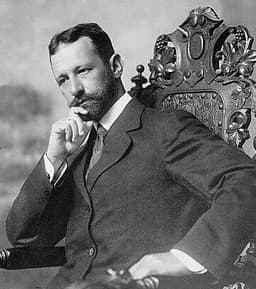
Mario Garcia Menocal
Politician · Modern
47.7Total

Tzipi Livni
Politician · Modern
48.8Total
Basic Information
Born
1866
1958
Died
1941
—
Era
Modern
Modern
Nationality
Cuba
Israel
Occupation
Politician
Politician
Civilization
Western
Middle Eastern
Score Comparison
Military (10%)
49.5
40.8
Political (20%)
46.6
45.1
Influence (20%)
48.6
53.3
Legacy (20%)
38.3
41.7
Leadership (15%)
65.0
65.7
Strategy (15%)
43.2
43.3
TOTAL
47.7
48.8
Mario Garcia Menocal — Complete Timeline
1912 AD
Election as President of CubaPolitical Action◆ Major
Mario Garcia Menocal was elected president of Cuba as the Conservative Party candidate. His presidency focused on economic development and infrastructure projects, leveraging his engineering background.
Cuban PoliticsElectionConservative Party
Impact: nationalconstructive
1915 AD
Construction of the Central HighwayReform◆ Major
Menocal oversaw the construction of the Central Highway, a major infrastructure project connecting Havana to eastern Cuba. The highway improved transportation and trade, but was criticized for high costs and corruption.
InfrastructureDevelopmentTransportation
Impact: nationalconstructive
1916 AD
Re-election Amidst Fraud AllegationsPolitical Action◆ Major
Menocal was re-elected in a disputed election marked by allegations of fraud and voter intimidation. The opposition Liberal Party claimed the election was stolen, leading to political instability and the failed coup by Jose Miguel Gomez.
Election FraudPolitical CrisisCoup Attempt
Impact: nationaldestructive
1917 AD
Cuban Entry into World War IPolitical Action
Menocal declared war on Germany in 1917, aligning Cuba with the Allied powers. Cuba's involvement was largely symbolic, but it strengthened ties with the United States and led to economic benefits from sugar exports.
World War IForeign PolicyUS-Cuba Relations
Impact: global
Tzipi Livni — Complete Timeline
2006 AD
Appointed Minister of Foreign AffairsPolitical Action◆ Major
Livni was appointed Foreign Minister under Prime Minister Ehud Olmert. She led Israel's diplomatic efforts, including peace negotiations with the Palestinian Authority and relations with the international community.
Foreign AffairsDiplomacyIsrael
Impact: globalconstructive
2007 AD
Led Peace Negotiations with PalestiniansPolitical Action◆ Major
Livni led the Israeli negotiating team in peace talks with Palestinian President Mahmoud Abbas, focusing on a two-state solution. The talks continued until 2008 but did not produce a final agreement.
Peace ProcessTwo-State SolutionPalestinians
Impact: regionalconstructive
2008 AD
Became Leader of Kadima PartyPolitical Action◆ Major
Livni won the Kadima party leadership election, succeeding Ehud Olmert. She was tasked with forming a coalition government but failed, leading to early elections in 2009.
KadimaParty LeadershipCoalition
Impact: national
2013 AD
Served as Minister of JusticePolitical Action◆ Major
Livni served as Minister of Justice and lead negotiator in the 2013-2014 peace talks brokered by US Secretary of State John Kerry. The talks collapsed in April 2014.
JusticePeace TalksUS Mediation
Impact: regionalconstructive
This comparison has not been analyzed yet.
One-time AI generation (~1 minute). Scores and timeline are already available below.
Rankings
🥇
Tzipi LivniLeader
Mil: 40.8Pol: 45.1Inf: 53.3
48.8
🥈
Mario Garcia Menocal
Mil: 49.5Pol: 46.6Inf: 48.6
47.7
+1.1 behind
How This Comparison Works
Algorithm
Each figure is scored on 6 dimensions (0—100 scale) based on structured historical data: Military (10%), Political (20%), Influence (20%), Legacy (20%), Leadership (15%), Strategy (15%). The weighted total produces the final ranking.
Data Sources
Scores are computed from structured sub-indicators in the database. Scale factors adjust for era (Ancient ×0.85, Modern ×1.0) and civilization size (Eastern ×1.05, Other ×0.80) to account for differences in population and military scale.
Maximum 3 Figures
Comparisons are limited to 2—3 figures to ensure readability and statistical meaningfulness.
Error Margins
±5 points per dimension — Sub-scores are derived from historical records with inherent uncertainty. Two figures within 5 points on a dimension should be considered roughly equivalent in that area.
Total Score Accuracy
±3 points overall — The weighted combination of 6 dimensions produces a total score with approximately ±3 points of uncertainty. Differences of less than 3 points are not statistically significant— the figures are effectively tied.
Known Limitations
- Historical records are incomplete and uneven across civilizations
- Figures from oral-tradition societies may be underrepresented
- Occupation labels can misclassify multi-role figures
- Scores measure capability and impact, not moral character
- Quantitative scoring is a comparison tool, not absolute truth
Capability Radar
Military (10%) — Battles & Warfare
Battles
30
23
Win Rate
29
25
Expansion
36
25
Political (20%) — Governance & Reform
Reform
30
30
Diplomacy
40
60
Economy
45
20
Influence (20%) — Cultural & Global Reach
Cultural
15
20
Global
15
40
Legacy (20%) — Historical Impact
Historical
20
30
Longevity
10
20
Leadership (15%) — Power & Stability
Tenure
55
40
Stability
25
25
Strategy (15%) — Tactics & Innovation
Strategy
37
31
Tactics
42
31
Reform
46
39
Similar Comparisons
Comments & Discussion
No comments yet. Be the first to share your thoughts!