Loading...
This comparison has not been analyzed yet.
One-time AI generation (~1 minute). Scores and timeline are already available below.
Mark W. Clark vs Mehmed Rushdi Pasha
Mehmed Rushdi Pasha leads by 17.0 pts · 2 figures compared
…
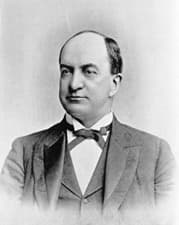
Mark W. Clark
General · Modern
39.9Total

Mehmed Rushdi Pasha
General · Modern
56.9Total
Basic Information
Born
1896
1811
Died
1984
1882
Era
Modern
Modern
Nationality
United States
Ottoman Empire
Occupation
General
General
Civilization
Western
Middle Eastern
Score Comparison
Military (10%)
10.0
46.7
Political (20%)
27.9
68.0
Influence (20%)
54.1
54.1
Legacy (20%)
42.5
46.7
Leadership (15%)
40.4
72.0
Strategy (15%)
45.0
60.0
TOTAL
39.9
56.9
Mark W. Clark — Complete Timeline
1942 AD
Appointment as Youngest US Lieutenant GeneralPolitical Action◆ Major
Clark was promoted to lieutenant general at age 46, becoming the youngest officer to hold that rank in the US Army at the time. This promotion placed him in command of the US Fifth Army for the invasion of Italy.
World War IIPromotionCareer
Impact: nationalconstructive
1943 AD
Command of the Allied Invasion of Italy (Operation Avalanche)War◆ Major
Clark commanded the US Fifth Army during the Allied invasion of mainland Italy at Salerno. The landings faced strong German resistance but succeeded in establishing a beachhead, leading to the eventual Allied advance up the Italian peninsula.
World War IIItalian CampaignInvasion
Impact: regional
1944 AD
Capture of RomeWar◆ Major
Clark's Fifth Army captured Rome on June 4, 1944, two days before the D-Day landings. The capture was a strategic victory, though Clark's decision to prioritize entering Rome over cutting off German retreat routes has been criticized.
World War IIItalian CampaignVictory
Impact: regionalconstructive
Command at the Battle of the Bulge (Relief of Bastogne)War◆ Major
Clark's 15th Army Group, including the US Third Army under Patton, relieved the besieged town of Bastogne during the Battle of the Bulge. This action helped halt the German offensive in the Ardennes.
World War IIBattle of the BulgeRelief
Impact: regionalconstructive
Mehmed Rushdi Pasha — Complete Timeline
1876 AD
Suppressed the 1876 Uprising in BosniaWar◆ Major
As Serasker, Mehmed Rushdi Pasha commanded Ottoman forces that suppressed a Christian uprising in Bosnia and Herzegovina. The rebellion was part of the wider Eastern Crisis and led to the Russo-Turkish War of 1877-1878.
BosniaRebellionEastern Crisis
Impact: regionaldestructive
Deposed Sultan AbdulazizPolitical Action
Mehmed Rushdi Pasha, as Serasker (Commander-in-Chief), led the military coup that deposed Sultan Abdulaziz. The coup was supported by reformist ministers who opposed the sultan's autocratic rule and financial mismanagement.
CoupAbdulazizConstitutional Era
Impact: national
Appointed Grand VizierPolitical Action◆ Major
Following the deposition of Abdulaziz, Mehmed Rushdi Pasha was appointed Grand Vizier. He oversaw the proclamation of the first Ottoman constitution and the accession of Murad V, though his tenure was brief due to political instability.
Grand VizierConstitutionReform
Impact: nationalconstructive
1878 AD
Dismissed from OfficePolitical Action
Mehmed Rushdi Pasha was dismissed from his position as Grand Vizier by Sultan Abdul Hamid II. He was exiled to his estate and played no further role in politics, dying in obscurity.
DismissalExile
Impact: national
This comparison has not been analyzed yet.
One-time AI generation (~1 minute). Scores and timeline are already available below.
Rankings
🥇
Mehmed Rushdi PashaLeader
Mil: 46.7Pol: 68.0Inf: 54.1
56.9
🥈
Mark W. Clark
Mil: 10.0Pol: 27.9Inf: 54.1
39.9
+17.0 behind
How This Comparison Works
Algorithm
Each figure is scored on 6 dimensions (0—100 scale) based on structured historical data: Military (10%), Political (20%), Influence (20%), Legacy (20%), Leadership (15%), Strategy (15%). The weighted total produces the final ranking.
Data Sources
Scores are computed from structured sub-indicators in the database. Scale factors adjust for era (Ancient ×0.85, Modern ×1.0) and civilization size (Eastern ×1.05, Other ×0.80) to account for differences in population and military scale.
Maximum 3 Figures
Comparisons are limited to 2—3 figures to ensure readability and statistical meaningfulness.
Error Margins
±5 points per dimension — Sub-scores are derived from historical records with inherent uncertainty. Two figures within 5 points on a dimension should be considered roughly equivalent in that area.
Total Score Accuracy
±3 points overall — The weighted combination of 6 dimensions produces a total score with approximately ±3 points of uncertainty. Differences of less than 3 points are not statistically significant— the figures are effectively tied.
Known Limitations
- Historical records are incomplete and uneven across civilizations
- Figures from oral-tradition societies may be underrepresented
- Occupation labels can misclassify multi-role figures
- Scores measure capability and impact, not moral character
- Quantitative scoring is a comparison tool, not absolute truth
Capability Radar
Military (10%) — Battles & Warfare
Battles
45
30
Win Rate
40
35
Expansion
25
20
Political (20%) — Governance & Reform
Reform
10
60
Diplomacy
15
50
Economy
10
40
Influence (20%) — Cultural & Global Reach
Cultural
15
30
Global
20
25
Legacy (20%) — Historical Impact
Historical
25
40
Longevity
20
30
Leadership (15%) — Power & Stability
Tenure
20
55
Stability
15
45
Strategy (15%) — Tactics & Innovation
Strategy
30
45
Tactics
35
40
Reform
20
50
Similar Comparisons
Comments & Discussion
No comments yet. Be the first to share your thoughts!