Loading...
This comparison has not been analyzed yet.
One-time AI generation (~1 minute). Scores and timeline are already available below.
Masinissa vs Valentinian I
Masinissa leads by 1.6 pts · 2 figures compared
…
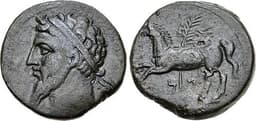
Masinissa
Emperor · Ancient
59.5Total
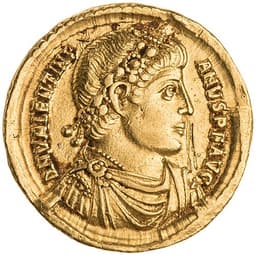
Valentinian I
Emperor · Ancient
57.9Total
Basic Information
Born
-238
321
Died
-148
375
Era
Ancient
Ancient
Nationality
Numidia
Roman Empire
Occupation
Emperor
Emperor
Civilization
Other
Western
Score Comparison
Military (10%)
67.3
60.0
Political (20%)
59.3
68.0
Influence (20%)
55.7
53.3
Legacy (20%)
50.0
45.8
Leadership (15%)
79.8
74.0
Strategy (15%)
55.0
58.0
TOTAL
59.5
57.9
Masinissa — Complete Timeline
206 BC
Alliance with RomePolitical Action◆ Major
Masinissa, king of the Massyli tribe in Numidia, allied with Rome during the Second Punic War. He switched sides from Carthage to Rome, providing crucial cavalry support to Scipio Africanus in the African campaign.
Second Punic WarAllianceNumidia
Impact: regional
202 BC
Battle of ZamaWar◆ Major
Masinissa commanded Numidian cavalry at the Battle of Zama, the decisive engagement of the Second Punic War. His cavalry charge routed Hannibal's forces, contributing directly to the Roman victory and the end of the war.
Second Punic WarBattleNumidian Cavalry
Impact: regional
201 BC
Unification of NumidiaPolitical Action◆ Major
After the Second Punic War, Masinissa unified the Numidian tribes under his rule, becoming the first king of a united Numidia. He ruled for over 50 years, expanding his kingdom and promoting agriculture and urbanization.
NumidiaUnificationKingdom
Impact: regionalconstructive
150 BC
Harassment of CarthageWar◆ Major
Masinissa repeatedly encroached on Carthaginian territory, provoking conflicts that Rome used as pretext for the Third Punic War. His aggressive expansionism weakened Carthage and contributed to its eventual destruction.
Third Punic WarCarthageExpansion
Impact: regionaldestructive
Valentinian I — Complete Timeline
364 AD
Election as Roman EmperorPolitical Action◆ Major
After the sudden death of Jovian, the Roman army elected Valentinian I as emperor at Nicaea. Valentinian was a capable military officer from Pannonia. He immediately appointed his brother Valens as co-emperor for the East, dividing the empire.
Imperial ElectionDivision of EmpireRoman Empire
Impact: regionalconstructive
365 AD
Campaigns against the AlamanniWar◆ Major
Valentinian I launched a series of campaigns against the Alamanni tribes who had invaded Gaul. He crossed the Rhine River and defeated them at the Battle of Solicinium (modern Rottenburg am Neckar). These campaigns secured the Rhine frontier for a decade.
Germanic WarsBattleRoman Empire
Impact: regionalconstructive
369 AD
Fortification of the Rhine and Danube frontiersReform◆ Major
Valentinian I ordered an extensive program of fortification along the Rhine and Danube borders. He built new forts, repaired existing walls, and established a system of watchtowers. This defensive strategy strengthened Roman control and deterred barbarian raids.
Military ReformFrontier DefenseRoman Empire
Impact: regionalconstructive
375 AD
Death from apoplexy during a diplomatic meetingOther◆ Major
While receiving a delegation of Quadi barbarians at Brigetio on the Danube, Valentinian I became enraged at their insolent demeanor. He suffered a stroke (apoplexy) and died shortly after. His sudden death left the Western Empire in the hands of his young sons Gratian and Valentinian II.
DeathDiplomacyRoman Empire
Impact: regionaltragic
This comparison has not been analyzed yet.
One-time AI generation (~1 minute). Scores and timeline are already available below.
Rankings
🥇
MasinissaLeader
Mil: 67.3Pol: 59.3Inf: 55.7
59.5
🥈
Valentinian I
Mil: 60.0Pol: 68.0Inf: 53.3
57.9
+1.6 behind
How This Comparison Works
Algorithm
Each figure is scored on 6 dimensions (0—100 scale) based on structured historical data: Military (10%), Political (20%), Influence (20%), Legacy (20%), Leadership (15%), Strategy (15%). The weighted total produces the final ranking.
Data Sources
Scores are computed from structured sub-indicators in the database. Scale factors adjust for era (Ancient ×0.85, Modern ×1.0) and civilization size (Eastern ×1.05, Other ×0.80) to account for differences in population and military scale.
Maximum 3 Figures
Comparisons are limited to 2—3 figures to ensure readability and statistical meaningfulness.
Error Margins
±5 points per dimension — Sub-scores are derived from historical records with inherent uncertainty. Two figures within 5 points on a dimension should be considered roughly equivalent in that area.
Total Score Accuracy
±3 points overall — The weighted combination of 6 dimensions produces a total score with approximately ±3 points of uncertainty. Differences of less than 3 points are not statistically significant— the figures are effectively tied.
Known Limitations
- Historical records are incomplete and uneven across civilizations
- Figures from oral-tradition societies may be underrepresented
- Occupation labels can misclassify multi-role figures
- Scores measure capability and impact, not moral character
- Quantitative scoring is a comparison tool, not absolute truth
Capability Radar
Military (10%) — Battles & Warfare
Battles
65
75
Win Rate
70
70
Expansion
70
55
Political (20%) — Governance & Reform
Reform
70
65
Diplomacy
80
55
Economy
75
60
Influence (20%) — Cultural & Global Reach
Cultural
50
45
Global
45
35
Legacy (20%) — Historical Impact
Historical
60
55
Longevity
55
40
Leadership (15%) — Power & Stability
Tenure
85
60
Stability
65
50
Strategy (15%) — Tactics & Innovation
Strategy
75
70
Tactics
60
65
Reform
55
60
Similar Comparisons
Comments & Discussion
No comments yet. Be the first to share your thoughts!