Loading...
Seleucus I Nicator vs Valentinian I
Seleucus I Nicator leads by 8.6 pts · 2 figures compared
…
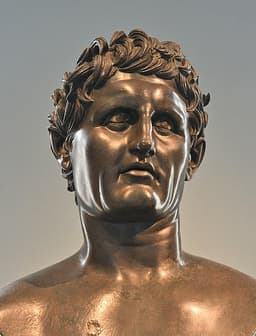
Seleucus I Nicator
Emperor · Ancient
66.5Total
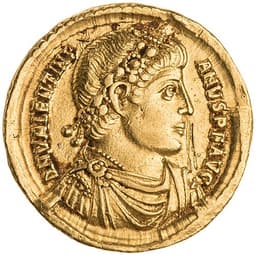
Valentinian I
Emperor · Ancient
57.9Total
Basic Information
Born
-358
321
Died
-281
375
Era
Ancient
Ancient
Nationality
Seleucid Empire
Roman Empire
Occupation
Emperor
Emperor
Civilization
Western
Western
Score Comparison
Military (10%)
78.5
60.0
Political (20%)
72.0
68.0
Influence (20%)
62.0
53.3
Legacy (20%)
55.0
45.8
Leadership (15%)
78.0
74.0
Strategy (15%)
69.1
58.0
TOTAL
66.5
57.9
Seleucus I Nicator — Complete Timeline
312 BC
Foundation of the Seleucid EmpirePolitical Action◆ Major
After the death of Alexander, Seleucus established control over Babylon and the eastern satrapies. He founded the Seleucid Empire, which stretched from Anatolia to India, and adopted the title of king. This marked the beginning of the Hellenistic period in the East.
DiadochiEmpireHellenistic
Impact: globalconstructive
301 BC
Battle of IpsusWar
Seleucus I Nicator fought against Antigonus I Monophthalmus at Ipsus. The allied forces of Seleucus, Lysimachus, and Cassander defeated Antigonus, who was killed. This battle solidified the division of Alexander's empire, with Seleucus gaining control of Syria and Mesopotamia.
DiadochiBattleSeleucid Empire
Impact: regionaldestructive
300 BC
Founding of AntiochCultural◆ Major
Seleucus I founded the city of Antioch on the Orontes River, which became the capital of the Seleucid Empire. The city grew into a major center of Hellenistic culture, trade, and politics, rivaling Alexandria in importance.
Seleucid EmpireCity FoundationHellenistic
Impact: regionalconstructive
281 BC
Assassination by Ptolemy CeraunusPolitical Action◆ Major
Seleucus I was assassinated by Ptolemy Ceraunus, a son of Ptolemy I, while campaigning in Thrace. His death ended the last major Diadochi conflict and left the Seleucid Empire to his son Antiochus I, who faced challenges from within and without.
DiadochiAssassinationSeleucid Empire
Impact: regionaltragic
Valentinian I — Complete Timeline
364 AD
Election as Roman EmperorPolitical Action◆ Major
After the sudden death of Jovian, the Roman army elected Valentinian I as emperor at Nicaea. Valentinian was a capable military officer from Pannonia. He immediately appointed his brother Valens as co-emperor for the East, dividing the empire.
Imperial ElectionDivision of EmpireRoman Empire
Impact: regionalconstructive
365 AD
Campaigns against the AlamanniWar◆ Major
Valentinian I launched a series of campaigns against the Alamanni tribes who had invaded Gaul. He crossed the Rhine River and defeated them at the Battle of Solicinium (modern Rottenburg am Neckar). These campaigns secured the Rhine frontier for a decade.
Germanic WarsBattleRoman Empire
Impact: regionalconstructive
369 AD
Fortification of the Rhine and Danube frontiersReform◆ Major
Valentinian I ordered an extensive program of fortification along the Rhine and Danube borders. He built new forts, repaired existing walls, and established a system of watchtowers. This defensive strategy strengthened Roman control and deterred barbarian raids.
Military ReformFrontier DefenseRoman Empire
Impact: regionalconstructive
375 AD
Death from apoplexy during a diplomatic meetingOther◆ Major
While receiving a delegation of Quadi barbarians at Brigetio on the Danube, Valentinian I became enraged at their insolent demeanor. He suffered a stroke (apoplexy) and died shortly after. His sudden death left the Western Empire in the hands of his young sons Gratian and Valentinian II.
DeathDiplomacyRoman Empire
Impact: regionaltragic
Expert Analysis
Origins
Seleucus I Nicator was born around 358 BC in Europos, Macedonia, to Antiochus, a general under Philip II. He served as a young officer in Alexander the Great's campaigns, gaining experience in administration and warfare. His noble Macedonian background provided him with connections and military training, but he was not of royal blood. Valentinian I was born in 321 AD in Cibalae, Pannonia, to Gratianus Funarius, a military officer. His father rose to prominence as a comes, and Valentinian grew up in a military environment. He lacked formal education but was trained as a soldier, serving in the Roman army under emperors Julian and Jovian.
Rise to Power
Seleucus rose after Alexander's death in 323 BC. As a Diadochi, he initially received the satrapy of Babylon in 321 BC. He fled to Egypt after Antigonus threatened him but returned in 312 BC, defeating Demetrius Poliorcetes at the Battle of Gaza. This victory allowed him to reclaim Babylon and expand eastward. By 301 BC, he allied with Lysimachus and Cassander to defeat Antigonus at the Battle of Ipsus, securing Syria and Anatolia. His empire stretched from the Mediterranean to India. Valentinian I was elected emperor in 364 AD after Jovian's death. The army chose him at Nicaea for his military competence and stern character. He appointed his brother Valens as co-emperor, taking the West while Valens ruled the East. His rise was swift, relying on army support.
Leadership & Governance
Seleucus governed as a Hellenistic monarch, blending Greek and Persian elements. He founded numerous cities, notably Antioch, which became his capital, and Seleucia on the Tigris. He promoted Hellenization but allowed local autonomy, using satraps and garrisons. His military score of 78.5 reflects his success in expanding and defending his realm. Valentinian I ruled the Western Roman Empire with a focus on military defense. He reformed the army, increased fortifications along the Rhine and Danube, and fought campaigns against the Alamanni, Quadi, and Sarmatians. His political score of 68.0 indicates competent administration, but he faced religious conflicts, supporting Nicene Christianity while tolerating pagans. He was harsh, executing rivals and suppressing dissent.
Triumph & Tragedy
Seleucus's greatest triumph was founding the Seleucid Empire, controlling territories from Anatolia to India, and his victory at Ipsus. He also established a stable administration and coinage. His tragedy was his assassination in 281 BC by Ptolemy Ceraunus while trying to claim the Macedonian throne. This ended his expansion and led to the empire's gradual decline. Valentinian's triumph was fortifying the frontiers, securing Gaul and Britain from barbarian incursions. He scored 74.0 in leadership, reflecting his ability to command respect. His tragedy was his death from apoplexy in 375 AD during a diplomatic meeting with the Quadi, triggered by rage. This left his young sons Gratian and Valentinian II to rule, leading to instability.
Character & Destiny
Seleucus was ambitious, strategic, and patient. He skillfully navigated alliances and betrayals, earning the epithet "Nicator" (Victor). His character shaped his destiny: he built a vast empire but died pursuing further glory. Historical assessments note his diplomatic acumen and city-building. Valentinian was stern, disciplined, and hot-tempered. His military background made him effective against threats, but his anger led to his death. He was seen as a capable soldier-emperor, but his harshness alienated some. His character contributed to his downfall, as his rage proved fatal.
Legacy
Seleucus's legacy is the Seleucid Empire, which lasted until 63 BC, spreading Hellenistic culture across the Near East. Antioch remained a major city for centuries. His score of 62.0 in influence reflects his impact on the region. Valentinian's legacy is his defensive fortifications, which delayed barbarian invasions. He also strengthened the Roman army's border system. However, his death exposed the weakness of hereditary succession. His influence score of 53.3 shows a more limited impact, as his reforms were overshadowed by the empire's later collapse.
Conclusion
Seleucus I Nicator had a greater impact than Valentinian I. His total score of 66.5 vs 57.9 reflects his broader influence and military achievements. While Valentinian successfully defended the Roman frontier, his work was temporary. Seleucus founded a dynasty and a civilization that shaped the Hellenistic world for centuries. His strategic vision and political skills created a lasting empire, whereas Valentinian's efforts were reactive and ultimately failed to prevent Rome's decline. Seleucus's higher scores in military (78.5 vs 60.0) and political (72.0 vs 68.0) underscore his superior impact.
Rankings
🥇
Seleucus I NicatorLeader
Mil: 78.5Pol: 72.0Inf: 62.0
66.5
🥈
Valentinian I
Mil: 60.0Pol: 68.0Inf: 53.3
57.9
+8.6 behind
How This Comparison Works
Algorithm
Each figure is scored on 6 dimensions (0—100 scale) based on structured historical data: Military (10%), Political (20%), Influence (20%), Legacy (20%), Leadership (15%), Strategy (15%). The weighted total produces the final ranking.
Data Sources
Scores are computed from structured sub-indicators in the database. Scale factors adjust for era (Ancient ×0.85, Modern ×1.0) and civilization size (Eastern ×1.05, Other ×0.80) to account for differences in population and military scale.
Maximum 3 Figures
Comparisons are limited to 2—3 figures to ensure readability and statistical meaningfulness.
Error Margins
±5 points per dimension — Sub-scores are derived from historical records with inherent uncertainty. Two figures within 5 points on a dimension should be considered roughly equivalent in that area.
Total Score Accuracy
±3 points overall — The weighted combination of 6 dimensions produces a total score with approximately ±3 points of uncertainty. Differences of less than 3 points are not statistically significant— the figures are effectively tied.
Known Limitations
- Historical records are incomplete and uneven across civilizations
- Figures from oral-tradition societies may be underrepresented
- Occupation labels can misclassify multi-role figures
- Scores measure capability and impact, not moral character
- Quantitative scoring is a comparison tool, not absolute truth
Capability Radar
Military (10%) — Battles & Warfare
Battles
85
75
Win Rate
80
70
Expansion
90
55
Political (20%) — Governance & Reform
Reform
75
65
Diplomacy
80
55
Economy
70
60
Influence (20%) — Cultural & Global Reach
Cultural
60
45
Global
70
35
Legacy (20%) — Historical Impact
Historical
80
55
Longevity
75
40
Leadership (15%) — Power & Stability
Tenure
80
60
Stability
65
50
Strategy (15%) — Tactics & Innovation
Strategy
85
70
Tactics
75
65
Reform
70
60
Similar Comparisons
Comments & Discussion
No comments yet. Be the first to share your thoughts!