Loading...
Matteo Renzi vs Olafur Ragnar Grimsson
Olafur Ragnar Grimsson leads by 4.2 pts · 2 figures compared
…
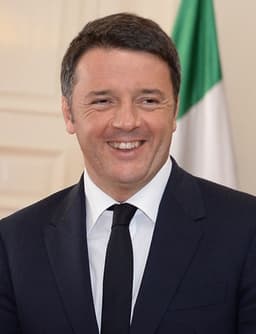
Matteo Renzi
Politician · Modern
50.4Total
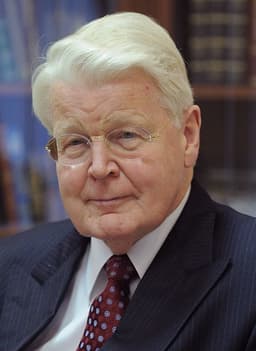
Olafur Ragnar Grimsson
Politician · Modern
54.6Total
Basic Information
Born
1975
1943
Died
—
—
Era
Modern
Modern
Nationality
Italy
Iceland
Occupation
Politician
Politician
Civilization
Western
Western
Score Comparison
Military (10%)
13.3
30.7
Political (20%)
68.0
68.0
Influence (20%)
56.4
54.1
Legacy (20%)
42.5
44.2
Leadership (15%)
67.0
72.0
Strategy (15%)
41.1
60.0
TOTAL
50.4
54.6
Matteo Renzi — Complete Timeline
2013 AD
Elected Secretary of the Democratic PartyPolitical Action◆ Major
Renzi was elected Secretary of the Democratic Party in a primary election, defeating the incumbent Pier Luigi Bersani. His victory signaled a shift towards a more centrist and reformist agenda within the party.
Party LeadershipDemocratic PartyPrimary
Impact: nationalconstructive
2014 AD
Passed the Jobs Act Labor ReformReform◆ Major
Renzi's government passed the Jobs Act, a major labor market reform that relaxed dismissal rules and expanded temporary contracts. The reform aimed to reduce unemployment but was criticized for increasing job precarity.
Labor ReformEconomic PolicyJobs Act
Impact: national
Appointed Prime Minister of ItalyPolitical Action◆ Major
Renzi became the youngest Prime Minister in Italian history at age 39, succeeding Enrico Letta. He promised sweeping reforms and a new political style, initially enjoying high popularity and media attention.
YouthReform AgendaPolitical Change
Impact: nationalconstructive
2016 AD
Lost Constitutional Referendum and ResignedPolitical Action◆ Major
Renzi staked his premiership on a constitutional referendum to reduce the Senate's power and streamline legislation. The proposal was rejected by 59% of voters, leading to his resignation and a political crisis.
ReferendumConstitutional ReformPolitical Defeat
Impact: nationaldestructive
Olafur Ragnar Grimsson — Complete Timeline
1996 AD
Elected President of IcelandPolitical Action◆ Major
Olafur Ragnar Grimsson was elected President of Iceland, succeeding Vigdis Finnbogadottir. He won with 41.4% of the vote. His presidency began a period of 20 years in office, making him one of Europe's longest-serving heads of state.
ElectionPresidency
Impact: nationalconstructive
2004 AD
Controversial Veto of Media BillPolitical Action◆ Major
Grimsson refused to sign a media ownership bill passed by parliament, triggering a national referendum. The bill aimed to restrict media ownership. Voters rejected the bill in the referendum. This was the first time a president used the veto power since Iceland's independence.
VetoMedia FreedomReferendum
Impact: national
2008 AD
Re-elected UnopposedPolitical Action
Grimsson was re-elected President of Iceland unopposed as no other candidate qualified for the ballot. This occurred during the 2008 financial crisis that severely impacted Iceland. His unopposed re-election reflected political consensus during a national emergency.
Re-electionFinancial Crisis
Impact: national
2016 AD
Declined to Seek Re-electionPolitical Action◆ Major
Grimsson announced he would not seek re-election after 20 years as president. His decision followed the Panama Papers scandal, in which his wife was implicated. He left office in August 2016, ending the longest presidential tenure in Iceland's history.
ResignationPanama Papers
Impact: national
Expert Analysis
Origins
Matteo Renzi was born on January 11, 1975, in Florence, Italy, into a middle-class family. His father was a businessman, his mother a teacher. Renzi studied law at the University of Florence, graduating in 1999. He entered politics early, joining the Italian People's Party and later the Democratic Party (PD). His formative experience was as provincial president of Florence from 2004 to 2009, where he gained a reputation for efficiency and a reformist agenda.
Olafur Ragnar Grimsson was born on May 14, 1943, in Ísafjörður, Iceland. His father was a fisherman and farmer, his mother a homemaker. Grimsson earned a PhD in political science from the University of Manchester in 1970, focusing on Icelandic political parties. He taught at the University of Iceland and became a prominent academic. His early political career began in the 1970s as a member of the Althingi (Iceland's parliament) for the People's Alliance party.
Rise to Power
Renzi's rise was meteoric. He became mayor of Florence in 2009 at age 34, winning with 60% of the vote. In 2012, he ran for secretary of the Democratic Party, defeating incumbent Pier Luigi Bersani in a primary. In February 2014, after a party coup, he was appointed Prime Minister at age 39, the youngest in Italian history. He promised a 'scrapping' of the old political class.
Grimsson's path was steadier. He served as finance minister from 1988 to 1991 and as a member of parliament for many years. In 1996, he ran for president, winning with 41.4% of the vote, succeeding Vigdis Finnbogadottir. His presidency began a period of 20 years in office, during which he was re-elected unopposed in 2000 (after the 1999 election was uncontested) and again in 2004, 2008, and 2012, often with no challengers.
Leadership & Governance
Renzi's leadership style was aggressive and reformist. He pushed through the 'Jobs Act' in 2014, which relaxed dismissal rules and expanded temporary contracts, scoring a political victory with a score of 68.0 in political skill. However, his governance was polarizing: he centralized power in the prime minister's office and bypassed party structures. His attempt to streamline the Senate through a constitutional referendum in 2016 failed, with 59% voting no, leading to his resignation. Renzi's strategy score of 41.1 reflects this misstep.
Grimsson's leadership was more consensus-based, but he also wielded significant power through vetoes. In 2004, he refused to sign a media ownership bill, triggering a national referendum where voters upheld his veto. He scored 72.0 in leadership, reflecting his ability to connect with the public. However, his style was criticized as monarchical after 20 years in office. His governance focused on Iceland's foreign policy and economic recovery after the 2008 financial crisis.
Triumph & Tragedy
Renzi's greatest success was the Jobs Act, which contributed to a decline in unemployment from 12.7% in 2014 to 11.2% in 2016. He also modernized the Democratic Party and promoted a youthful image. His greatest failure was the 2016 constitutional referendum, where he staked his career and lost. This not only ended his premiership but also weakened the reform agenda.
Grimsson's triumph was his long tenure and his role in stabilizing Iceland after the 2008 financial crisis. He was a popular figure, with approval ratings often above 70%. His tragedy was the Panama Papers scandal in 2016, where his wife was implicated in offshore holdings. Grimsson announced he would not seek re-election, ending his 20-year presidency on a sour note. His legacy score of 44.2 reflects this mixed record.
Character & Destiny
Renzi was charismatic and ambitious, but his character was marked by overconfidence. He often acted unilaterally, alienating allies. His destiny was shaped by his willingness to take risks, but his strategic failures (score 41.1) led to his downfall. Historians view him as a reformer who failed to build lasting consensus.
Grimsson was steady and intelligent, but also aloof. His character was suited to Iceland's small, consensus-driven society. He used his presidential powers sparingly but effectively. His destiny was to be a long-serving figurehead who became a symbol of continuity. However, the Panama Papers tarnished his reputation, showing that even careful leaders can be undone by scandal.
Legacy
Renzi's legacy is mixed. The Jobs Act remains in place, but his broader reform agenda stalled. He inspired a generation of younger politicians but also polarized Italian politics. His total score of 50.4 reflects a moderate impact.
Grimsson's legacy is more solid. He modernized the Icelandic presidency, used referendums to empower voters, and was a respected international figure. His total score of 54.6 gives him a slight edge. However, his long tenure also concentrated power in the presidency, which critics say undermined democratic accountability.
Conclusion
Olafur Ragnar Grimsson had a greater impact than Matteo Renzi, as reflected in his higher total score of 54.6 vs. 50.4. Grimsson's leadership score of 72.0 and strategy score of 60.0 outpaced Renzi's 67.0 and 41.1, respectively. While Renzi's reforms were more ambitious, they were less enduring. Grimsson's 20-year presidency and his use of referendums left a lasting mark on Icelandic democracy. Renzi's failure in the 2016 referendum undermined his achievements. Therefore, Grimsson's steady, albeit controversial, tenure edges out Renzi's bold but flawed premiership.
Rankings
🥇
Olafur Ragnar GrimssonLeader
Mil: 30.7Pol: 68.0Inf: 54.1
54.6
🥈
Matteo Renzi
Mil: 13.3Pol: 68.0Inf: 56.4
50.4
+4.2 behind
How This Comparison Works
Algorithm
Each figure is scored on 6 dimensions (0—100 scale) based on structured historical data: Military (10%), Political (20%), Influence (20%), Legacy (20%), Leadership (15%), Strategy (15%). The weighted total produces the final ranking.
Data Sources
Scores are computed from structured sub-indicators in the database. Scale factors adjust for era (Ancient ×0.85, Modern ×1.0) and civilization size (Eastern ×1.05, Other ×0.80) to account for differences in population and military scale.
Maximum 3 Figures
Comparisons are limited to 2—3 figures to ensure readability and statistical meaningfulness.
Error Margins
±5 points per dimension — Sub-scores are derived from historical records with inherent uncertainty. Two figures within 5 points on a dimension should be considered roughly equivalent in that area.
Total Score Accuracy
±3 points overall — The weighted combination of 6 dimensions produces a total score with approximately ±3 points of uncertainty. Differences of less than 3 points are not statistically significant— the figures are effectively tied.
Known Limitations
- Historical records are incomplete and uneven across civilizations
- Figures from oral-tradition societies may be underrepresented
- Occupation labels can misclassify multi-role figures
- Scores measure capability and impact, not moral character
- Quantitative scoring is a comparison tool, not absolute truth
Capability Radar
Military (10%) — Battles & Warfare
Battles
21
47
Win Rate
24
51
Expansion
27
56
Political (20%) — Governance & Reform
Reform
55
45
Diplomacy
50
55
Economy
45
50
Influence (20%) — Cultural & Global Reach
Cultural
30
30
Global
40
35
Legacy (20%) — Historical Impact
Historical
35
35
Longevity
20
30
Leadership (15%) — Power & Stability
Tenure
40
60
Stability
30
65
Strategy (15%) — Tactics & Innovation
Strategy
29
54
Tactics
35
58
Reform
39
61
Similar Comparisons
Comments & Discussion
No comments yet. Be the first to share your thoughts!