Loading...
Matteo Renzi vs Mbonu Ojike
Matteo Renzi leads by 6.6 pts · 2 figures compared
…
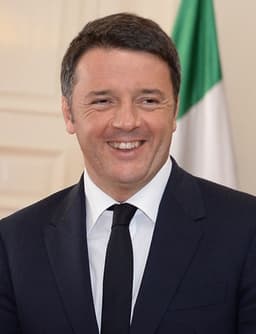
Matteo Renzi
Politician · Modern
50.4Total

Mbonu Ojike
Politician · Modern
43.8Total
Basic Information
Born
1975
1914
Died
—
1956
Era
Modern
Modern
Nationality
Italy
Nigeria
Occupation
Politician
Politician
Civilization
Western
Other
Score Comparison
Military (10%)
13.3
24.5
Political (20%)
68.0
43.7
Influence (20%)
56.4
53.3
Legacy (20%)
42.5
41.7
Leadership (15%)
67.0
45.0
Strategy (15%)
41.1
42.9
TOTAL
50.4
43.8
Matteo Renzi — Complete Timeline
2013 AD
Elected Secretary of the Democratic PartyPolitical Action◆ Major
Renzi was elected Secretary of the Democratic Party in a primary election, defeating the incumbent Pier Luigi Bersani. His victory signaled a shift towards a more centrist and reformist agenda within the party.
Party LeadershipDemocratic PartyPrimary
Impact: nationalconstructive
2014 AD
Passed the Jobs Act Labor ReformReform◆ Major
Renzi's government passed the Jobs Act, a major labor market reform that relaxed dismissal rules and expanded temporary contracts. The reform aimed to reduce unemployment but was criticized for increasing job precarity.
Labor ReformEconomic PolicyJobs Act
Impact: national
Appointed Prime Minister of ItalyPolitical Action◆ Major
Renzi became the youngest Prime Minister in Italian history at age 39, succeeding Enrico Letta. He promised sweeping reforms and a new political style, initially enjoying high popularity and media attention.
YouthReform AgendaPolitical Change
Impact: nationalconstructive
2016 AD
Lost Constitutional Referendum and ResignedPolitical Action◆ Major
Renzi staked his premiership on a constitutional referendum to reduce the Senate's power and streamline legislation. The proposal was rejected by 59% of voters, leading to his resignation and a political crisis.
ReferendumConstitutional ReformPolitical Defeat
Impact: nationaldestructive
Mbonu Ojike — Complete Timeline
1944 AD
Founded the African Continental BankPolitical Action◆ Major
Mbonu Ojike was a key figure in founding the African Continental Bank (ACB) alongside Nnamdi Azikiwe. The bank was established to provide financial services to Nigerians and promote African economic independence from European-controlled banks.
BankingEconomic NationalismAfrican Continental Bank
Impact: nationalconstructive
1949 AD
Led the 'Boycott All Boycottable Goods' campaignPolitical Action◆ Major
Mbonu Ojike led a campaign urging Nigerians to boycott European goods and services as a form of economic protest against colonial rule. The campaign promoted African self-reliance and local industries, making Ojike a prominent figure in the nationalist movement.
BoycottEconomic NationalismColonial Protest
Impact: nationalconstructive
1951 AD
Elected to the Eastern Region House of AssemblyPolitical Action
Mbonu Ojike was elected to the Eastern Region House of Assembly as a member of the National Council of Nigeria and the Cameroons (NCNC). He served as a legislator and later as a minister, advocating for progressive policies and Africanization.
Eastern RegionNCNCLegislator
Impact: regionalconstructive
1954 AD
Appointed Minister of Works in Eastern RegionPolitical Action
Mbonu Ojike was appointed Minister of Works in the Eastern Region government. He oversaw infrastructure projects, including road construction and public building development, contributing to the region's physical development.
InfrastructureEastern RegionMinister
Impact: regionalconstructive
Expert Analysis
Origins
Matteo Renzi was born in Florence, Italy, on January 11, 1975, into a middle-class family. His father was a businessman and his mother a teacher. Renzi studied law at the University of Florence and became active in Catholic scouting and politics early on. He joined the centrist Christian Democracy party before its dissolution, then moved to the center-left Democratic Party (PD). His early career included working for his family's marketing company and serving as a provincial councilor.
Mbonu Ojike was born in 1914 in Osisioma Ngwa, southeastern Nigeria, into a farming family. He attended local mission schools and later studied at the University of Ghana and the University of Pennsylvania, earning a master's degree in education. Ojike became a teacher and a prominent figure in the Nigerian nationalist movement, influenced by pan-Africanist ideas and the leadership of Nnamdi Azikiwe.
Rise to Power
Renzi's rise was meteoric. He became mayor of Florence in 2009 at age 34, gaining national attention for his energetic style and reforms. In December 2013, he challenged and defeated the incumbent PD secretary Pier Luigi Bersani, winning the primary with 68% of the vote. In February 2014, he engineered the resignation of Prime Minister Enrico Letta and became Italy's youngest premier at age 39, with a promise of sweeping reforms.
Ojike's rise came through grassroots activism. He joined the National Council of Nigeria and the Cameroons (NCNC) and became a key strategist for economic nationalism. He was elected to the Eastern Region House of Assembly in 1951 and later served as Minister of Works in the Eastern Region government. His leadership of the 'Boycott All Boycottable Goods' campaign in the late 1940s made him a household name, challenging British colonial economic dominance.
Leadership & Governance
Renzi's leadership was characterized by a confrontational, reformist style. He passed the Jobs Act in 2014, which relaxed dismissal rules and expanded temporary contracts, aiming to reduce unemployment. He also reformed the education system and introduced a new electoral law. However, his top-down approach alienated many in his party and the public. His governance score is 67.0, reflecting his ability to push through legislation but also his polarizing nature.
Ojike's leadership was more focused on collective action and anti-colonial resistance. As Minister of Works, he oversaw infrastructure projects like road construction. He was a key figure in founding the African Continental Bank (ACB) in 1947, which provided financial services for Nigerians and reduced dependence on British banks. His strategy score is 42.9, indicating a more ideological than operational approach.
Triumph & Tragedy
Renzi's greatest success was the Jobs Act, which contributed to a temporary drop in unemployment. He also secured a major EU budget flexibility agreement. However, his greatest failure was the 2016 constitutional referendum. He staked his premiership on reducing the Senate's power, but 59% of voters rejected it, leading to his resignation. This loss derailed his reform agenda and left the PD in disarray.
Ojike's triumph was the boycott campaign, which boosted Nigerian economic nationalism and inspired future movements. The African Continental Bank remains a legacy institution. However, his career was cut short by his death in 1956 at age 42, leaving many goals unfulfilled. He never held top national office, limiting his direct political impact.
Character & Destiny
Renzi is seen as ambitious, impatient, and charismatic. His willingness to take risks—like staking his job on the referendum—showed confidence but also recklessness. His political score of 68.0 reflects his skill in winning power but not in sustaining it. His destiny was to be a reformer who overreached.
Ojike was principled and determined, but less politically agile. His nationalist fervor drove him to advocate for independence, but his early death prevented him from seeing it. His influence score of 53.3 indicates he was a significant figure but not a top-tier leader.
Legacy
Renzi's legacy is mixed. The Jobs Act is still in place, but his broader institutional reforms failed. He reshaped the PD but also contributed to its fragmentation. His influence on Italian politics is measured by his score of 56.4, showing he changed the conversation but not the system.
Ojike's legacy endures in Nigeria's economic nationalism and the African Continental Bank. He is remembered as a pioneer of non-violent economic resistance. His legacy score of 41.7 reflects his niche but lasting impact.
Conclusion
Matteo Renzi had greater impact on his country's governance and political system, with a total score of 50.4 compared to Ojike's 43.8. While Ojike's contributions to anti-colonial economic resistance were significant, Renzi's reforms directly altered Italy's labor market and political dynamics, even if his most ambitious changes failed. His political and leadership scores (68.0 and 67.0) outweigh Ojike's (43.7 and 45.0). Thus, Renzi's impact, though contested, was more tangible and far-reaching.
Rankings
🥇
Matteo RenziLeader
Mil: 13.3Pol: 68.0Inf: 56.4
50.4
🥈
Mbonu Ojike
Mil: 24.5Pol: 43.7Inf: 53.3
43.8
+6.6 behind
How This Comparison Works
Algorithm
Each figure is scored on 6 dimensions (0—100 scale) based on structured historical data: Military (10%), Political (20%), Influence (20%), Legacy (20%), Leadership (15%), Strategy (15%). The weighted total produces the final ranking.
Data Sources
Scores are computed from structured sub-indicators in the database. Scale factors adjust for era (Ancient ×0.85, Modern ×1.0) and civilization size (Eastern ×1.05, Other ×0.80) to account for differences in population and military scale.
Maximum 3 Figures
Comparisons are limited to 2—3 figures to ensure readability and statistical meaningfulness.
Error Margins
±5 points per dimension — Sub-scores are derived from historical records with inherent uncertainty. Two figures within 5 points on a dimension should be considered roughly equivalent in that area.
Total Score Accuracy
±3 points overall — The weighted combination of 6 dimensions produces a total score with approximately ±3 points of uncertainty. Differences of less than 3 points are not statistically significant— the figures are effectively tied.
Known Limitations
- Historical records are incomplete and uneven across civilizations
- Figures from oral-tradition societies may be underrepresented
- Occupation labels can misclassify multi-role figures
- Scores measure capability and impact, not moral character
- Quantitative scoring is a comparison tool, not absolute truth
Capability Radar
Military (10%) — Battles & Warfare
Battles
21
22
Win Rate
24
22
Expansion
27
25
Political (20%) — Governance & Reform
Reform
55
40
Diplomacy
50
35
Economy
45
30
Influence (20%) — Cultural & Global Reach
Cultural
30
35
Global
40
25
Legacy (20%) — Historical Impact
Historical
35
30
Longevity
20
20
Leadership (15%) — Power & Stability
Tenure
40
15
Stability
30
20
Strategy (15%) — Tactics & Innovation
Strategy
29
29
Tactics
35
33
Reform
39
39
Similar Comparisons
Comments & Discussion
No comments yet. Be the first to share your thoughts!