Loading...
This comparison has not been analyzed yet.
One-time AI generation (~1 minute). Scores and timeline are already available below.
Maurice of Saxony vs Valerii Zaluzhnyi
Maurice of Saxony leads by 5.8 pts · 2 figures compared
…

Maurice of Saxony
General · Modern
58.1Total
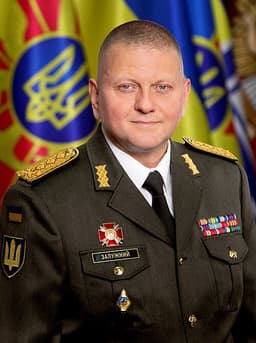
Valerii Zaluzhnyi
General · Modern
52.3Total
Basic Information
Born
1521
1974
Died
1553
—
Era
Modern
Modern
Nationality
Saxony
Ukraine
Occupation
General
General
Civilization
Western
Western
Score Comparison
Military (10%)
70.0
52.5
Political (20%)
45.0
35.1
Influence (20%)
58.0
61.0
Legacy (20%)
52.0
50.0
Leadership (15%)
72.0
47.3
Strategy (15%)
60.7
69.1
TOTAL
58.1
52.3
Maurice of Saxony — Complete Timeline
1546 AD
Betrayed the Schmalkaldic LeaguePolitical Action◆ Major
Maurice secretly allied with Emperor Charles V against the Schmalkaldic League, despite being a Protestant. He provided military support to the emperor, leading to the league's defeat at M
BetrayalSchmalkaldic League
Impact: regionaldestructive
1547 AD
Became Elector of SaxonyPolitical Action◆ Major
Maurice was granted the Electorate of Saxony by Emperor Charles V after the defeat of his cousin John Frederick I at the Battle of M
ElectoratePower Shift
Impact: regional
1552 AD
Signed the Treaty of PassauPolitical Action◆ Major
Maurice led a revolt of Protestant princes against Charles V and forced the emperor to sign the Treaty of Passau. This treaty granted religious toleration to Lutherans and released Philip of Hesse from prison, marking a turning point in the Reformation.
Treaty of PassauReligious Toleration
Impact: regionalconstructive
1553 AD
Killed at the Battle of SievershausenWar◆ Major
Maurice was killed in action at the Battle of Sievershausen while fighting against the forces of Albert Alcibiades. His death at age 32 ended his rule, and he was succeeded by his brother Augustus, who continued the Albertine line of Saxon electors.
BattleDeath
Impact: regionaltragic
Valerii Zaluzhnyi — Complete Timeline
2021 AD
Zaluzhnyi's appointment as Commander-in-ChiefPolitical Action◆ Major
Zaluzhnyi was appointed Commander-in-Chief of the Armed Forces of Ukraine by President Zelenskyy. He was tasked with reforming the military and preparing for potential Russian aggression.
AppointmentUkraineMilitary
Impact: nationalconstructive
2022 AD
Zaluzhnyi's defense of KyivWar
Zaluzhnyi commanded the successful defense of Kyiv against Russian forces attempting to capture the capital. Ukrainian forces repelled the assault, forcing a Russian withdrawal. This was a turning point in the 2022 invasion.
WarKyivUkraine
Impact: globalconstructive
Zaluzhnyi's Kharkiv counteroffensiveWar◆ Major
Zaluzhnyi planned and executed a surprise counteroffensive in Kharkiv Oblast, recapturing over 3,000 square kilometers of territory from Russian forces. The operation demonstrated Ukrainian military capability and shifted the war's momentum.
WarCounteroffensiveUkraine
Impact: regionalconstructive
2024 AD
Zaluzhnyi's dismissal as Commander-in-ChiefPolitical Action◆ Major
Zaluzhnyi was dismissed by President Zelenskyy amid reported tensions over war strategy and political ambitions. His removal was controversial, as he was highly popular among the military and public.
DismissalUkraineMilitary
Impact: national
This comparison has not been analyzed yet.
One-time AI generation (~1 minute). Scores and timeline are already available below.
Rankings
🥇
Maurice of SaxonyLeader
Mil: 70.0Pol: 45.0Inf: 58.0
58.1
🥈
Valerii Zaluzhnyi
Mil: 52.5Pol: 35.1Inf: 61.0
52.3
+5.8 behind
How This Comparison Works
Algorithm
Each figure is scored on 6 dimensions (0—100 scale) based on structured historical data: Military (10%), Political (20%), Influence (20%), Legacy (20%), Leadership (15%), Strategy (15%). The weighted total produces the final ranking.
Data Sources
Scores are computed from structured sub-indicators in the database. Scale factors adjust for era (Ancient ×0.85, Modern ×1.0) and civilization size (Eastern ×1.05, Other ×0.80) to account for differences in population and military scale.
Maximum 3 Figures
Comparisons are limited to 2—3 figures to ensure readability and statistical meaningfulness.
Error Margins
±5 points per dimension — Sub-scores are derived from historical records with inherent uncertainty. Two figures within 5 points on a dimension should be considered roughly equivalent in that area.
Total Score Accuracy
±3 points overall — The weighted combination of 6 dimensions produces a total score with approximately ±3 points of uncertainty. Differences of less than 3 points are not statistically significant— the figures are effectively tied.
Known Limitations
- Historical records are incomplete and uneven across civilizations
- Figures from oral-tradition societies may be underrepresented
- Occupation labels can misclassify multi-role figures
- Scores measure capability and impact, not moral character
- Quantitative scoring is a comparison tool, not absolute truth
Capability Radar
Military (10%) — Battles & Warfare
Battles
60
75
Win Rate
55
70
Expansion
50
10
Political (20%) — Governance & Reform
Reform
40
15
Diplomacy
75
35
Economy
50
10
Influence (20%) — Cultural & Global Reach
Cultural
40
45
Global
40
50
Legacy (20%) — Historical Impact
Historical
55
55
Longevity
45
40
Leadership (15%) — Power & Stability
Tenure
55
20
Stability
45
25
Strategy (15%) — Tactics & Innovation
Strategy
70
78
Tactics
65
80
Reform
45
72
Similar Comparisons
Comments & Discussion
No comments yet. Be the first to share your thoughts!