Loading...
Peng Dehuai vs Valerii Zaluzhnyi
Peng Dehuai leads by 12.6 pts · 2 figures compared
…
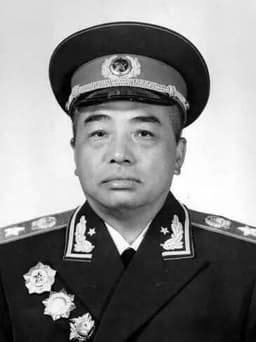
Peng Dehuai
General · Modern
64.9Total
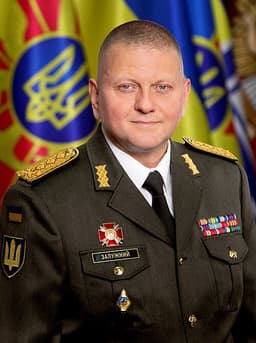
Valerii Zaluzhnyi
General · Modern
52.3Total
Basic Information
Born
1898
1974
Died
1974
—
Era
Modern
Modern
Nationality
China
Ukraine
Occupation
General
General
Civilization
Eastern
Western
Score Comparison
Military (10%)
80.0
52.5
Political (20%)
62.7
35.1
Influence (20%)
65.0
61.0
Legacy (20%)
55.0
50.0
Leadership (15%)
70.0
47.3
Strategy (15%)
70.0
69.1
TOTAL
64.9
52.3
Peng Dehuai — Complete Timeline
1950 AD
Commander of Chinese Forces in the Korean WarWar
Peng Dehuai was appointed commander of the Chinese People's Volunteer Army in Korea. He led Chinese forces to initial victories against UN forces, pushing them back from the Yalu River and capturing Seoul.
Korean WarMilitary Command
Impact: global
1954 AD
Minister of National Defense of the People's Republic of ChinaPolitical Action◆ Major
Peng Dehuai was appointed Minister of National Defense, overseeing the modernization of the People's Liberation Army. He advocated for professional military reforms and reduced the influence of political commissars.
GovernmentMilitary Reform
Impact: nationalconstructive
1959 AD
Criticized Mao Zedong at the Lushan ConferencePolitical Action
Peng Dehuai wrote a letter to Mao Zedong criticizing the Great Leap Forward's economic policies and their human cost. Mao responded by purging Peng, labeling him a 'right opportunist' and removing him from all posts.
Great Leap ForwardPolitical PurgeCriticism
Impact: nationaldestructive
Valerii Zaluzhnyi — Complete Timeline
2021 AD
Zaluzhnyi's appointment as Commander-in-ChiefPolitical Action◆ Major
Zaluzhnyi was appointed Commander-in-Chief of the Armed Forces of Ukraine by President Zelenskyy. He was tasked with reforming the military and preparing for potential Russian aggression.
AppointmentUkraineMilitary
Impact: nationalconstructive
2022 AD
Zaluzhnyi's defense of KyivWar
Zaluzhnyi commanded the successful defense of Kyiv against Russian forces attempting to capture the capital. Ukrainian forces repelled the assault, forcing a Russian withdrawal. This was a turning point in the 2022 invasion.
WarKyivUkraine
Impact: globalconstructive
Zaluzhnyi's Kharkiv counteroffensiveWar◆ Major
Zaluzhnyi planned and executed a surprise counteroffensive in Kharkiv Oblast, recapturing over 3,000 square kilometers of territory from Russian forces. The operation demonstrated Ukrainian military capability and shifted the war's momentum.
WarCounteroffensiveUkraine
Impact: regionalconstructive
2024 AD
Zaluzhnyi's dismissal as Commander-in-ChiefPolitical Action◆ Major
Zaluzhnyi was dismissed by President Zelenskyy amid reported tensions over war strategy and political ambitions. His removal was controversial, as he was highly popular among the military and public.
DismissalUkraineMilitary
Impact: national
Expert Analysis
Origins
**Peng Dehuai** was born on October 24, 1898, in Xiangtan, Hunan, China, into a poor peasant family. With only two years of formal education, he worked as a farmhand and coal miner before joining the Hunan Army in 1916 at age 18. He rose through the ranks due to his combat performance, becoming a battalion commander by 1926. Influenced by communist ideology, he joined the Chinese Communist Party (CCP) in 1928 and led the Pingjiang Uprising, establishing the Fifth Red Army.
**Valerii Zaluzhnyi** was born on July 8, 1973, in Novohrad-Volynskyi, Zhytomyr Oblast, Ukrainian SSR. Growing up in a military family, he graduated from the Odesa Institute of Ground Forces in 1997 and later from the National Defense University of Ukraine. He served in various command positions, including as commander of the 51st Guards Mechanized Brigade and chief of staff of the Western Operational Command. He also studied at the Ivan Chernyakhovsky National Defense University, earning a master's degree in military science.
Rise to Power
Peng Dehuai's rise accelerated during the Chinese Civil War. He became a corps commander in the Red Army, leading forces in the Long March (1934-1935) and later commanding the Eighth Route Army during the Second Sino-Japanese War (1937-1945). His decisive victories in the civil war, such as the Yan'an campaign and the conquest of Xinjiang, earned him the rank of Marshal in 1955. His appointment as commander of the Chinese People's Volunteer Army in October 1950 for the Korean War marked his peak influence.
Zaluzhnyi's ascent was more gradual. He commanded the 51st Guards Mechanized Brigade during the War in Donbas (2014-2015), earning a reputation for effective leadership. Appointed Chief of the General Staff in 2021, he became Commander-in-Chief of the Armed Forces of Ukraine in July 2021, tasked with reforming the military. His role in the successful defense of Kyiv in February-March 2022 catapulted him to national and international prominence.
Leadership & Governance
Peng Dehuai's leadership was characterized by hands-on command and a focus on professional military modernization. As Minister of National Defense (1954-1959), he pushed for a standardized rank system, military academies, and reduced political indoctrination in the army, scoring 70.0 in leadership. His governance style clashed with Mao Zedong's emphasis on ideological purity. Peng's 80.0 military score reflects his tactical acumen, particularly in the Korean War's early phases, where he used human wave attacks and night operations to offset UN firepower.
Zaluzhnyi's leadership, scoring 47.3, is marked by decentralized command and empowerment of junior officers. He prioritized intelligence, precision strikes, and use of Western-supplied weapons. His 69.1 strategy score highlights his ability to plan complex operations, such as the Kharkiv counteroffensive (September 2022), which used feints and rapid armored advances to recapture 3,000 km². He also modernized Ukraine's military by integrating NATO standards and promoting a culture of initiative.
Triumph & Tragedy
Peng's greatest triumph was leading Chinese forces to a stalemate in the Korean War, preventing the collapse of North Korea and forcing the UN to negotiate. His tragedy came at the Lushan Conference in 1959, when he criticized Mao's Great Leap Forward, resulting in his purge, imprisonment, and death in 1974. His posthumous rehabilitation in 1978 restored his legacy but could not erase his suffering.
Zaluzhnyi's triumph was the defense of Kyiv and the Kharkiv counteroffensive, which shattered Russia's initial war plans and demonstrated Ukraine's resilience. His tragedy was his dismissal in February 2024 amid political tensions with President Zelenskyy, reflecting the challenge of military leadership under civilian oversight. His 52.5 military score understates his impact, as the war is ongoing.
Character & Destiny
Peng Dehuai was known for his bluntness and integrity, often clashing with superiors. His decision to write to Mao in 1959 reflected his moral courage but sealed his fate. His character, scoring 55.0 in legacy, shaped a destiny of sacrifice for principles.
Zaluzhnyi, nicknamed the "Iron General," is described as calm, analytical, and media-shy. His 61.0 influence score reflects his popularity, but his political score of 35.1 indicates tensions with civilian leadership. His destiny remains tied to Ukraine's war outcome.
Legacy
Peng Dehuai's legacy is dual: a brilliant military commander (80.0 military) and a cautionary tale of political dissent. His reforms influenced the PLA's modernization. Zaluzhnyi's legacy is still forming, but his defense of Kyiv and operational innovations are already studied in military academies. His 50.0 legacy score will likely rise if Ukraine prevails.
Conclusion
Peng Dehuai had greater impact on a global scale, with his Korean War command altering the Cold War's trajectory and his political sacrifice becoming a symbol of integrity. Zaluzhnyi's impact, while profound, is more regionally focused and incomplete. Peng's total score of 64.9 exceeds Zaluzhnyi's 52.3, and his military and leadership scores are significantly higher. Thus, Peng Dehuai emerges as the more influential historical figure.
Rankings
🥇
Peng DehuaiLeader
Mil: 80.0Pol: 62.7Inf: 65.0
64.9
🥈
Valerii Zaluzhnyi
Mil: 52.5Pol: 35.1Inf: 61.0
52.3
+12.6 behind
How This Comparison Works
Algorithm
Each figure is scored on 6 dimensions (0—100 scale) based on structured historical data: Military (10%), Political (20%), Influence (20%), Legacy (20%), Leadership (15%), Strategy (15%). The weighted total produces the final ranking.
Data Sources
Scores are computed from structured sub-indicators in the database. Scale factors adjust for era (Ancient ×0.85, Modern ×1.0) and civilization size (Eastern ×1.05, Other ×0.80) to account for differences in population and military scale.
Maximum 3 Figures
Comparisons are limited to 2—3 figures to ensure readability and statistical meaningfulness.
Error Margins
±5 points per dimension — Sub-scores are derived from historical records with inherent uncertainty. Two figures within 5 points on a dimension should be considered roughly equivalent in that area.
Total Score Accuracy
±3 points overall — The weighted combination of 6 dimensions produces a total score with approximately ±3 points of uncertainty. Differences of less than 3 points are not statistically significant— the figures are effectively tied.
Known Limitations
- Historical records are incomplete and uneven across civilizations
- Figures from oral-tradition societies may be underrepresented
- Occupation labels can misclassify multi-role figures
- Scores measure capability and impact, not moral character
- Quantitative scoring is a comparison tool, not absolute truth
Capability Radar
Military (10%) — Battles & Warfare
Battles
85
75
Win Rate
75
70
Expansion
60
10
Political (20%) — Governance & Reform
Reform
55
15
Diplomacy
60
35
Economy
40
10
Influence (20%) — Cultural & Global Reach
Cultural
55
45
Global
65
50
Legacy (20%) — Historical Impact
Historical
70
55
Longevity
60
40
Leadership (15%) — Power & Stability
Tenure
65
20
Stability
50
25
Strategy (15%) — Tactics & Innovation
Strategy
85
78
Tactics
80
80
Reform
70
72
Similar Comparisons
Comments & Discussion
No comments yet. Be the first to share your thoughts!