Loading...
Mauricio Funes vs Souvanna Phouma
Souvanna Phouma leads by 4.3 pts · 2 figures compared
…

Mauricio Funes
Politician · Modern
45.2Total
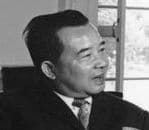
Souvanna Phouma
Politician · Modern
49.5Total
Basic Information
Born
1959
1901
Died
—
1984
Era
Modern
Modern
Nationality
El Salvador
Laos
Occupation
Politician
Politician
Civilization
Western
Eastern
Score Comparison
Military (10%)
50.0
11.1
Political (20%)
40.8
68.0
Influence (20%)
49.4
53.3
Legacy (20%)
39.2
45.0
Leadership (15%)
51.9
65.0
Strategy (15%)
41.3
38.9
TOTAL
45.2
49.5
Mauricio Funes — Complete Timeline
2009 AD
Implemented Social Programs and Economic ReformsReform◆ Major
Funes' government launched social programs including free school uniforms and supplies, a universal healthcare initiative, and subsidies for the poor. He also increased the minimum wage and expanded access to credit for small farmers.
Social ProgramsWelfareEconomic Reform
Impact: nationalconstructive
Elected President of El SalvadorPolitical Action◆ Major
Mauricio Funes won the presidential election as the candidate of the Farabundo Marti National Liberation Front (FMLN), becoming the first leftist president of El Salvador since the civil war. His victory marked the end of 20 years of ARENA rule.
ElectionFMLNFirst Leftist President
Impact: nationalconstructive
Normalized Relations with Cuba and VenezuelaPolitical Action◆ Major
Funes restored diplomatic relations with Cuba, which had been severed since 1961, and strengthened ties with Venezuela's Hugo Chavez. This aligned El Salvador with the ALBA bloc and secured oil subsidies from Venezuela.
Foreign PolicyCubaVenezuela
Impact: regional
2016 AD
Fled to Nicaragua Amid Corruption AllegationsPolitical Action◆ Major
Funes fled to Nicaragua after being accused of embezzling $351 million in public funds during his presidency. He was granted asylum by the Ortega government, and El Salvador issued an international arrest warrant for him.
CorruptionAsylumNicaragua
Impact: nationaltragic
Souvanna Phouma — Complete Timeline
1951 AD
First term as Prime MinisterPolitical Action◆ Major
Souvanna Phouma became Prime Minister of Laos for the first time, leading a neutralist government. He sought to maintain Laos's neutrality in the Cold War, balancing between communist Pathet Lao and right-wing factions.
Prime MinisterNeutralityCold War
Impact: nationalconstructive
1962 AD
Geneva Accords of 1962Political Action◆ Major
Souvanna Phouma signed the Geneva Accords, which established Laos as a neutral state and created a coalition government. The agreement was intended to end the Laotian Civil War but ultimately failed to prevent further conflict.
Geneva AccordsNeutralityCoalition
Impact: regionalconstructive
1973 AD
Formation of coalition governmentPolitical Action◆ Major
Souvanna Phouma helped form a new coalition government with the Pathet Lao after the Vientiane Agreement. This government aimed to end the civil war but was short-lived as the Pathet Lao seized full power in 1975.
CoalitionCivil warVientiane Agreement
Impact: nationalconstructive
1975 AD
Resignation after Pathet Lao takeoverPolitical Action◆ Major
Souvanna Phouma resigned as Prime Minister after the Pathet Lao took control of Laos, ending the monarchy. He remained in Laos as an advisor to the new communist government until his death.
ResignationPathet LaoCommunist takeover
Impact: nationaltragic
Expert Analysis
Origins
**Mauricio Funes** was born on October 18, 1959, in San Salvador, El Salvador. He grew up in a middle-class family; his father was a teacher and his mother a homemaker. Funes studied at the University of Central America but did not complete a degree. He began his career as a journalist, working for Channel 12 and later as a host for a political talk show. His media career made him a public figure, but he had no formal political or military background.
**Souvanna Phouma** was born on October 7, 1901, in Luang Prabang, Laos, into the royal family. He was the son of Prince Bounkhong, the last viceroy of Luang Prabang. Souvanna studied in Hanoi and later earned a degree in engineering from the École Centrale de Lyon in France. He returned to Laos and worked in public works before entering politics. His royal lineage and education positioned him as a key figure in Laotian independence.
Rise to Power
Funes rose to prominence as a journalist and television host, gaining popularity for his criticism of the right-wing government. In 2007, the Farabundo Martí National Liberation Front (FMLN), a former guerrilla movement, recruited him as their presidential candidate. He won the 2009 election with 51.3% of the vote, becoming the first leftist president in El Salvador's history. His victory marked a shift after two decades of conservative rule.
Souvanna Phouma entered politics after World War II, serving in various ministerial roles. He became Prime Minister for the first time in 1951, leading a neutralist government. His rise was tied to his ability to balance between the communist Pathet Lao and the right-wing forces backed by the United States. He was a central figure in the 1962 Geneva Accords, which established Laos as a neutral state. He served multiple terms, often forming coalition governments to maintain peace.
Leadership & Governance
Funes governed with a social democratic agenda. He implemented social programs including free school uniforms and supplies, a universal healthcare initiative, and subsidies for the poor. He normalized relations with Cuba and Venezuela, securing aid from Hugo Chávez. However, his administration was marred by corruption. He was accused of embezzling $351 million in public funds, and after leaving office in 2014, he fled to Nicaragua to avoid prosecution. His governance score of 40.8 reflects his mixed record: popular policies but weak institutional control.
Souvanna Phouma's leadership was defined by his commitment to neutrality. He sought to keep Laos out of the Cold War conflict, negotiating with both the Pathet Lao and the US-backed Royal Lao government. His political score of 68.0 indicates his skill in diplomacy and coalition-building. However, his strategy score of 38.9 shows that his neutralist approach ultimately failed as the Pathet Lao took control in 1975. He resigned and remained in Laos as an advisor, avoiding the fate of many royalists.
Triumph & Tragedy
Funes' greatest success was his election, ending decades of right-wing rule and implementing social programs that improved access to education and healthcare. His tragedy was the corruption scandal that forced him into exile, tarnishing his legacy. He scored 51.9 in leadership but only 39.2 in legacy, reflecting how his achievements were overshadowed by his flight.
Souvanna Phouma's triumph was the 1962 Geneva Accords, which temporarily stabilized Laos. He also formed coalition governments that delayed the civil war's outcome. His tragedy was the ultimate failure of neutrality; the Pathet Lao seized power, ending the monarchy. He scored 65.0 in leadership but 49.5 overall, showing his diplomatic skill but inability to prevent a takeover.
Character & Destiny
Funes was charismatic and media-savvy, but his lack of political experience made him vulnerable to corruption. His decision to flee suggests a prioritization of self-preservation over accountability. His personality shaped a presidency that started with hope and ended in scandal.
Souvanna Phouma was pragmatic and diplomatic, but his neutrality was perceived as weakness by both sides. He remained in Laos after the communist takeover, possibly out of loyalty or resignation. His character was that of a compromiser, but in the Cold War context, compromise was not enough.
Legacy
Funes is remembered as the first leftist president of El Salvador, but his legacy is damaged by corruption. His social programs had some lasting impact, but the FMLN later distanced itself from him. He remains a controversial figure, with a legacy score of 39.2.
Souvanna Phouma is remembered as a prince who tried to keep Laos neutral. The Geneva Accords are a historical milestone, but his failure to prevent the Pathet Lao takeover means he is seen as a transitional figure. His legacy score of 45.0 reflects his diplomatic efforts.
Conclusion
Souvanna Phouma had a greater impact than Mauricio Funes, with a total score of 49.5 versus 45.2. Phouma's role in the Geneva Accords and his attempts at neutrality shaped Laos during a critical period, while Funes' corruption overshadowed his social reforms. Phouma's political score of 68.0 far exceeds Funes' 40.8, indicating superior diplomatic skill. However, neither figure achieved lasting stability: Funes fled his country, and Phouma's neutrality collapsed. In the broader historical context, Phouma's influence on Cold War diplomacy in Southeast Asia is more significant than Funes' brief presidency in Central America.
Rankings
🥇
Souvanna PhoumaLeader
Mil: 11.1Pol: 68.0Inf: 53.3
49.5
🥈
Mauricio Funes
Mil: 50.0Pol: 40.8Inf: 49.4
45.2
+4.3 behind
How This Comparison Works
Algorithm
Each figure is scored on 6 dimensions (0—100 scale) based on structured historical data: Military (10%), Political (20%), Influence (20%), Legacy (20%), Leadership (15%), Strategy (15%). The weighted total produces the final ranking.
Data Sources
Scores are computed from structured sub-indicators in the database. Scale factors adjust for era (Ancient ×0.85, Modern ×1.0) and civilization size (Eastern ×1.05, Other ×0.80) to account for differences in population and military scale.
Maximum 3 Figures
Comparisons are limited to 2—3 figures to ensure readability and statistical meaningfulness.
Error Margins
±5 points per dimension — Sub-scores are derived from historical records with inherent uncertainty. Two figures within 5 points on a dimension should be considered roughly equivalent in that area.
Total Score Accuracy
±3 points overall — The weighted combination of 6 dimensions produces a total score with approximately ±3 points of uncertainty. Differences of less than 3 points are not statistically significant— the figures are effectively tied.
Known Limitations
- Historical records are incomplete and uneven across civilizations
- Figures from oral-tradition societies may be underrepresented
- Occupation labels can misclassify multi-role figures
- Scores measure capability and impact, not moral character
- Quantitative scoring is a comparison tool, not absolute truth
Capability Radar
Military (10%) — Battles & Warfare
Battles
29
14
Win Rate
31
19
Expansion
32
22
Political (20%) — Governance & Reform
Reform
40
40
Diplomacy
30
55
Economy
25
30
Influence (20%) — Cultural & Global Reach
Cultural
20
25
Global
15
25
Legacy (20%) — Historical Impact
Historical
25
40
Longevity
10
30
Leadership (15%) — Power & Stability
Tenure
30
60
Stability
15
20
Strategy (15%) — Tactics & Innovation
Strategy
35
21
Tactics
38
28
Reform
46
29
Similar Comparisons
Comments & Discussion
No comments yet. Be the first to share your thoughts!