Loading...
Paias Wingti vs Souvanna Phouma
Souvanna Phouma leads by 2.4 pts · 2 figures compared
…

Paias Wingti
Politician · Modern
47.1Total
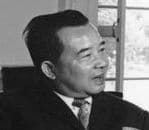
Souvanna Phouma
Politician · Modern
49.5Total
Basic Information
Born
1951
1901
Died
—
1984
Era
Modern
Modern
Nationality
Papua New Guinea
Laos
Occupation
Politician
Politician
Civilization
Other
Eastern
Score Comparison
Military (10%)
27.8
11.1
Political (20%)
68.0
68.0
Influence (20%)
51.8
53.3
Legacy (20%)
43.3
45.0
Leadership (15%)
40.0
65.0
Strategy (15%)
43.0
38.9
TOTAL
47.1
49.5
Paias Wingti — Complete Timeline
1985 AD
Elected Prime Minister of Papua New GuineaPolitical Action◆ Major
Paias Wingti was elected Prime Minister of Papua New Guinea after a vote of no confidence ousted Michael Somare. Wingti, from the Western Highlands, became the first highlander to hold the office, representing a shift in political power from the coastal regions.
PNG PoliticsHighlandsPrime Minister
Impact: national
Formed the People's Democratic MovementPolitical Action
Paias Wingti founded the People's Democratic Movement (PDM) party after splitting from the Pangu Pati. The PDM became a major political force in Papua New Guinea, and Wingti used it as his base to win the prime ministership later that year.
Political PartyPNG PoliticsPangu Pati Split
Impact: national
1992 AD
Re-elected Prime MinisterPolitical Action◆ Major
Paias Wingti was re-elected as Prime Minister of Papua New Guinea following the 1992 general election. His second term focused on economic reforms and infrastructure development, but was also marked by political instability and the Bougainville conflict.
PNG PoliticsElectionSecond Term
Impact: national
1994 AD
Resigned to avoid vote of no confidencePolitical Action◆ Major
Facing a likely vote of no confidence, Paias Wingti resigned as Prime Minister and was immediately re-elected in a parliamentary maneuver. The Supreme Court later ruled this tactic unconstitutional, forcing him to step down and paving the way for Julius Chan to become Prime Minister.
PNG PoliticsConstitutional CrisisResignation
Impact: national
Souvanna Phouma — Complete Timeline
1951 AD
First term as Prime MinisterPolitical Action◆ Major
Souvanna Phouma became Prime Minister of Laos for the first time, leading a neutralist government. He sought to maintain Laos's neutrality in the Cold War, balancing between communist Pathet Lao and right-wing factions.
Prime MinisterNeutralityCold War
Impact: nationalconstructive
1962 AD
Geneva Accords of 1962Political Action◆ Major
Souvanna Phouma signed the Geneva Accords, which established Laos as a neutral state and created a coalition government. The agreement was intended to end the Laotian Civil War but ultimately failed to prevent further conflict.
Geneva AccordsNeutralityCoalition
Impact: regionalconstructive
1973 AD
Formation of coalition governmentPolitical Action◆ Major
Souvanna Phouma helped form a new coalition government with the Pathet Lao after the Vientiane Agreement. This government aimed to end the civil war but was short-lived as the Pathet Lao seized full power in 1975.
CoalitionCivil warVientiane Agreement
Impact: nationalconstructive
1975 AD
Resignation after Pathet Lao takeoverPolitical Action◆ Major
Souvanna Phouma resigned as Prime Minister after the Pathet Lao took control of Laos, ending the monarchy. He remained in Laos as an advisor to the new communist government until his death.
ResignationPathet LaoCommunist takeover
Impact: nationaltragic
Expert Analysis
Origins
Paias Wingti was born in 1951 in the Western Highlands of Papua New Guinea, then an Australian territory. He attended local schools and later studied at the University of Papua New Guinea, where he earned a degree in economics. His early career included work as a public servant before entering politics. Wingti's highlands background shaped his political base, as he drew support from his region.
Souvanna Phouma was born on October 7, 1901, in Luang Prabang, Laos, into the royal family as a prince. He studied in France, earning a degree in engineering from the University of Paris. He returned to Laos and worked in public works before entering politics. His royal lineage and French education positioned him as a moderate nationalist.
Rise to Power
Wingti entered politics in 1977 when he was elected to the National Parliament as a member of the Pangu Pati. He quickly rose within the party, becoming a minister in Michael Somare's government. In 1985, he broke away to form the People's Democratic Movement (PDM) and, after a vote of no confidence, became Prime Minister on November 21, 1985, at age 34. He was re-elected in 1987 and again in 1992.
Souvanna Phouma's political ascent began after World War II. He served as prime minister for the first time in 1951, leading a neutralist government. He became a key figure in Laotian politics, advocating for neutrality during the Cold War. In 1962, he signed the Geneva Accords, which established Laos as a neutral state. He led coalition governments that included both rightists and the communist Pathet Lao.
Leadership & Governance
Wingti's leadership style was pragmatic and focused on economic development. He implemented structural adjustment programs, privatized state enterprises, and sought foreign investment. Politically, he was skilled at parliamentary maneuvering. In 1988, facing a no-confidence vote, he resigned and was immediately re-elected, a tactic later ruled unconstitutional by the Supreme Court. His political score of 68.0 reflects his effectiveness in navigating PNG's fluid party system, though his leadership score of 40.0 indicates challenges in maintaining stability.
Souvanna Phouma's leadership was defined by his commitment to neutrality. He sought to balance the interests of the United States, the Soviet Union, and China to prevent Laos from being drawn into the Vietnam War. He formed coalition governments, but these were fragile. His leadership score of 65.0 reflects his diplomatic skill, but his strategy score of 38.9 shows the difficulty of achieving lasting peace.
Triumph & Tragedy
Wingti's greatest success was economic reform. He reduced inflation, stabilized the currency, and attracted aid. However, his political maneuvering led to instability. His resignation and re-election tactic damaged democratic institutions. His legacy score of 43.3 reflects mixed outcomes.
Souvanna Phouma's triumph was the Geneva Accords, which temporarily neutralized Laos. However, the accords failed as the Pathet Lao gained strength. In 1975, they took full control, ending the monarchy. Souvanna resigned but remained as an advisor. His influence score of 53.3 shows his impact, but his military score of 11.1 indicates his inability to prevent communist takeover.
Character & Destiny
Wingti was a shrewd operator, adept at building coalitions. His highlands background gave him a regional base, but his tactics alienated opponents. He was sometimes seen as opportunistic. His total score of 47.1 reflects a career of mixed achievements.
Souvanna Phouma was a prince who believed in moderation. He was respected for his integrity but criticized for naivety. He underestimated the Pathet Lao's commitment to total control. His total score of 49.5 edges out Wingti.
Legacy
Wingti's legacy is the PDM, which remains a major party. His economic reforms set a precedent. However, his constitutional crisis weakened governance norms.
Souvanna Phouma's legacy is his attempt at neutrality. He is remembered as a peacemaker, but his failure to prevent communist rule overshadows his efforts.
Conclusion
Souvanna Phouma had a slightly greater impact (score 49.5 vs 47.1) due to his role in international diplomacy and the Geneva Accords. Wingti's influence was limited to PNG. While both faced impossible circumstances, Souvanna's efforts to maintain neutrality in a Cold War context were more consequential.
Rankings
🥇
Souvanna PhoumaLeader
Mil: 11.1Pol: 68.0Inf: 53.3
49.5
🥈
Paias Wingti
Mil: 27.8Pol: 68.0Inf: 51.8
47.1
+2.4 behind
How This Comparison Works
Algorithm
Each figure is scored on 6 dimensions (0—100 scale) based on structured historical data: Military (10%), Political (20%), Influence (20%), Legacy (20%), Leadership (15%), Strategy (15%). The weighted total produces the final ranking.
Data Sources
Scores are computed from structured sub-indicators in the database. Scale factors adjust for era (Ancient ×0.85, Modern ×1.0) and civilization size (Eastern ×1.05, Other ×0.80) to account for differences in population and military scale.
Maximum 3 Figures
Comparisons are limited to 2—3 figures to ensure readability and statistical meaningfulness.
Error Margins
±5 points per dimension — Sub-scores are derived from historical records with inherent uncertainty. Two figures within 5 points on a dimension should be considered roughly equivalent in that area.
Total Score Accuracy
±3 points overall — The weighted combination of 6 dimensions produces a total score with approximately ±3 points of uncertainty. Differences of less than 3 points are not statistically significant— the figures are effectively tied.
Known Limitations
- Historical records are incomplete and uneven across civilizations
- Figures from oral-tradition societies may be underrepresented
- Occupation labels can misclassify multi-role figures
- Scores measure capability and impact, not moral character
- Quantitative scoring is a comparison tool, not absolute truth
Capability Radar
Military (10%) — Battles & Warfare
Battles
27
14
Win Rate
27
19
Expansion
30
22
Political (20%) — Governance & Reform
Reform
40
40
Diplomacy
50
55
Economy
45
30
Influence (20%) — Cultural & Global Reach
Cultural
30
25
Global
20
25
Legacy (20%) — Historical Impact
Historical
35
40
Longevity
25
30
Leadership (15%) — Power & Stability
Tenure
55
60
Stability
40
20
Strategy (15%) — Tactics & Innovation
Strategy
31
21
Tactics
39
28
Reform
42
29
Similar Comparisons
Comments & Discussion
No comments yet. Be the first to share your thoughts!