Loading...
This comparison has not been analyzed yet.
One-time AI generation (~1 minute). Scores and timeline are already available below.
Memnon of Rhodes vs Tian Dan
Tian Dan leads by 3.2 pts · 2 figures compared
…
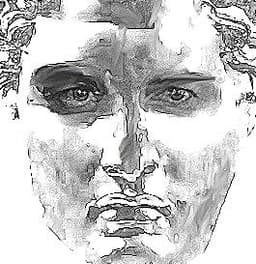
Memnon of Rhodes
General · Ancient
43.9Total

Tian Dan
General · Ancient
47.1Total
Basic Information
Born
-380
-290
Died
-333
-240
Era
Ancient
Ancient
Nationality
Rhodes
China
Occupation
General
General
Civilization
Western
Eastern
Score Comparison
Military (10%)
52.5
61.7
Political (20%)
27.9
29.3
Influence (20%)
50.2
53.3
Legacy (20%)
43.3
48.3
Leadership (15%)
30.0
33.5
Strategy (15%)
66.3
61.3
TOTAL
43.9
47.1
Memnon of Rhodes — Complete Timeline
334 BC
Defense of HalicarnassusWar◆ Major
Memnon commanded the Persian defense of Halicarnassus against Alexander the Great. He used fortified positions and naval sorties to delay the Macedonian advance, forcing Alexander to besiege the city for months before it fell.
SiegePersian DefenseAlexander the Great
Impact: regional
Advice to Darius III on Scorched EarthPolitical Action
Memnon advised Darius III to adopt a scorched earth strategy, destroying crops and villages to deny supplies to Alexander's army. The Persian court rejected this plan, leading to the Battle of Granicus and subsequent losses.
StrategyPersian CourtAlexander
Impact: regional
333 BC
Naval Campaign in the AegeanWar◆ Major
Memnon launched a naval campaign to recapture Greek islands and threaten Alexander's supply lines. He captured Chios and most of Lesbos, but died during the siege of Mytilene, ending the Persian counteroffensive.
Naval CampaignAegeanPersian Strategy
Impact: regional
Tian Dan — Complete Timeline
279 BC
Defense of JimoWar◆ Major
Tian Dan was appointed as the commander of Jimo, one of the last two Qi cities not captured by Yue Yi's forces. He organized the defense, rallied the population, and prepared for a counterattack against the Yan army.
Qi DefenseJimoWarring States
Impact: regionalconstructive
Fire Cattle AttackWar◆ Major
Tian Dan used a stratagem involving cattle with burning tails to break the Yan siege of Jimo. The cattle charged into the Yan camp, causing chaos, followed by Qi soldiers. This surprise attack routed the Yan army and turned the tide of the war.
Military StratagemBattleQi Victory
Impact: regional
Recapture of Qi TerritoryWar◆ Major
Following the victory at Jimo, Tian Dan led the Qi army in a rapid campaign to recapture all 70 cities lost to Yan. He exploited the disarray in Yan after Yue Yi's exile and restored Qi as a major power.
Qi RecoveryMilitary CampaignReconquest
Impact: regionalconstructive
Enfeoffment as Lord of AnpingPolitical Action
King Xiang of Qi enfeoffed Tian Dan as the Lord of Anping in recognition of his service in restoring Qi. This title granted him a fief and elevated his status among the nobility.
EnfeoffmentQi StateNobility
Impact: nationalconstructive
This comparison has not been analyzed yet.
One-time AI generation (~1 minute). Scores and timeline are already available below.
Rankings
🥇
Tian DanLeader
Mil: 61.7Pol: 29.3Inf: 53.3
47.1
🥈
Memnon of Rhodes
Mil: 52.5Pol: 27.9Inf: 50.2
43.9
+3.2 behind
How This Comparison Works
Algorithm
Each figure is scored on 6 dimensions (0—100 scale) based on structured historical data: Military (10%), Political (20%), Influence (20%), Legacy (20%), Leadership (15%), Strategy (15%). The weighted total produces the final ranking.
Data Sources
Scores are computed from structured sub-indicators in the database. Scale factors adjust for era (Ancient ×0.85, Modern ×1.0) and civilization size (Eastern ×1.05, Other ×0.80) to account for differences in population and military scale.
Maximum 3 Figures
Comparisons are limited to 2—3 figures to ensure readability and statistical meaningfulness.
Error Margins
±5 points per dimension — Sub-scores are derived from historical records with inherent uncertainty. Two figures within 5 points on a dimension should be considered roughly equivalent in that area.
Total Score Accuracy
±3 points overall — The weighted combination of 6 dimensions produces a total score with approximately ±3 points of uncertainty. Differences of less than 3 points are not statistically significant— the figures are effectively tied.
Known Limitations
- Historical records are incomplete and uneven across civilizations
- Figures from oral-tradition societies may be underrepresented
- Occupation labels can misclassify multi-role figures
- Scores measure capability and impact, not moral character
- Quantitative scoring is a comparison tool, not absolute truth
Capability Radar
Military (10%) — Battles & Warfare
Battles
45
45
Win Rate
40
70
Expansion
30
40
Political (20%) — Governance & Reform
Reform
15
20
Diplomacy
55
40
Economy
20
25
Influence (20%) — Cultural & Global Reach
Cultural
20
40
Global
20
30
Legacy (20%) — Historical Impact
Historical
35
55
Longevity
25
45
Leadership (15%) — Power & Stability
Tenure
35
35
Stability
25
30
Strategy (15%) — Tactics & Innovation
Strategy
60
65
Tactics
65
80
Reform
20
30
Similar Comparisons
Comments & Discussion
No comments yet. Be the first to share your thoughts!