Loading...
Tian Dan vs Yue Yi
Yue Yi leads by 2.7 pts · 2 figures compared
…

Tian Dan
General · Ancient
47.1Total
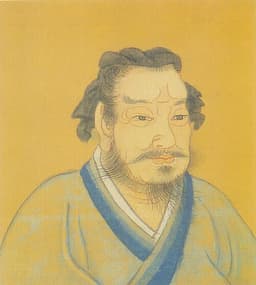
Yue Yi
General · Ancient
49.8Total
Basic Information
Born
-290
-310
Died
-240
-259
Era
Ancient
Ancient
Nationality
China
China
Occupation
General
General
Civilization
Eastern
Eastern
Score Comparison
Military (10%)
61.7
75.0
Political (20%)
29.3
26.4
Influence (20%)
53.3
53.3
Legacy (20%)
48.3
50.0
Leadership (15%)
33.5
36.9
Strategy (15%)
61.3
70.0
TOTAL
47.1
49.8
Tian Dan — Complete Timeline
279 BC
Defense of JimoWar◆ Major
Tian Dan was appointed as the commander of Jimo, one of the last two Qi cities not captured by Yue Yi's forces. He organized the defense, rallied the population, and prepared for a counterattack against the Yan army.
Qi DefenseJimoWarring States
Impact: regionalconstructive
Fire Cattle AttackWar◆ Major
Tian Dan used a stratagem involving cattle with burning tails to break the Yan siege of Jimo. The cattle charged into the Yan camp, causing chaos, followed by Qi soldiers. This surprise attack routed the Yan army and turned the tide of the war.
Military StratagemBattleQi Victory
Impact: regional
Recapture of Qi TerritoryWar◆ Major
Following the victory at Jimo, Tian Dan led the Qi army in a rapid campaign to recapture all 70 cities lost to Yan. He exploited the disarray in Yan after Yue Yi's exile and restored Qi as a major power.
Qi RecoveryMilitary CampaignReconquest
Impact: regionalconstructive
Enfeoffment as Lord of AnpingPolitical Action
King Xiang of Qi enfeoffed Tian Dan as the Lord of Anping in recognition of his service in restoring Qi. This title granted him a fief and elevated his status among the nobility.
EnfeoffmentQi StateNobility
Impact: nationalconstructive
Yue Yi — Complete Timeline
284 BC
Alliance of Five StatesWar◆ Major
Yue Yi formed a coalition of five states
CoalitionDiplomacyWarring States
Impact: regional
Conquest of Qi CitiesWar◆ Major
Yue Yi led the coalition forces to a series of victories, capturing over 70 cities of Qi, including the capital Linzi. Qi was reduced to only two remaining cities, Ju and Jimo, and was on the verge of total annihilation.
Qi ConquestMilitary CampaignYan Victory
Impact: regional
Appointment as General of YanPolitical Action◆ Major
King Zhao of Yan appointed Yue Yi as general to lead a campaign against the state of Qi. Yue Yi had previously served in Wei and Zhao, but his talents were recognized by King Zhao, who trusted him with the command of the Yan army.
Yan StateAppointmentQi Campaign
Impact: regional
279 BC
Exile to ZhaoPolitical Action◆ Major
After King Zhao of Yan died, his successor King Hui distrusted Yue Yi due to slander from Qi spies. Yue Yi fled to the state of Zhao to avoid execution. His departure allowed Qi to recover under Tian Dan and recapture its lost cities.
ExileYan StateQi Recovery
Impact: regionaltragic
Expert Analysis
Origins
Tian Dan was born into the royal clan of Qi, but his early life is obscure. He rose from a minor official in the city of Jimo to become its defender during the Yan invasion. His background as a local administrator gave him intimate knowledge of the region and its people, which he would later leverage in his defense.
Yue Yi was a native of the state of Zhao, but he served in Wei and Zhao before finding his true calling in Yan. His father, Yue Yang, was a general, and Yue Yi inherited his military acumen. He was well-educated in the arts of war and diplomacy, which enabled him to form the grand alliance against Qi.
Rise to Power
Tian Dan's rise was sudden and born of crisis. In 284 BCE, when the Yan coalition under Yue Yi captured most of Qi, only Jimo and Ju remained. The desperate Qi leaders appointed Tian Dan as commander of Jimo. He rallied the people, executed traitors, and fortified the city. His first major test was a siege that lasted years.
Yue Yi's rise was more deliberate. After King Zhao of Yan sought revenge against Qi for past humiliations, Yue Yi was appointed as general. In 284 BCE, he forged a five-state alliance (Yan, Zhao, Chu, Wei, Han) and launched a coordinated attack. His forces swept through Qi, capturing 70 cities in a matter of months. Qi's King Min was killed, and only two cities held out.
Leadership & Governance
Tian Dan's leadership was characterized by improvisation and psychological warfare. He used deception to demoralize the Yan army, such as spreading rumors that the Yan soldiers feared mutilation and that Qi ghosts were angry. He also inspired his troops by sharing hardships and leading from the front. His governance was practical: he redistributed food, reduced taxes, and organized the populace into a cohesive defense.
Yue Yi was a disciplined strategist. He maintained strict order among his multi-state coalition, preventing looting and ensuring supply lines. After capturing Qi's capital Linzi, he did not destroy the city but instead preserved its culture. He treated Qi's people leniently to win their support. However, his siege of Jimo and Ju dragged on for years because he chose to starve them out rather than assault, which proved to be a tactical error.
Triumph & Tragedy
Tian Dan's greatest triumph was the fire cattle attack in 279 BCE. He tied burning torches to the tails of 1,000 oxen and drove them into the Yan camp at night, followed by 5,000 Qi soldiers. The chaos broke the siege and led to a rout. He then recaptured all 70 cities in a swift campaign. His tragedy is that he could not restore Qi to its former power; the state was weakened and eventually conquered. He also fell out of favor with King Xiang and died in obscurity.
Yue Yi's triumph was the near-annihilation of Qi. He conquered 70 cities and brought Yan to the peak of its power. His tragedy came after King Zhao's death. The new king, Hui, was suspicious and recalled Yue Yi. Fearing execution, Yue Yi fled to Zhao, leaving his family behind. His campaign was left unfinished, and Yan soon lost the conquered territories. He died in exile, his life's work undone.
Character & Destiny
Tian Dan was resourceful and adaptable, but also cautious. He preferred psychological tricks to direct confrontation. His destiny was to be a savior in a moment of crisis, but he lacked the vision to rebuild Qi into a major power. Historical assessments note his cleverness but also his limited scope.
Yue Yi was a grand strategist with a long-term vision. His decision to starve Jimo and Ju rather than storm them showed patience but also inflexibility. His character was shaped by loyalty to Yan, but his fate was sealed by court intrigue. He scored 70.0 in strategy to Tian Dan's 61.3, reflecting his superior planning.
Legacy
Tian Dan is remembered as a folk hero in China, his fire cattle tactic celebrated as a classic example of ingenuity. His legacy is tied to the resilience of Qi and the concept of defending one's homeland against overwhelming odds. He scored 48.3 in legacy, reflecting a moderate but lasting fame.
Yue Yi's legacy is as one of the great conquerors of the Warring States period. His alliance-building and rapid conquests are studied in military academies. However, his failure to complete the conquest and his exile tarnish his record. He scored 50.0 in legacy, slightly higher than Tian Dan.
Conclusion
Yue Yi had a greater impact on the Warring States period. His conquest of 70 cities nearly eliminated Qi, a major state, and his alliance system was a diplomatic masterstroke. Tian Dan's counterattack was impressive but only restored the status quo ante. Yue Yi's total score of 49.8 edges out Tian Dan's 47.1, and his military score of 75.0 dwarfs Tian Dan's 61.7. While Tian Dan was the better defender, Yue Yi was the superior strategist and conqueror. The historical balance tilts toward Yue Yi.
Rankings
🥇
Yue YiLeader
Mil: 75.0Pol: 26.4Inf: 53.3
49.8
🥈
Tian Dan
Mil: 61.7Pol: 29.3Inf: 53.3
47.1
+2.7 behind
How This Comparison Works
Algorithm
Each figure is scored on 6 dimensions (0—100 scale) based on structured historical data: Military (10%), Political (20%), Influence (20%), Legacy (20%), Leadership (15%), Strategy (15%). The weighted total produces the final ranking.
Data Sources
Scores are computed from structured sub-indicators in the database. Scale factors adjust for era (Ancient ×0.85, Modern ×1.0) and civilization size (Eastern ×1.05, Other ×0.80) to account for differences in population and military scale.
Maximum 3 Figures
Comparisons are limited to 2—3 figures to ensure readability and statistical meaningfulness.
Error Margins
±5 points per dimension — Sub-scores are derived from historical records with inherent uncertainty. Two figures within 5 points on a dimension should be considered roughly equivalent in that area.
Total Score Accuracy
±3 points overall — The weighted combination of 6 dimensions produces a total score with approximately ±3 points of uncertainty. Differences of less than 3 points are not statistically significant— the figures are effectively tied.
Known Limitations
- Historical records are incomplete and uneven across civilizations
- Figures from oral-tradition societies may be underrepresented
- Occupation labels can misclassify multi-role figures
- Scores measure capability and impact, not moral character
- Quantitative scoring is a comparison tool, not absolute truth
Capability Radar
Military (10%) — Battles & Warfare
Battles
45
75
Win Rate
70
80
Expansion
40
70
Political (20%) — Governance & Reform
Reform
20
20
Diplomacy
40
50
Economy
25
25
Influence (20%) — Cultural & Global Reach
Cultural
40
40
Global
30
30
Legacy (20%) — Historical Impact
Historical
55
60
Longevity
45
50
Leadership (15%) — Power & Stability
Tenure
35
40
Stability
30
30
Strategy (15%) — Tactics & Innovation
Strategy
65
90
Tactics
80
85
Reform
30
30
Similar Comparisons
Comments & Discussion
No comments yet. Be the first to share your thoughts!